





|
|
WARWICK FREEMAN. HOOK HAND HEART STAR CRISTINA FILIPE2025-10-05
You are opening this book, you are turning these pages. You are already in possession. You hold the book in your hands, exploring the luxury of the printed pages — smooth, fresh, fragrant with slightly metallic scent of printing ink. The paper slips forwards and back over the bindings. Each page opens up a new world, every photograph introduces new characters. This is a pleasure. And it is yours. You own it. Julie Ewington, ‘Owner’s Manual’, 1995
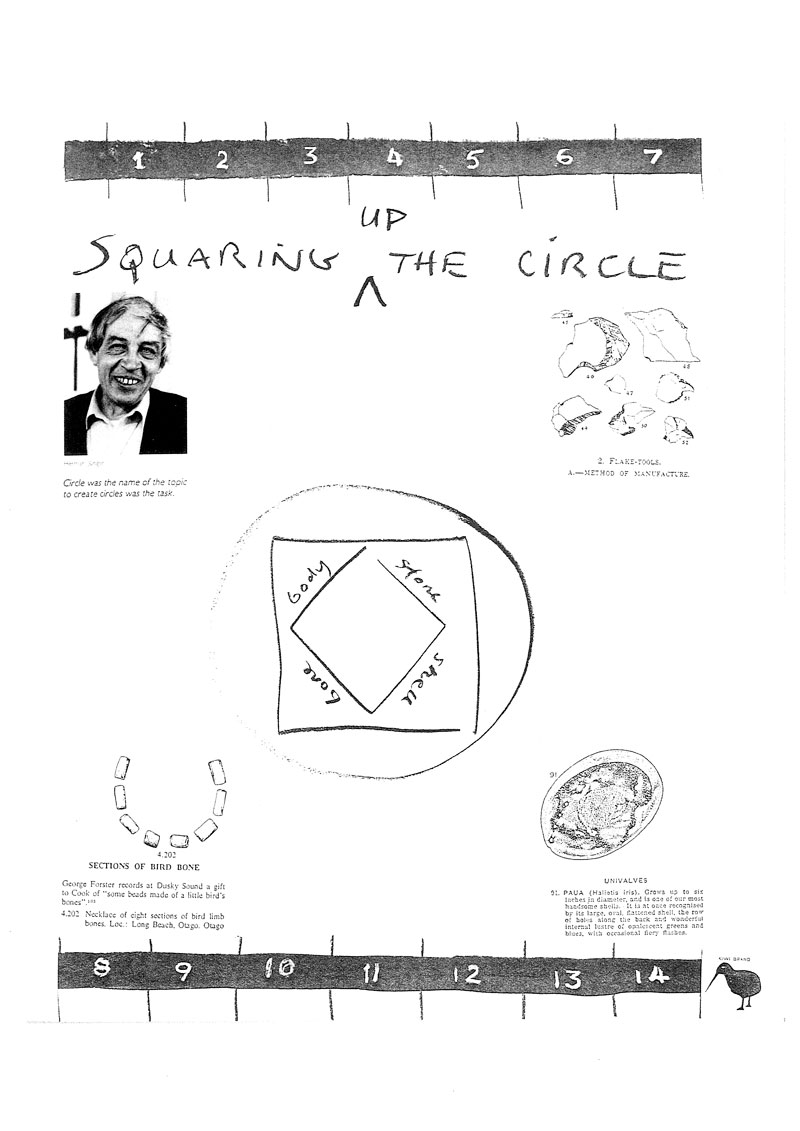
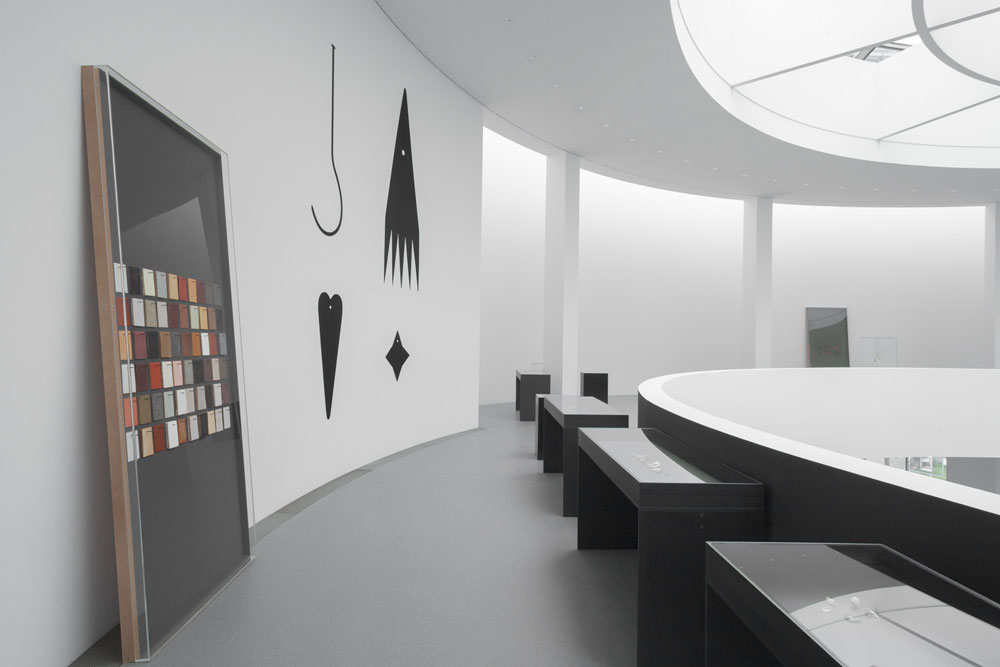
Thirty years after reading Julie Ewington’s extraordinary essay ‘Owner’s Manual’ on the jewellery of Warwick Freeman (Nelson, New Zealand, 1953), I had the opportunity to be guided by the artist himself through his retrospective exhibition, Hook Hand Heart Star, at the Pinakothek der Moderne in Munich on 14 March, the day before its opening. The travelling exhibition [1], presented as part of the official Schmuck programme, was curated by Petra Hölscher, Senior Curator at Die Neue Sammlung – The Design Museum, Kim Paton, Director of Objectspace in Auckland, Bronwyn Lloyd, writer and independent curator, and the artist himself. Installed on the top floor of the Pinakothek der Moderne, the exhibition traced the development of Freeman’s work over the past five decades. The circular architecture of the exhibition space prompted the artist to revisit his drawing Squaring Up the Circle [Img.1], from 1988, which reflects the Circle workshop he attended in 1982 under the guidance of Hermann Jünger (Germany, 1928–2005) – a pivotal figure in contemporary jewellery, who at the time was Professor and Head of the Jewellery Department at the Akademie der Bildenden Künste in Munich. As stated in ‘Squaring Up the Circle – Warwick Freeman’s Exhibition Architecture’, the text accompanying the exhibition brochure:
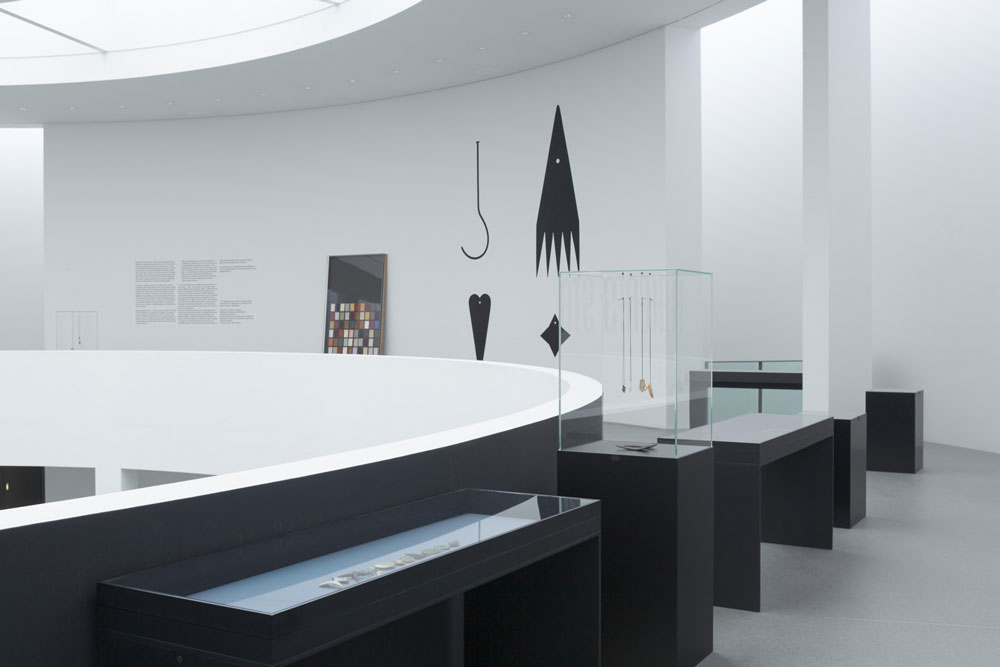
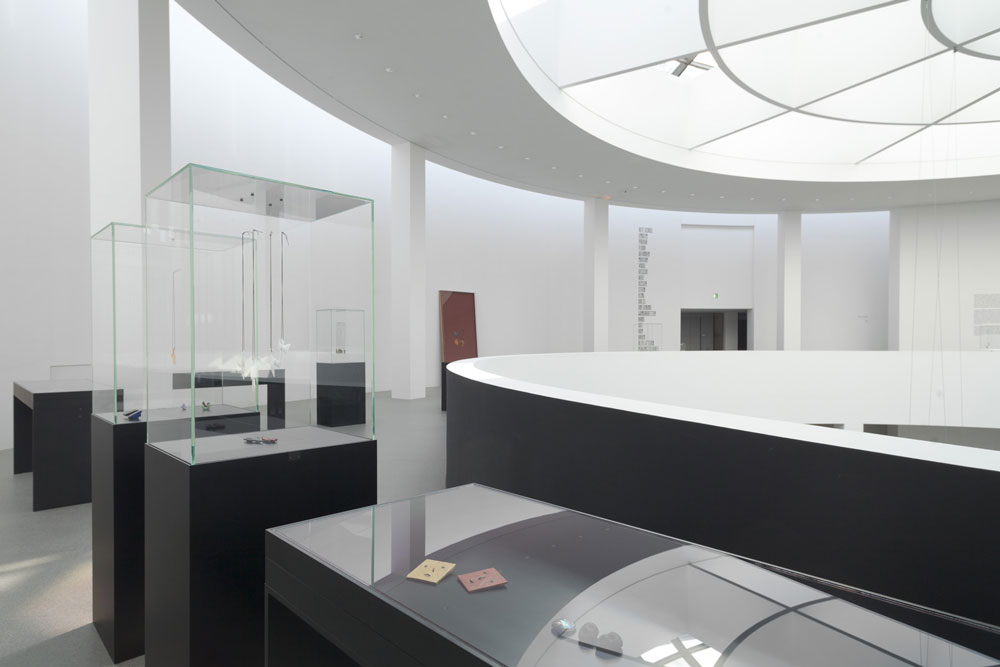
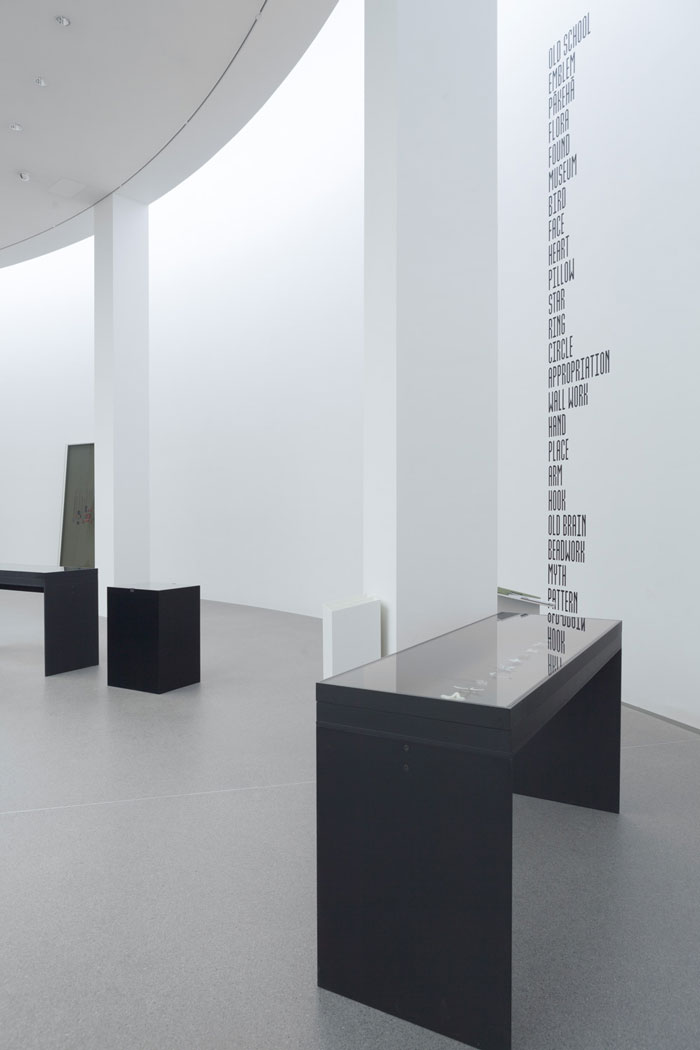
In 2025, over 35 years later, it is this drawing “Squaring Up the Circle” that Freeman uses as an idea for the design of this exhibition at Pinakothek der Modern. The outer round of the building shell encloses the square of the show cases, in which the inner round of the rotunda is inscribed [Img.2, 3, 4, 5]. The four high, color-framed wall display cases represented the four concepts underpinning modern New Zeeland jewellery: bone, stone, shell, and body. (Freeman, Holscher, Paton, 2025, p. 15)
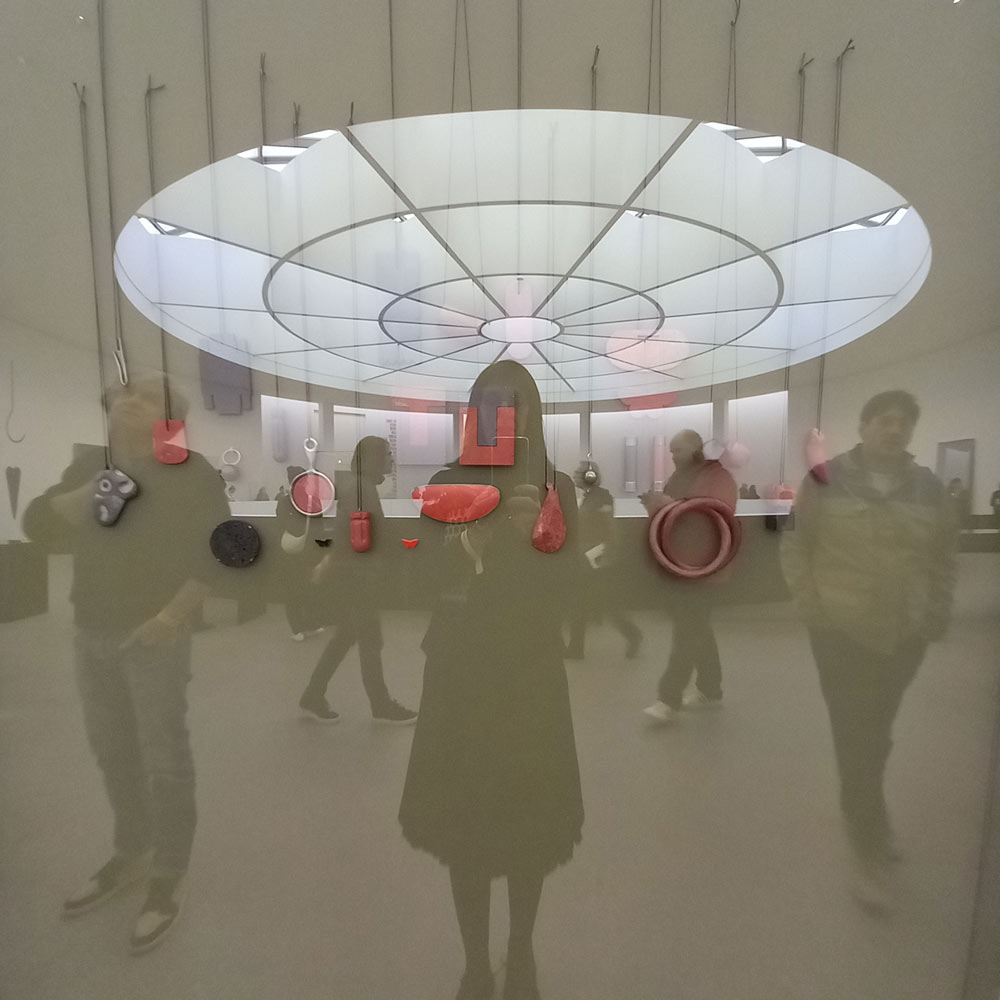
Freeman’s participation in Circle, organised by the Goethe-Institut and the Queen Elizabeth II Arts Council in Wellington, proved pivotal to his career, marking a decisive turning point and his conscious entry into the field of contemporary jewellery, ten years after he had begun working in the discipline. In the essay ‘It Will Become the Life of an Artist’, published in the exhibition catalogue (arnoldsche Art Publishers), Petra Hölscher examines the structure, outcomes and lasting impact of the workshop on Freeman’s artistic development. Hölscher explains that her essay ‘attempts to address the question of why, even today, New Zealand colleagues never tire of referring to the workshop given by Hermann Jünger back in 1982.’ (Hölscher, 2025, p. 12). She also reveals that, in keeping with his usual practice, Jünger preserved an extensive archive of fragments and materials from the two months he spent in Australia and Aotearoa New Zealand, documenting aspects of his creative process and teaching. According to Hölscher, this discovery helps us to understand why this period proved so decisive in Warwick Freeman’s development as an artist (jeweller). [2] (Hölscher, 2025, pp. 12–13). The works were installed throughout the circular gallery, both in freestanding display cases and in wall-mounted vitrines. Among the horizontally arranged works, particular emphasis was given to the linear groupings that the artist refers to as Sentences, while the vertically displayed pieces drew attention to individual works, most of them suspended. Positioned against the walls were four large-scale display cases, resembling framed pictures in wood and glass, which the artist calls Wall Work(s).
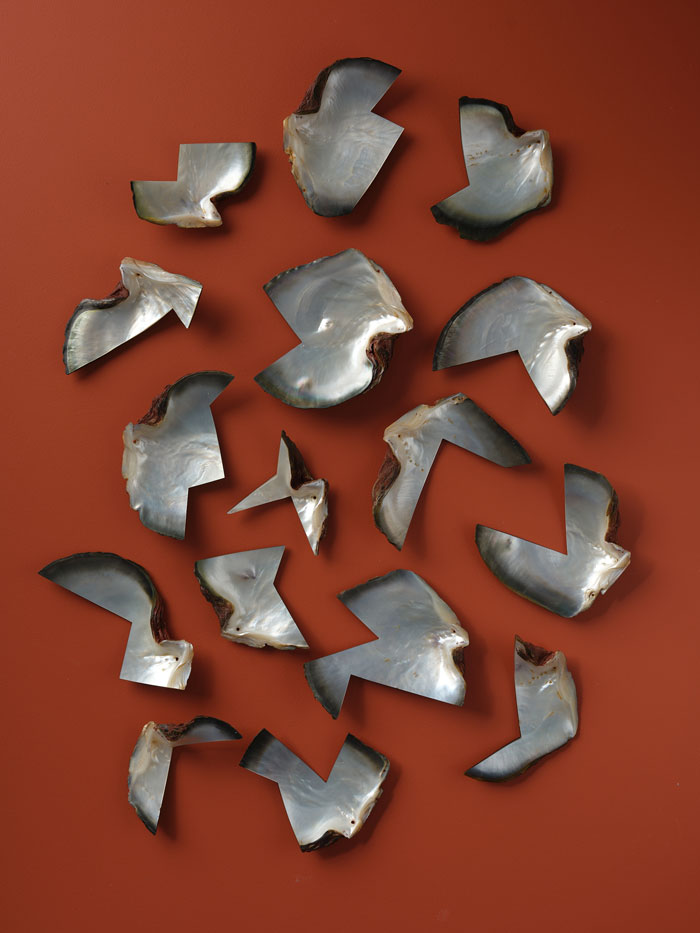
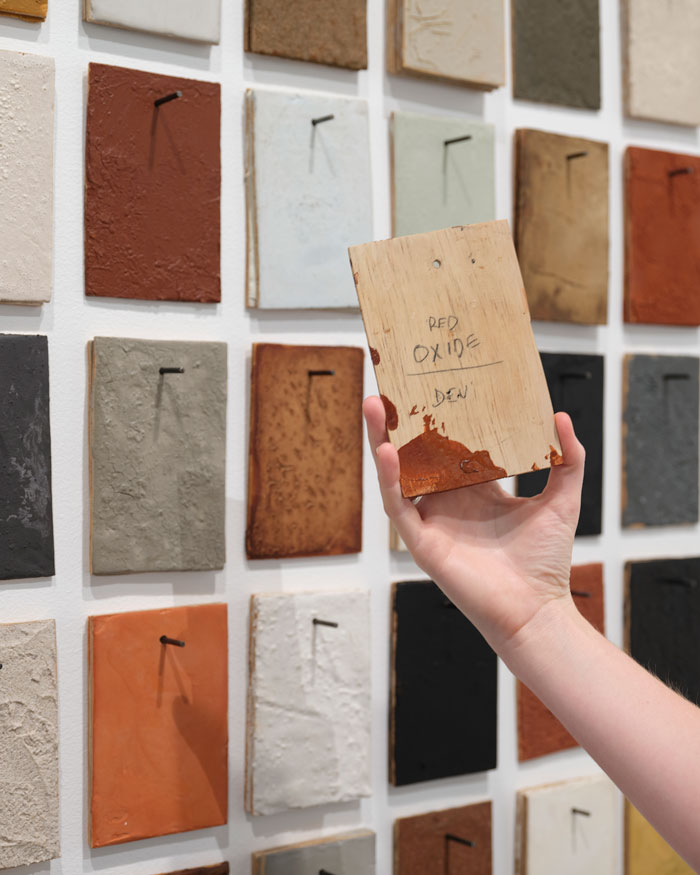
Wall mounted installations feature in Warwick Freeman’s practice. The four examples here range from a colour-theme arrangement of jewellery in red and black [Img.6]; a group of four over-sized pendants; an abstract assembly of the shell offcuts from another body of work [Img.7]. The gridded tiles of Dust [Img.4] chart the residue of making and the by-products of materials that accumulate in the studio — they are painted with the coloured dust of almost every material Freeman has worked with over the course of his career. (Freeman, Holscher, Paton, 2025, p. 58)
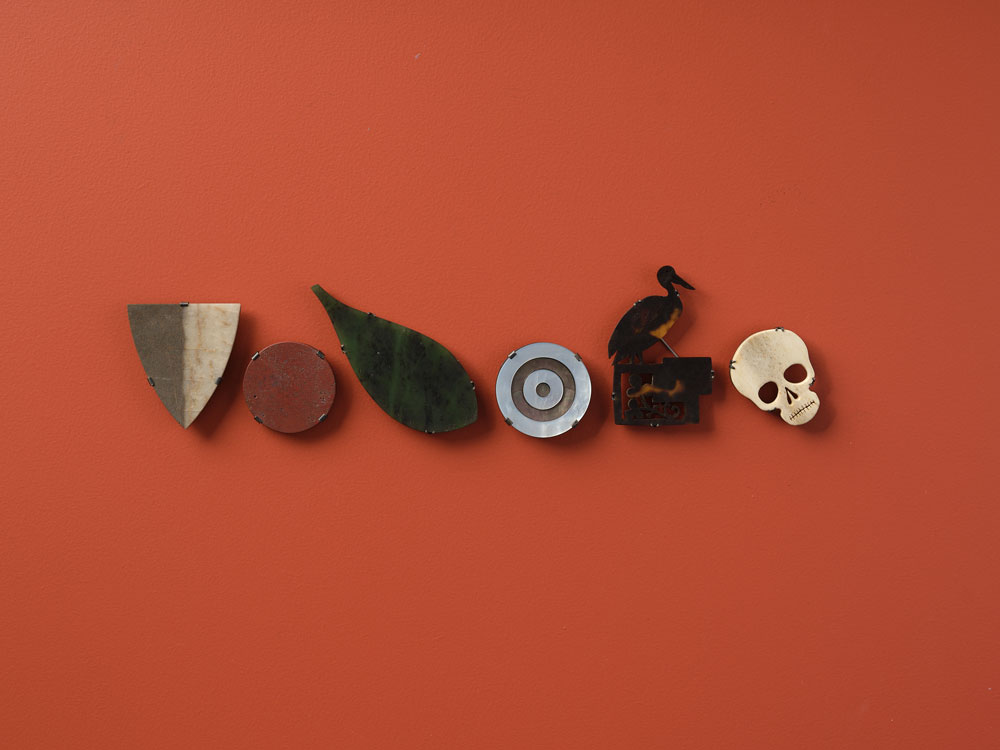
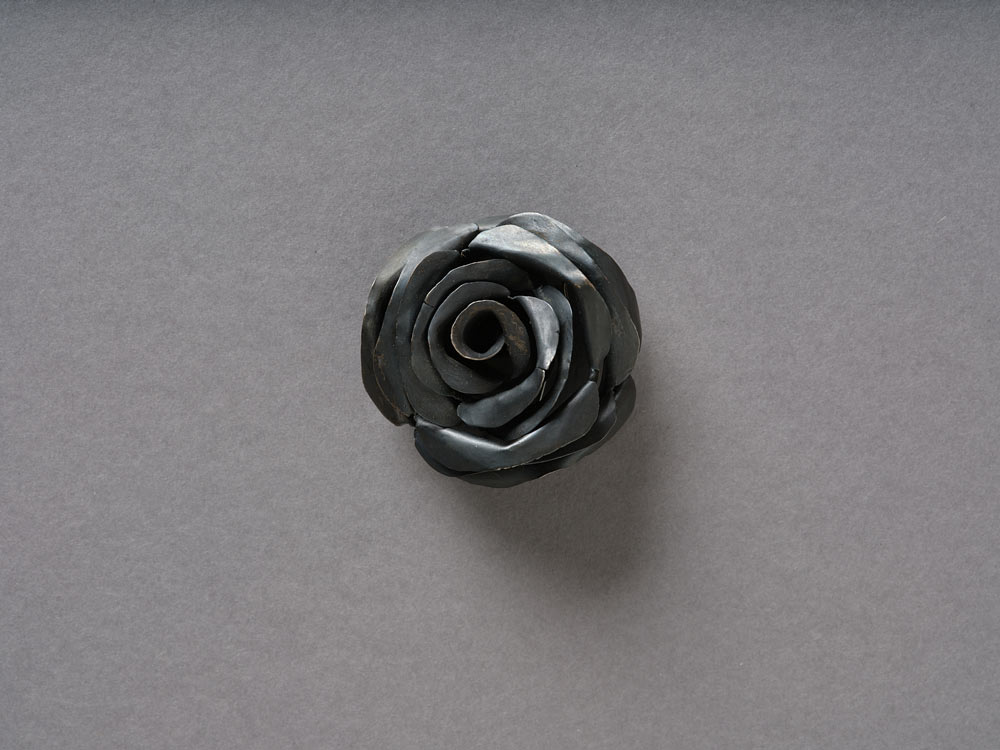
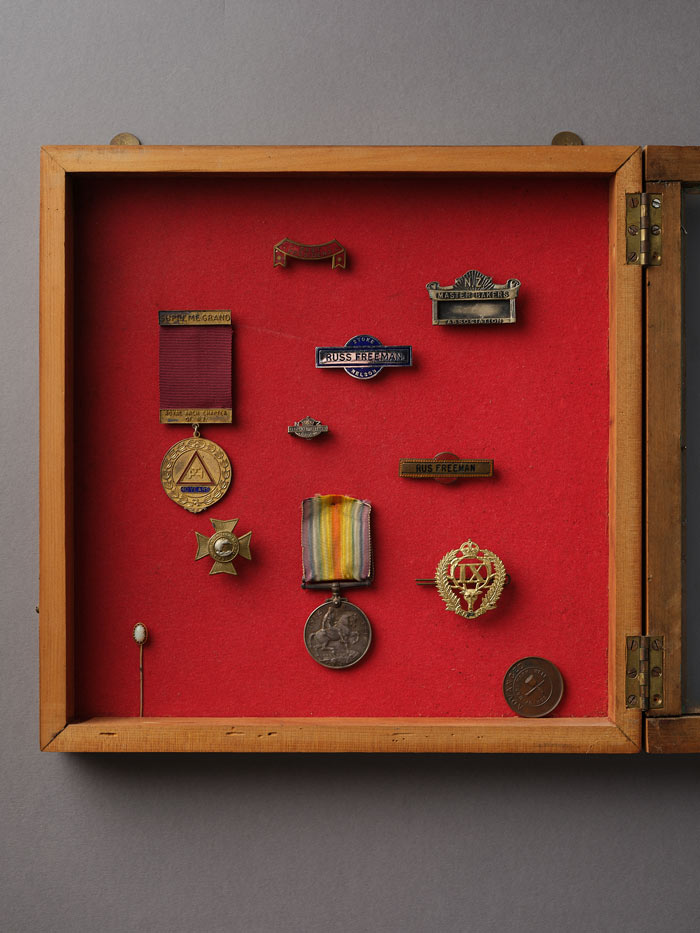
Also displayed on the gallery wall was a list of words [Img.5] – presented in large format and arranged vertically, like a poem – which evokes both the making process, the forms of the jewellery and the exhibition’s underlying structure. Distinguished by their materials and by their pure, organic and readily recognisable forms, the works were shaped through a dialogue with the intrinsic qualities of the materials themselves and the artist’s intuitive manual intervention [Img.8]. Most take the form of emblems [Img.9]. In the essay ‘Owner’s Manual’, Julie Ewington describes these emblems or symbols as ‘minor miracles of compression. They speak with forceful economy about shared ideas and commitments, even (especially) those which have not yet found their voice’ (Ewington, 1995). She also reflects on those who wear these symbols, more specifically on the meaning that Freeman’s jewellery holds for its owners. Both are revealed through her text and Patrick Reynolds’s photographs. Yet, contrary to what one might expect, the jewellery appears with remarkable restraint and discretion, much like the artist himself during the guided visit. Its wearers are often seen from afar, set within the landscape or in other everyday contexts, while the jewellery itself appears as a subtle sign upon the body – a marker of identity. Experiencing Freeman’s exhibition at the Pinakothek der Moderne was like returning, virtually, to ‘Owner’s Manual’, this time guided by the artist’s own voice, which had previously resonated through Ewington’s writing. In introducing Black Rose, Ewington writes: ‘All flowers must die. After a brief season of splendour, the petals darken and wither and drop in fulfilment of the great preordained cycle. In the midst of life we are in death. […] Black Rose was made in 1990, the sesquicentenary year of the British Treaty of Waitangi with the Maori people of New Zealand. An emblem of mourning, but also a badge for a new life’ (Ewington, 1995). Freeman’s grandfather himself wore emblems that his grandmother bequeathed to him, and in 1985 the artist assembled this collection within a small wooden and glass cabinet lined with red felt, presenting these objects as relics under the title My Grandfather’s Jewellery [Img.11]. This work was included in the exhibition Share of Sky: Emblems 1985–90 at the Dowse Art Museum, where Freeman wrote in the accompanying exhibition notes:
I’m sure he wouldn’t have considered these pieces jewellery, but for me they belong to a very strong jewellery tradition – that of creating emblems; emblems that denote membership to a particular group, ranking within that group & also the honouring of its individuals. (Freeman apud Paton, 2025, p. 31)
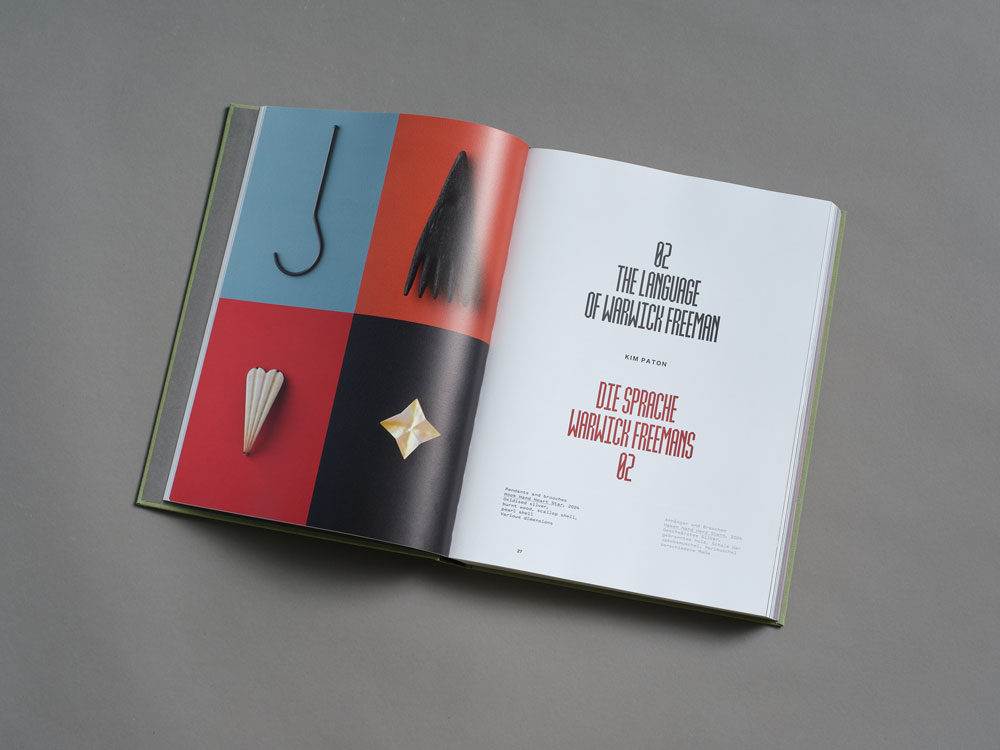
The title of the exhibition, Hook Hand Heart Star, refers to four recurring symbols in Freeman’s jewellery, whose combined image appears both in the exhibition catalogue [Img.12] and on the gallery walls. This is not the place to speculate on the reasons that led the artist to adopt these motifs, yet, like Black Rose, each of them carries a specific meaning. As Freeman himself remarked during the guided visit, ‘Some ideas are so obvious that they don’t need any explanation.’ As Kim Paton observes in his essay, Freeman often leaves it to the viewer to discover their own meaning (Paton, 2025, p. 44). Freeman’s work explores the construction of identity by intertwining personal and historical narratives. Drawing on everyday materials, the legacy of New Zealand’s colonisation and the country’s geology as sources of inspiration, Hook Hand Heart Star brings together installations, striking groupings and the emblematic series known as Sentences, revealing an artistic practice that continues to evolve. (Medieninformation, 2025). In 1998, the New Zealand historian David Skinner, the first scholar to write about Freeman’s work, drew particular attention to the artist’s origins, his cultural background and the significance of local materials (Skinner, 2004). The exhibition itself confirms this perspective, as stated in its introductory text:
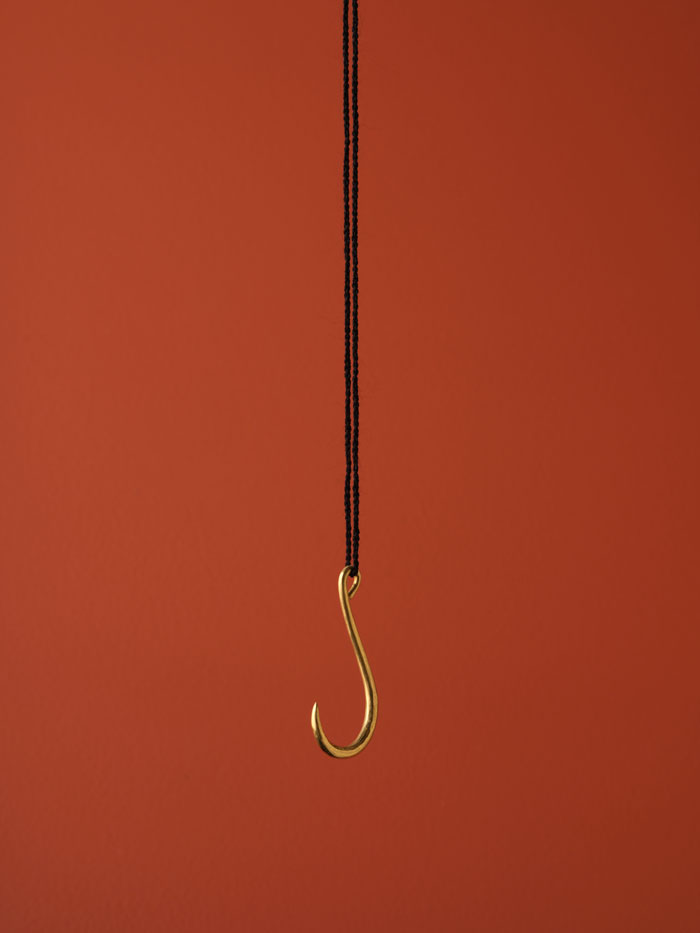
Across five decades the New Zealand jeweller has built a lexicon of signs: from the cultural symbolism of the hook [Img.13] and the star to the heart redrawn in the volcanic scoria of Rangitoto island. When worn, his jewelry communicates something of who we are and how we have lived. Throughout his career Freeman has never tired of exploring what it means to make jewelry in Aotearoa New Zealand. (About the Exhibition, 2025)
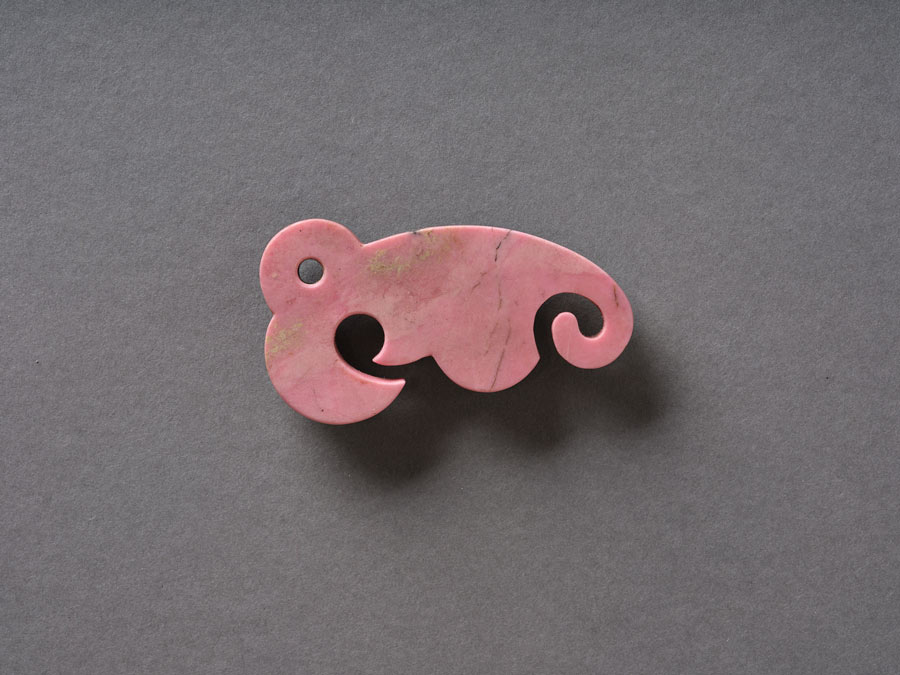
Further insight into the interpretation of Freeman’s work can be found in Karl Chitham’s essay ‘When Is a Hook a Hei Matau?’, included in the exhibition catalogue. Reflecting on Pink Monkey Bird (2020, p. 102) [Img.14], Chitham writes:
This brooch is an example of the human brain’s fascinating ability to try to make meaning out of what is in effect a nonsensical collection of shapes. To some degree this piece is closely aligned with the problems identified by Austrian philosopher Ludwig Wittgenstein, and his musings on the now famous rabbit-duck illusion. Wittgenstein was interested in the correlation between seeing and interpreting, and the way in which we individually attribute meaning to an object or image. He called this the ‘aspect perception’ and suggested that while we may attribute the same perception of a thing, we each also bring different ‘aspect’ to our reading of it. Regardless of Freeman’s influence or intention for the work, it is the viewer’s personal prejudice and related life experiences that dictated whether they see a manaia made from Otago rhodonite (incidentally the region associated with many early Māori rock drawings featuring various bird-like forms), or a pink monkey bird, or something else entirely. (Chitham, 2025, pp. 103-104)
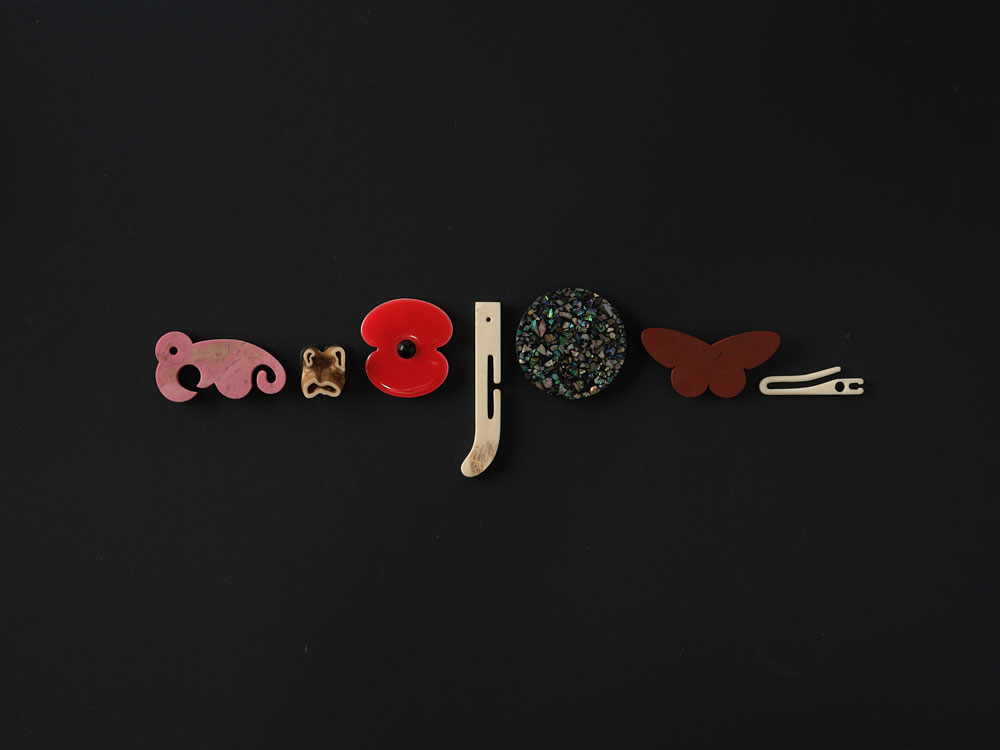
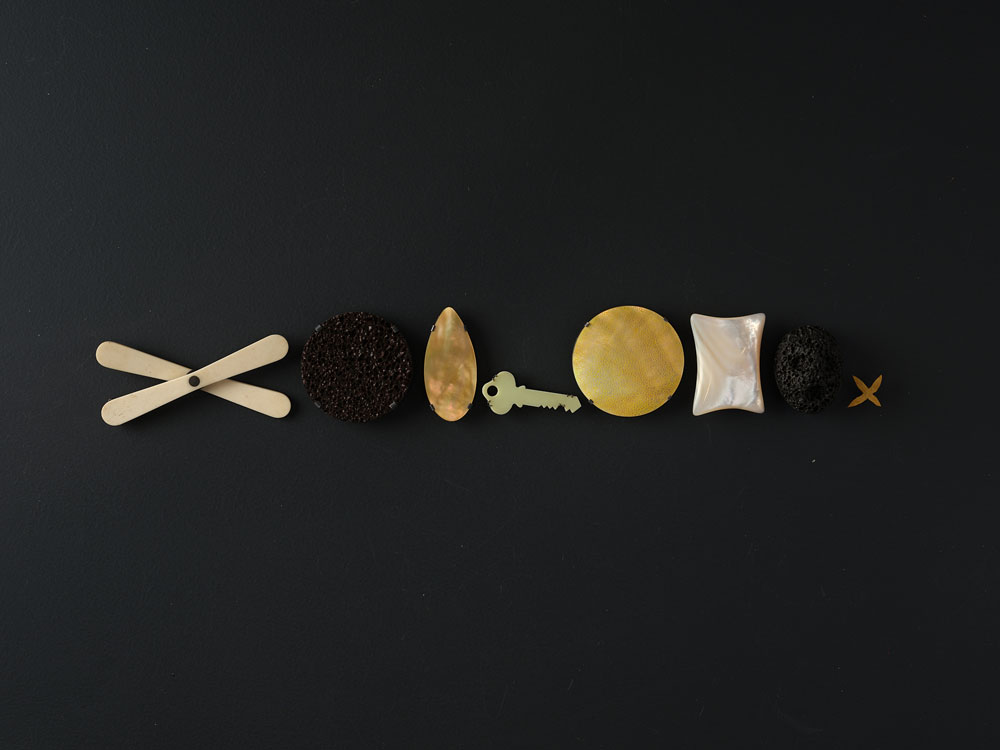
As already noted, Hook Hand Heart Star does not follow a chronological sequence. Instead, the exhibition is structured around a list of twenty-four words that serve as a guide to its exhibition design: ‘Old School’, ‘Emblem’, ‘Pākehā’, ‘Flora’, ‘Found’, ‘Museum’, ‘Bird’, ‘Face’, ‘Heart’, ‘Pillow’, ‘Star’, ‘Ring’, ‘Circle’, ‘Appropriation’, ‘Wall Work’, ‘Hand’, ‘Place’, ‘Arm’, ‘Hook’, ‘Old Brain’, ‘Beadwork’, ‘Myth’, ‘Pattern’, and ‘Sentences’ [Img.5]. The groups defined by these words bring together works from different periods. According to the artist, the list could easily have included other terms, highlighting the versatility – or, indeed, the ‘intentional ambiguity’ – of his work (Chitham, 2025, p. 104). Themes and forms recur across different moments in his career. Symbols are repeated throughout the ‘sentences’, functioning almost like a mantra [Img.15]. The artist typically develops at least three variations of each symbol over time. These motifs carry emotional, political, social and aesthetic associations, reflecting both their significance within the traditions of his culture and the ways in which Freeman has continued to engage with them throughout his artistic practice. In his essay ‘The Novelty of Our Own Situation’, Freeman wrote:
I get my permission to make jewellery from those that have made jewellery before me. I take permission from the society I work within; the world that surrounds and influences me. And somewhere in that mix I can even identify permission that might be something to do with my own voice – a piece became a piece when I say so. But always it is the result of accumulated voices – some saying yes, you can, and some saying no you can’t. Finally, you listen to your own voice, but not without having heard the others (consciously or unconsciously). (Freeman, 1999, p. 70)
During the guided tour and in his essay ‘The Workshop: A Memoir’, included in the exhibition catalogue (Freeman, 2025, p. 83), the artist emphasised the interdisciplinary nature of his practice, noting that the elements composing the Wall Work installations could be regarded as jewellery when worn on the body, or as paintings in their present arrangement. Within contemporary art, the boundaries between traditional categories are frequently transgressed, giving rise to new reflections and questions rather than conforming to the conventions derived from the etymology of the terms used to define them. In the essay ‘The Language of Warwick Freeman’, mentioned earlier, Kim Paton observes that ‘his breadth of interest and curiosity across creative disciplines – craft, fine art, architecture – is evident in his jewellery. Freeman gives equal weight to the craft of making, the act of wearing, and the theoretical heavy-lifting of his work, and it is particularly evident in his sentences and Wall-based installations.’ (Paton, 2025, p. 45). Freeman’s retrospective broadens our understanding of his work, resisting interpretations confined to material, form or disciplinary boundaries. The artist’s acts of transformation are explored throughout the exhibition and articulated in his essay, where he writes:
The act of transformation that can take place with very simple actions. A fundamental action like drilling a hole (as in the panels in Dust) [Img.16] is one of the earliest technical skills we developed. That simple action, by creating a point of suspension, can make any material a piece of jewellery. That technique is probably why jewellery is so prominent in our early material culture. (Freeman, 2025, p. 84)
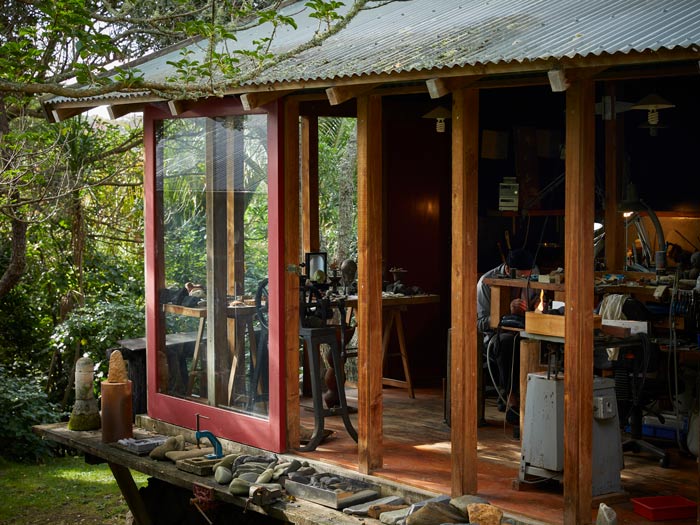
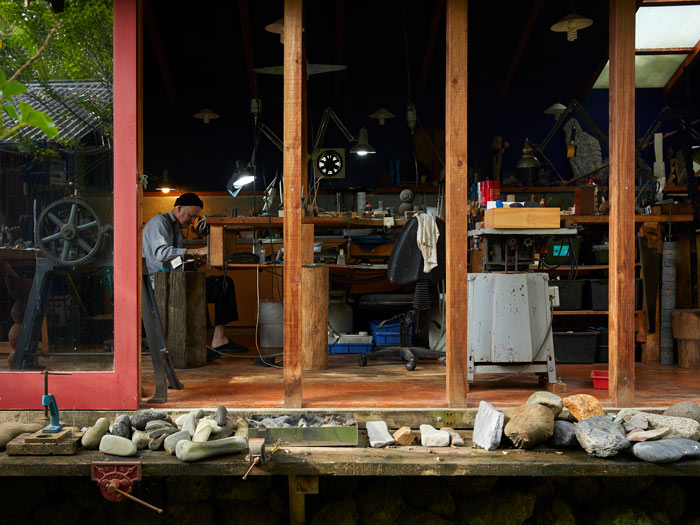
The exhibition not only highlights the artist’s modus operandi and the context in which his works are made [Img.17] [3], but also reveals the artists whose voices resonate at his workbench – Hermann Jünger, Otto Künzli (Switzerland, 1948), Onno Boekhoudt (The Netherlands, 1949–2002), Dorothea Prühl (Germany, 1937), Kobi Bosshard (New Zealand, 1939), and Alain Preston (New Zealand, 1941) are among the voices he – and we – listen to (Freeman, 2025, p. 87). The accompanying catalogue – with its outstanding essays, photography and graphic design — is an invaluable resource for further study. Like the exhibition itself, it is exemplary.
Cristina FilipeShe holds a PhD in Heritage Studies from the Catholic University of Porto – School of Arts (2018) and is a researcher at the Centre for Research in Science and Technology in the Arts (CITAR) at the same School. She holds a Master’s degree in Arts and Design from the Surrey Institute of Art & Design (2001), having received scholarships from the Foundation for Science and Technology and the Calouste Gulbenkian Foundation, respectively. She studied jewellery design at Ar.Co – Centre for Art and Visual Communication (1984–1987), the Gerrit Rietveld Academie (1987–1988) and the Royal College of Art (1992). She taught on the jewellery course at Ar.Co (1989–2015), which she directed between 2004 and 2015, and at ESAD – Escola Superior de Artes e Design, Matosinhos (2001–2007). Since 1998, she has been a visiting lecturer and artist at numerous international schools and has served as an examiner for several master’s and doctoral theses. She received the Susan Beech Mid-Career Artist Grant from the Art Jewelry Forum (2017) to produce the book Contemporary Jewellery in Portugal. From the 1960s Avant-garde to the Early 20th Century (2019). She has exhibited internationally since 1984 and her work is held in public and private collections. Since 2005, she has been a programme organiser and curator of exhibitions, symposia and colloquia. She founded and served as chair of the board of PIN – the Portuguese Association of Contemporary Jewellery (2004–2023). She was the creator and chief curator of the 1st Lisbon Biennial of Contemporary Jewellery – Suor Frio (2021). She is the author of several articles and essays, the editorial and academic coordinator of the book/catalogue Suor Frio (2022), and the creator and academic coordinator of the Imprensa Nacional’s ‘J’ collection – the first volume (Tereza Seabra) was launched in October 2024.
:::
Notes [1] The exhibition is the result of a collaboration between Warwick Freeman, Objectspace and Die Neue Sammlung – The Design Museum. Following its presentation in Munich, it will travel to Objectspace in Auckland in December 2025 and to the Dowse Art Museum in Wellington in July 2026. The exhibition is supported by H.E. Craig John Hawke, New Zealand Ambassador to Germany, and by the Blumhardt Foundation (New Zealand), Creative New Zealand, the Museumsstiftung zur Förderung der Staatlichen Bayerischen Museen – Vermächtnis Christof und Ursula Engelhorn, and The Stout Trust (New Zealand).
References About the Exhibition, Warwick Freeman. Hook Hand Head Star in https://www.pinakothek-der-moderne.de/en/exhibitions/warwickfreemann/, /, accessed on 31 August 2025.
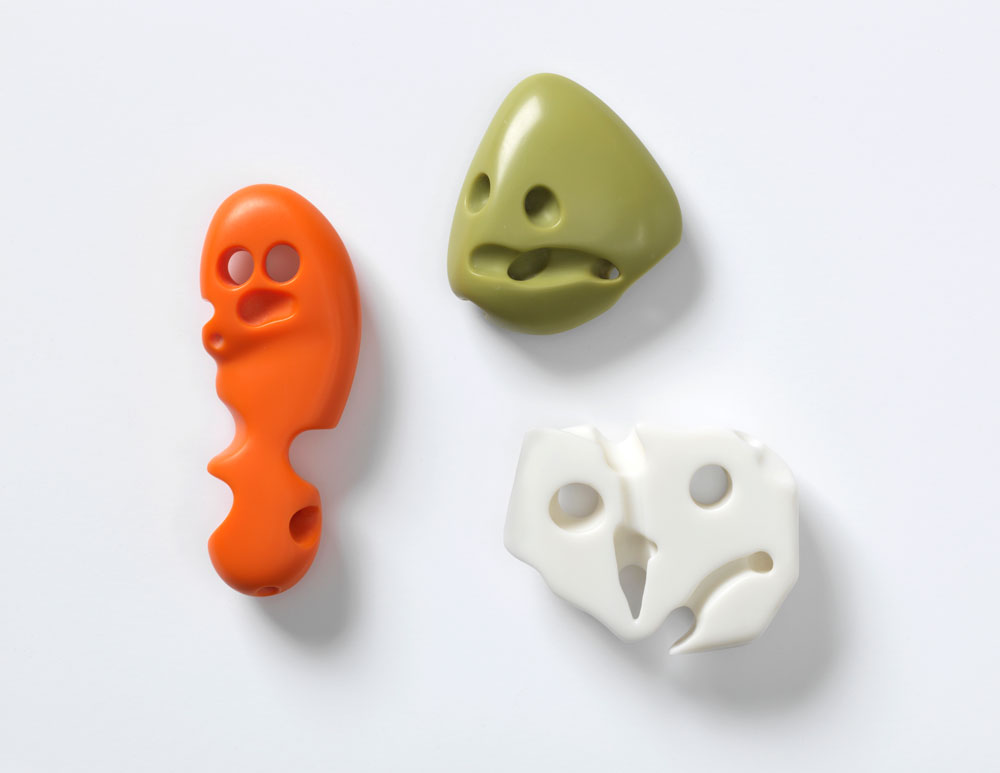
Complete Captions 1. Warwick Freeman, collage, 1988. Published in Bone Stone Shell: New Jewellery New Zealand, edited by Geri Thomas for the exhibition of the same title at the Crafts Council Gallery, Wellington. Courtesy: The artist and Objectspace. 2. Warwick Freeman, Hook Hand Heart Star, 2025. Exhibition view, Pinakothek der Moderne, Munich. Courtesy: Objectspace and Die Neue Sammlung – The Design Museum. Photograph: Kai Mewe. © Die Neue Sammlung – The Design Museum. 3. Warwick Freeman, Hook Hand Heart Star, 2025. Exhibition view, Pinakothek der Moderne, Munich. Courtesy: Objectspace and Die Neue Sammlung – The Design Museum. Photograph: Kai Mewe. © Die Neue Sammlung – The Design Museum. 4. Warwick Freeman, Hook Hand Heart Star, 2025. Exhibition view, Pinakothek der Moderne, Munich. Courtesy: Objectspace and Die Neue Sammlung – The Design Museum. Photograph: Kai Mewe. © Die Neue Sammlung – The Design Museum. 5. Warwick Freeman, Hook Hand Heart Star, 2025. Exhibition view, Pinakothek der Moderne, Munich. Courtesy: Objectspace and Die Neue Sammlung – The Design Museum. Photograph: Kai Mewe. © Die Neue Sammlung – The Design Museum. 6. Warwick Freeman, Hook Hand Heart Star, 2025. Exhibition view. WALL WORK: A Different Red / A Different Black (detail), 1999–2013. Pinakothek der Moderne, Munich. Photograph: Cristina Filipe. 7. FACE: White Ghost, Green Ghost, Orange Ghost, 2003. Brooches. Corian and steel. Various dimensions. Courtesy: Die Neue Sammlung – The Design Museum. Photograph: Die Neue Sammlung – The Design Museum (Alexander Laurenzo). 8. WALL WORK: Red Shell, 2014. Pendants. Mother-of-pearl shell and paint. 100 × 120 cm. Courtesy: The artist and Objectspace. Photograph: Sam Hartnett. 9. EMBLEM: Insignia, 1997. Brooches. Sandstone, quartz, jasper, nephrite, mother-of-pearl shell, turtle shell, bone and silver. Various dimensions. Collection: Schmuckmuseum, Pforzheim. Courtesy: The artist and Objectspace. Photograph: Sam Hartnett. 10. PĀKEHĀ: Black Rose, 1990. Brooch. Oxidised silver. 5 × 4.7 cm. Photograph: Sam Hartnett. Courtesy: The artist and Objectspace. 11. My Grandfather’s Jewellery, 1985. Photograph: Sam Hartnett. Courtesy: The artist and Objectspace. 12. Warwick Freeman, Hook Hand Heart Star. Book. Published by arnoldsche Art Publishers, 2025. Photograph: Sam Hartnett. Courtesy: The artist and Objectspace. 13. Arrow Hook, 2008. Pendant. Gold. Photograph: Sam Hartnett. Courtesy: The artist and Objectspace. 14. Pink Monkey Bird, 2020. Brooch. Otago rhodonite. 3.5 × 6.3 × 0.5 cm. Collection: Rae-ann Sinclair, Lake Hāwea and Sydney. Courtesy: The artist and Objectspace. Photograph: Sam Hartnett. 15. Sentence, 2024. Installation. Pink Monkey Bird, Face Ache, Poppy, Hanger Hook, Pāua Brooch, Red Butterfly, Apron Hook, Cross Bones, Lava Brooch, Lamp, Key (Yale), Gorse Brooch, Pearl Pillow, Fella, Starling. Various materials and dimensions. Photograph: Sam Hartnett. Courtesy: The artist and Objectspace. 16. Dust (detail), 2011. Wall work. Pressed wood, synthetic, natural and metallic dusts, binder. 100 × 120 cm. Photograph: Sam Hartnett. Courtesy: The artist and Objectspace. 17. Warwick Freeman’s Ngataringa Bay Workshop, 1978–2019. Photographs by Sam Hartnett, 2019. Curated by Objectspace. Courtesy: The artist and Objectspace.
Dr Petra Hölscher and Michaela Klaube, Die Neue Sammlung – The Design Museum, München; Victoria McAdam and Scarlett Robinson-Kean, Objectspace, Auckland, Liesbeth den Besten and Saskia Kolff-van Es. |