

|
|
COIMBRA BIENNIAL, ANOZERO™26 JAMES MAYOR2026-04-29
The Coimbra Biennial Anozero’26 launch coincided with publication of the April edition of Artforum, ‘Whither Biennials? On the Crisis of Global Art’. With these large-scale exhibitions of contemporary art currently coming in at 300 – 400 worldwide and growing, the edition discusses how biennials might become more sustainable, equitable and meaningful. The series of articles raises questions which include biennials’ relation to commercial art fairs, future place in an increasingly technology driven world, and tendency to give little back to the host city while exacting a high carbon footprint. A former Artistic Director of the Venice Biennale, Daniel Birnbaum’s contribution ‘The biennial as art form in an age of global fatigue’, discusses the shifting infrastructures of contemporary art – cultural, environmental and technological. Today’s globalised art world is multicentric, with a web of production, exhibition and commercialization hubs across all continents, underpinned by compulsive global travel by participants and a boom in cultural tourism. Art world luminaries referencing ‘biennalisation’ point to increasing ‘biennial fatigue’, where ‘exhausted usefulness’ is too often characterised by predictable curatorial choices. It is hard to imagine how this year, with higher air fares induced by the Iran war fuel crisis, biennials can avoid being hit by lower visitor numbers and greater pressure on budgets in a context where sustainable funding is already a challenge. With the shifting global emphasis for biennials from the centre to the periphery, the Coimbra Biennial is strategically located between Portugal’s larger cities of Lisbon and Porto. Founded in 1290, the University of Coimbra is one of Europe’s oldest and Coimbra itself was a major centre of medieval culture. In 2013, this cultural heritage was recognised with the designation of the University of Coimbra – Alta and Sofia as a UNESCO World Heritage Site. In 2015, under the aegis of the Círculo de Artes Plásticas de Coimbra (CAPC), the University established Anozero, distinguished by being the only biennial in the world founded by a university. CAPC Director and a founding Director of Anozero, Carlos Antunes is frank about Anozero’s significance in defining Coimbra as a cultural territory. Anozero’26 is ambitious and has been achieved with a modest budget of € 800,000, with an international platform of three curators and 53 artists, architects and collectives. Hans Ibelings, born in Amsterdam, a publisher and architectural historian, currently Assistant Professor at the Faculty of Architecture, Landscape and Design at the University of Toronto; John Zeppetelli, born in Canada of Italian origins, a filmmaker and former Director and Chief Curator of the Montreal Museum of Contemporary Art; and Daniel Madeira, Coimbra based Assistant Curator, propose a pertinent theme, ‘To hold, to give, to receive’ that reflects today’s zeitgeist of attention to care. Antunes wanted this edition of Anozero to place greater emphasis on architecture. During a conversation at the 2024 Venice Biennale, he introduced the vast 17th century Santa Clara-a-Nova Monastery as the biennial’s central exhibition hub. «There was a general sense of excitement about the historic sites throughout the city. We were fascinated by the infrastructure available to us», Zeppetelli comments. Antunes refers to the biennial creating ways for visitors to become more comfortable with their difference to ‘other’. Through exchange with other countries, ideas percolate, generating curiosity and building trust. «Five years ago, people made a single visit, now we have people who return five or ten times during the three months of the biennial». Madeira, the Assistant Curator affiliated with CAPC - Circulo de Artes Plasticas de Coimbra on the Anozero curatorial team, comments, «being so ancient, the city needs to look to the future. With our links to the University of Coimbra, Anozero fulfils a research function», among which the investigation of experimental living structures and new purposes for historical sites. For Ibelings «we wished to dwell on the importance of being in the world, inhabiting it. Exhibition and habitation share the same Proto-Indo-European etymological root ‘ghabh’, which has a triple meaning, ‘to hold, to give, to receive’». The curators inform us the intention of Anozero’26 is to explore how giving and receiving, giving back, and giving forward take shape in art and architecture, through lenses of symbiosis, mutual aid, generosity and hospitality. He expands «symbiosis is a driving force of evolution, we abide in a symbiotic world and symbiosis generates novelty. To value symbiosis as the foundation for creativity is a rather exceptional viewpoint in a world where economic disruptions are lauded as creative disruption». ‘To hold, to give, to receive’ is intended as an act of resistance to our world of disturbing inequality characterised by the growing appeal of right-wing authoritarian leaders. Anozero’26 blurs lines between disciplines, giving a place to art and architecture that is hospitable and welcoming, and projects that implicitly or explicitly give, give back and give forward.
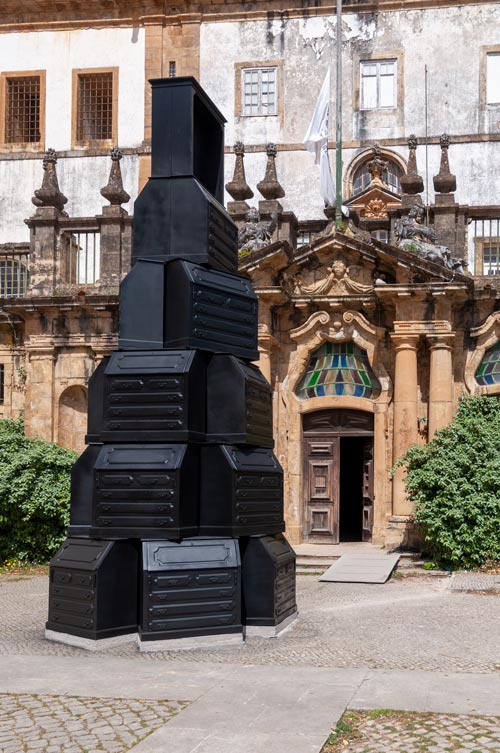
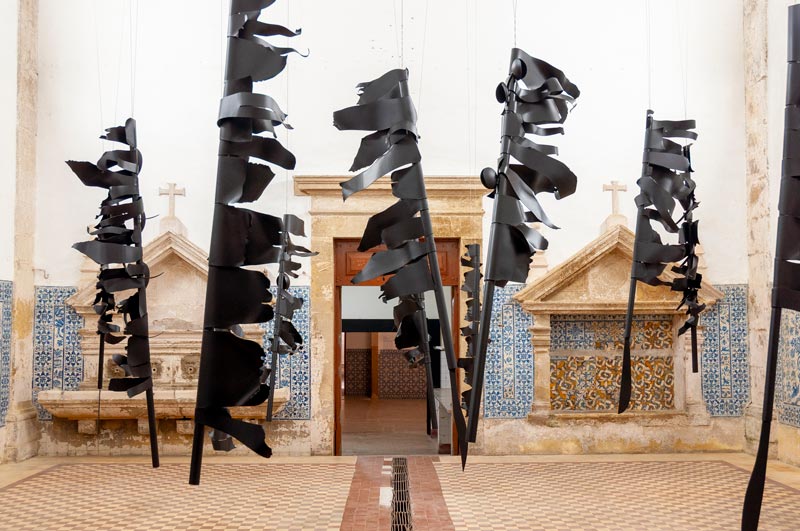
KOSMOS, Monument to the Ordinary, 2026. Anozero'26 © Jorge das Neves
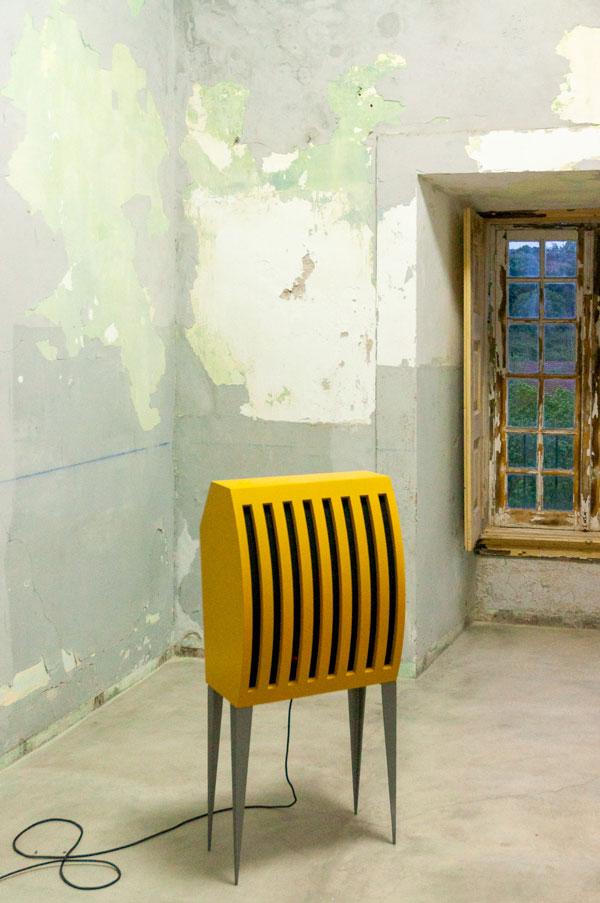
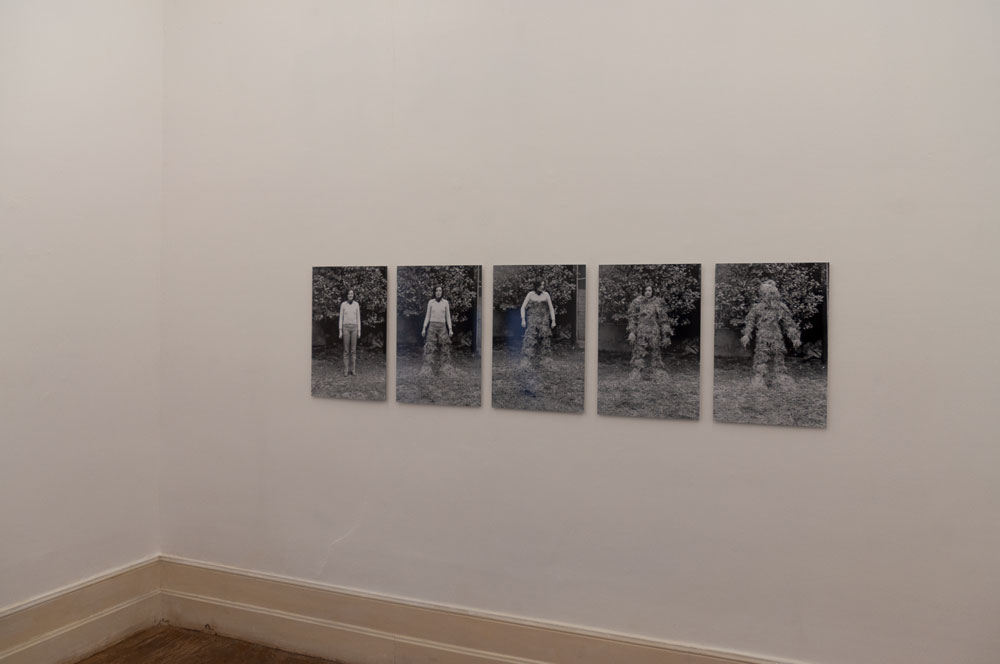
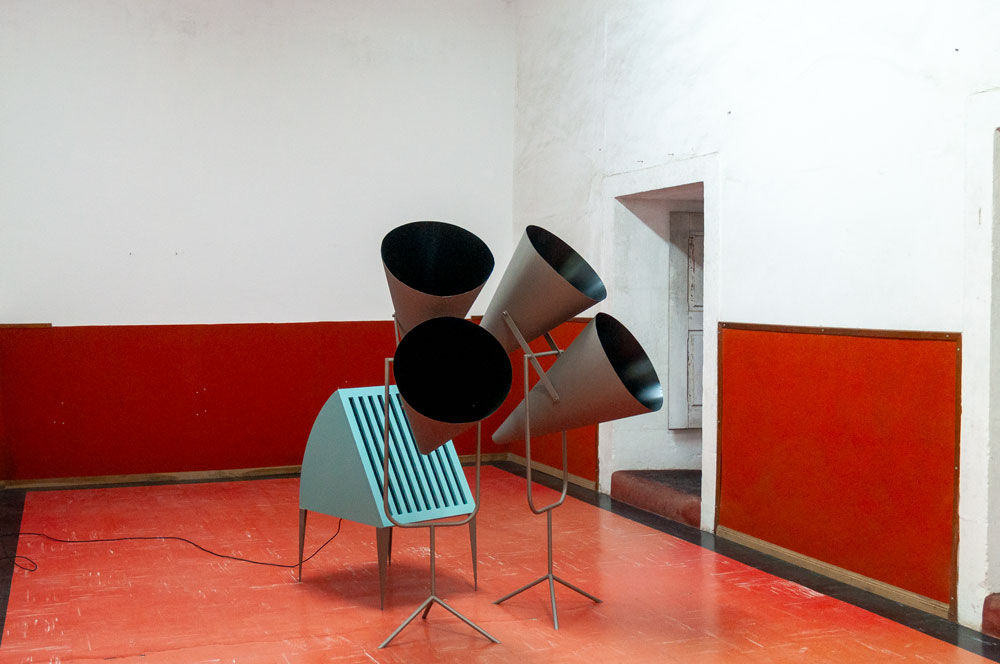
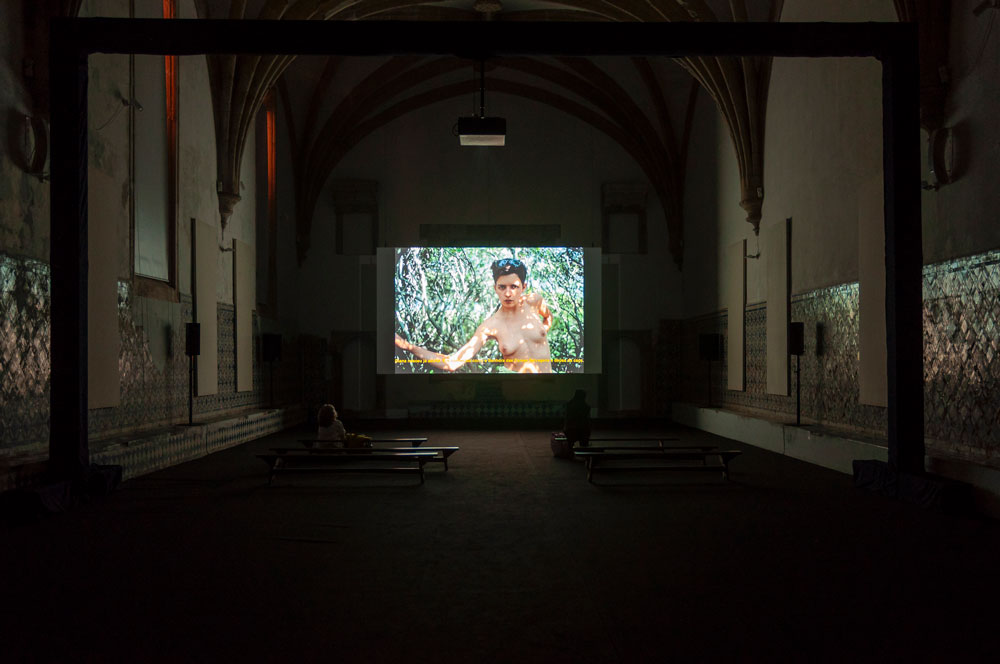
An enormous building, the Monastery of Santa Clara-a-Nova faces the University of Coimbra across the Mondego River and serves once again as the biennial’s most extensive exhibition hub. For two hundred years, the Monastery was austere home to nuns of the Franciscan woman’s order of cloistered contemplatives, the ‘Poor Clares’, before in the 19th century passing to the State following the dissolution of the country’s religious orders, for use as a military barracks. Alarmingly, the convent is once again facing an uncertain future, with a high probability it will soon be repurposed. Under Portugal’s Revive programme, the government has granted development rights to a private company to transform the building into a hotel … an act of gentrification which would represent a giant step backwards for one of Europe’s oldest university cities. Coimbra has a long history of anarchist fraternities, known as repúblicas, providing support for communities such as students. A theme relevant to the present moment, the proposition ‘To hold, to give, to receive’ is sufficiently open to allow for a wide range of different readings. Two theoretical pillars are employed to build greater precision: The Russian anarchist philosopher Peter Kropotkin wrote in Mutual Aid a Factor of Evolution (1902) that cooperation and mutual support are essential for the survival and evolution of all species, a position which challenged the Darwinian belief in competition as the primary driver of evolution. His work influenced important architects such as Ebenezer Howard, the British urban planner and founder of the Garden City movement. Lynn Margulis, an American evolutionary micro-biologist, worked from the 1960s onwards on the significance of symbiosis in evolution. On the upper floor of the Monastery, Ibelings lays out a theoretical framework, bringing in anarchist thinkers, architects and urban planners to map pathways for living together and sharing resources: Leberecht Migge, a pioneering German landscape architect and social reformer, who produced an early plea for greening the city of Berlin; Mikhail Okhitovich, a Soviet sociologist and town planner; the British architect and theorist F.C. Turner, who worked in Peru supporting people building homes and settlements; Colin Ward, a British builder and writer; the German Erwin Gutkind, who influenced a generation of young British architects and planners after World War II, proclaiming «the end of cities means the rise of communities», among others. This adjoins a space, in which children (and adults) can construct and reconstruct the structures of their dreams. In Xenia Ibelings has invited ten Portuguese architecture studios to reflect on the Greek theme with its triple meaning of guest, host and stranger, examining how architecture can embrace the three categories of user. Many of the exhibitions in the Monastery are of Portuguese artists, curated by Daniel Madeira: Two works by Luisa Cunha are shown across the biennial: Hello! Conceptual, provocative and welcoming, in the Monastery, with a second work in the Cold Greenhouse of the Botanical Garden that explores the sculptural potential of the spoken word. The Listening Machine of three sculptural sound pieces by Vasco Araújo create a self-questioning dialogue, which includes a child’s voice disconcertingly asking adult questions.
Vasco Araújo, Máquina de Escuta #2 (Listening machine #2), 2021. Anozero'26. © Jorge das Neves
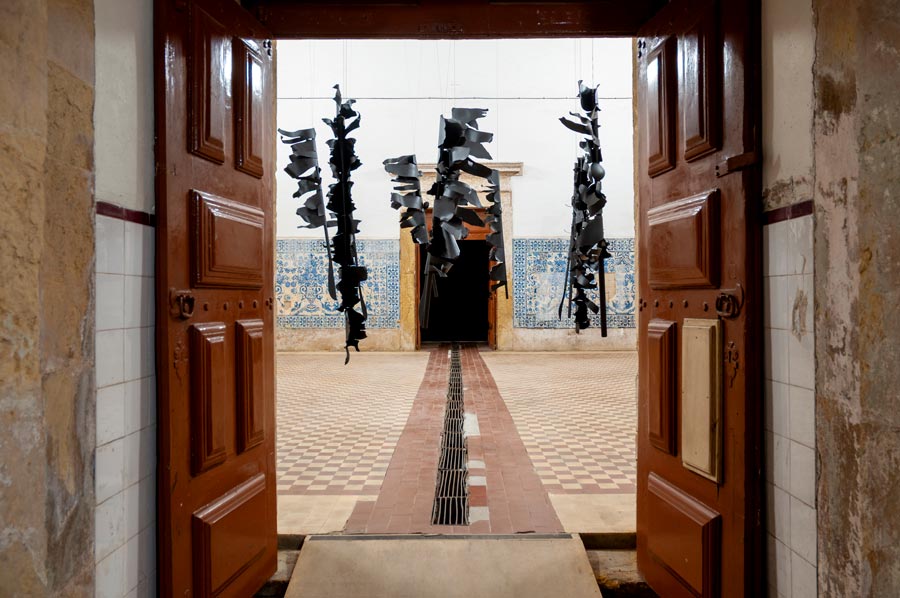
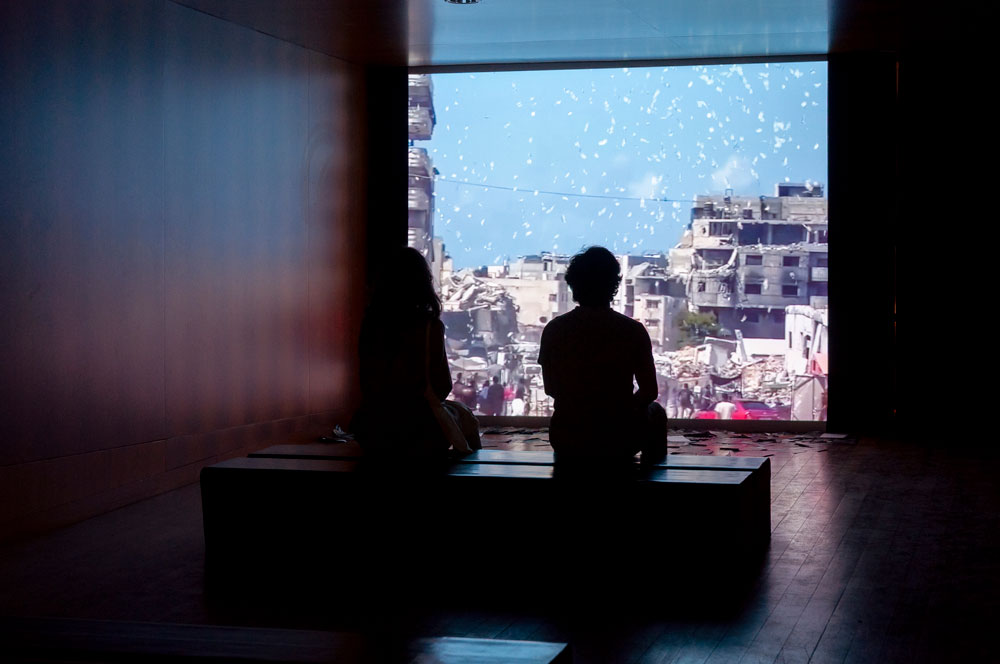
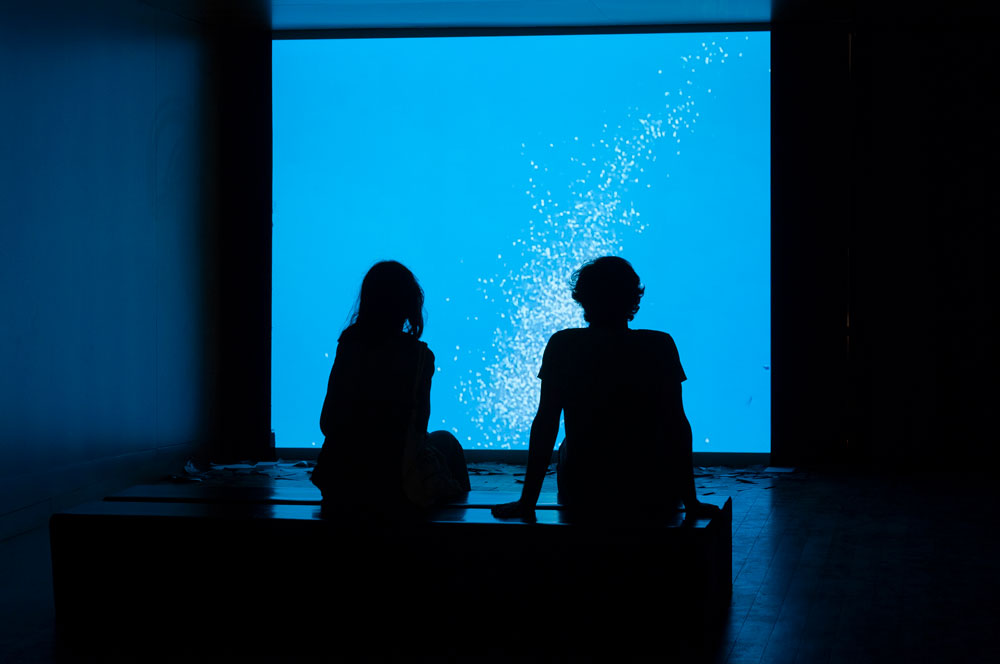
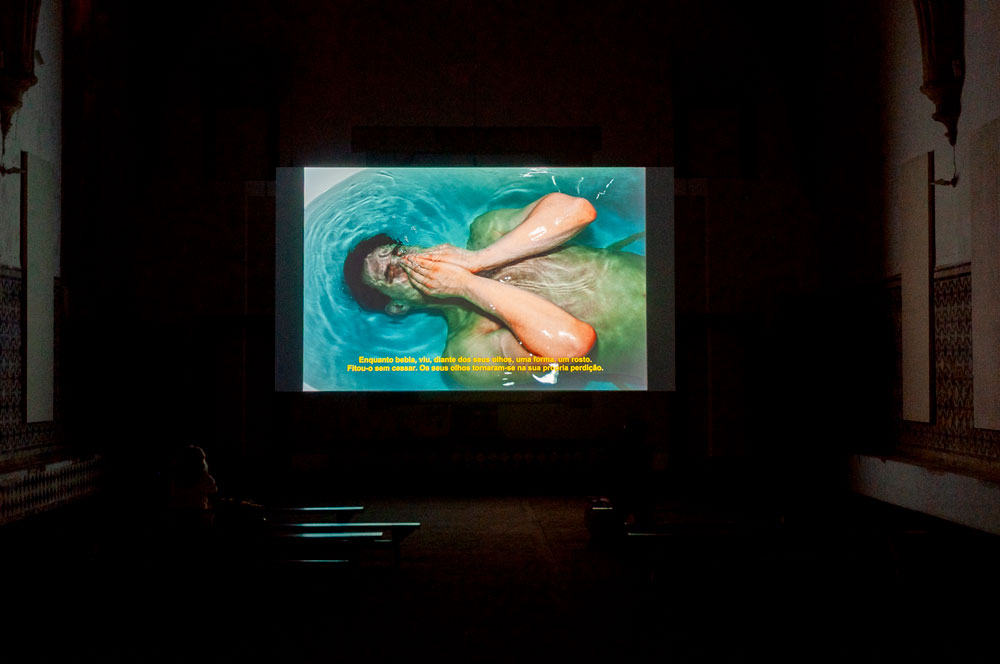
Indian artist Shilpa Gupta’s kinetic sculpture Untitled reflects on the erasure of voices and ideas. A microphone moving through the space recites the names of one hundred poets detained or disappeared at different periods by their governments, forming an archive of state violence that testifies to the fragility of the individual voice. Three films by Spanish architect, artist and filmmaker Arturo Franco, who has had a career in the conservation and restoration of historic heritage, align with the biennial’s emphasis on traditional and collective labour, collective knowledge and the act of ‘holding’ a built environment across time. In Portuguese artist Rui Chafes’, I Believe in Everything, black iron wings reject excess to ascend to more elevated ethical spaces, in an exploration of spirituality and transcendence balancing weight and lightness, against a despondent soundtrack by Candura. Extending from the entrance to the Monastery, the elongated 200-metre barrel-vaulted main corridor, conduit to the ensuing exhibitions, shows a visceral participative piece about bereavement Start Again the Lament by American artist Taryn Simon. Visitors proceed in a state of growing disorientation along the pitch-dark corridor towards a vertical neon strip. Simon’s piece wraps us in sensations of bereavement experienced during forced adaptation to unfamiliar unbearable realities. As the visitor gropes their way down the corridor, they are immersed in soundtracks pouring from the nun’s cells. Professional mourners, employed to give shape and form to grief, from fifteen different cultures, cry out their lamentations and transform the corridor into a resonant chamber of mourning. Simon’s work serves as an emotional bridge to a series of works about the experiences of civilians in Gaza, shown at Círculo Sereia, and curated by John Zeppetelli. The multidisciplinary architectural research practice, Forensic Architecture, based at Goldsmiths, University of London, investigates human rights violations and environmental crimes around the world through forensic examination of the built environment. Forensic Architecture’s founder, Eyal Weizman, is an Israeli Jew who has written a PhD thesis on the architecture of occupation. Forensic Architecture has methodically documented multiple military and eco-genocidal assaults on Gaza, including systematic destruction of life-sustaining conditions, by the Israel Defense Forces since the start of the October 2023 war, using tools such as modelling and spatial analysis. In Cartography of Genocide Weizman gathers open call cell phone footage of Israeli evacuation orders in Gaza. Like malevolent swarms of birds, the orders descend from planes and drones giving civilians an hour to leave, an absurdly cynical timeframe. The orders lie on the gallery floor, challenging our war fatigue. In a related video Weizman interviews a young couple who have been displaced multiple times. A virtual map of their repetitive circular displacements accompanies an excruciating first-person account. On a black screen a sound wave culminates in torture. Weizman has been banned from the United States for his work.
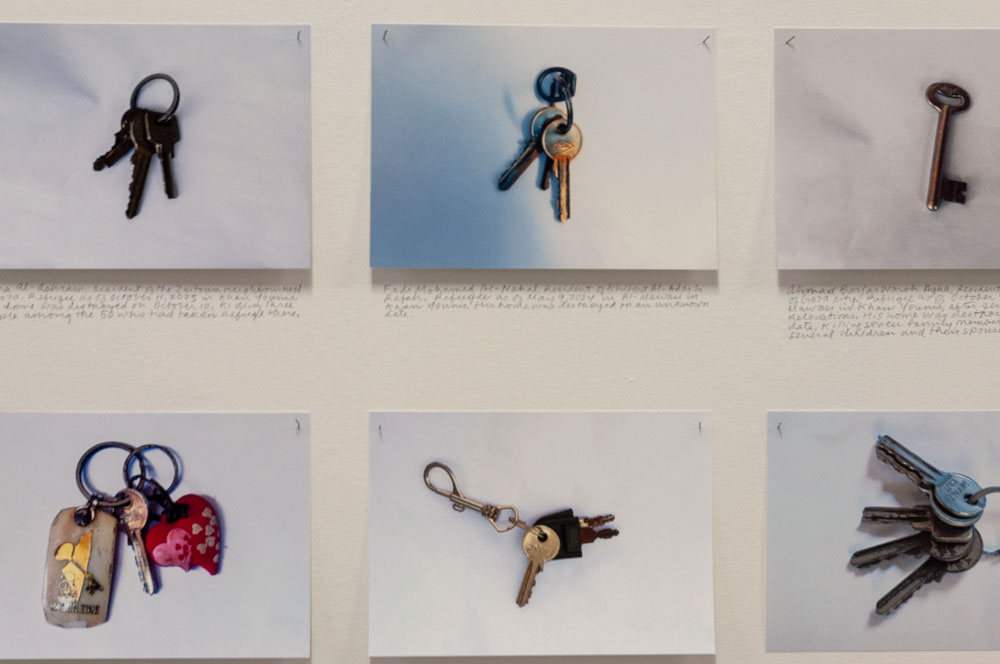
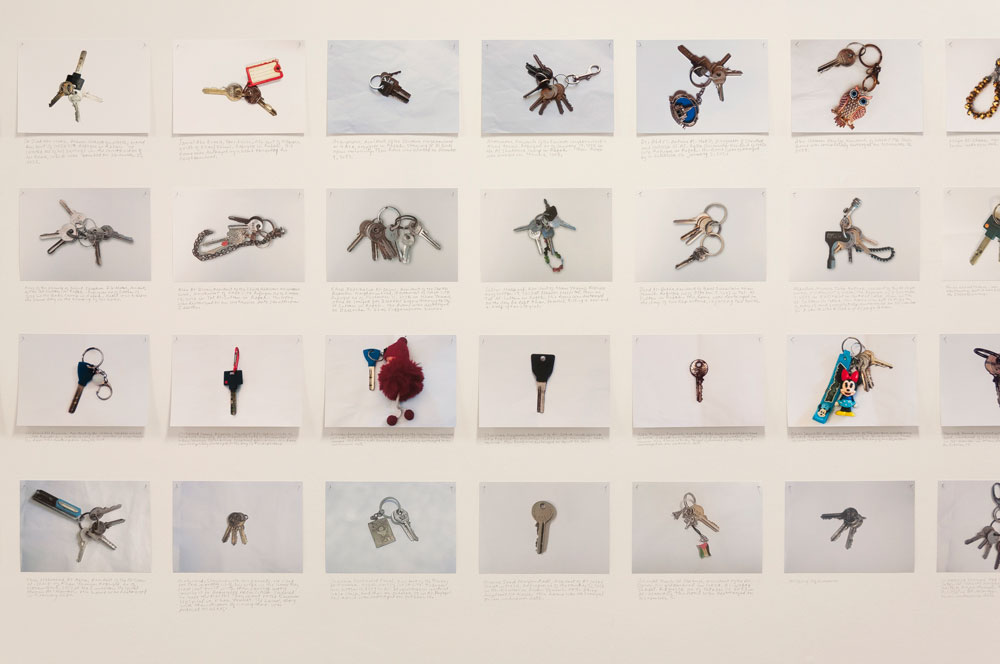
Taysir Batniji, Just in Case #2, 2024. Anozero'26, © Jorge das Neves
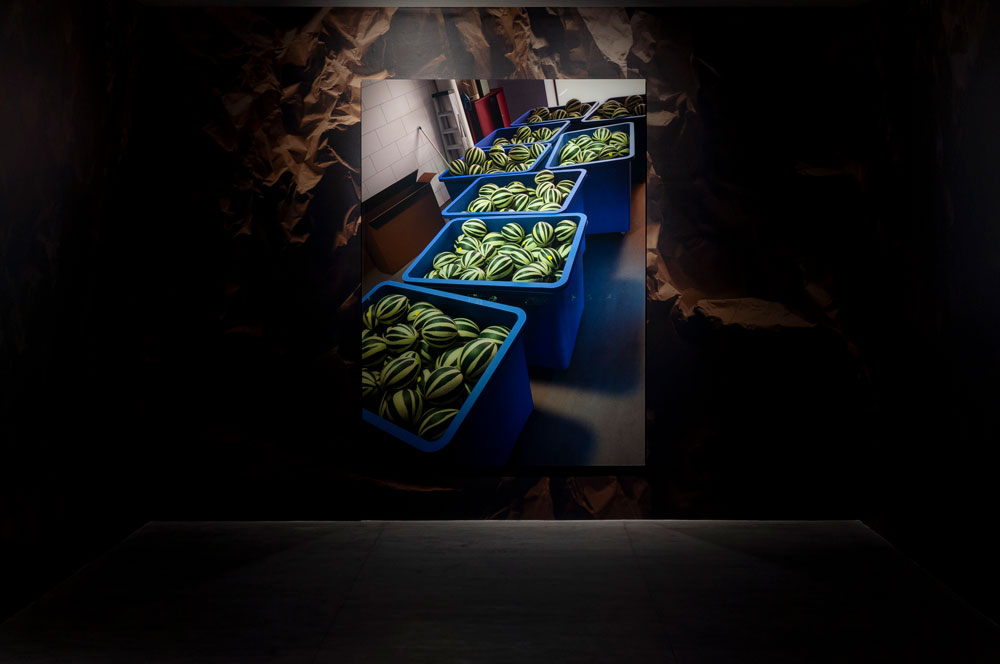
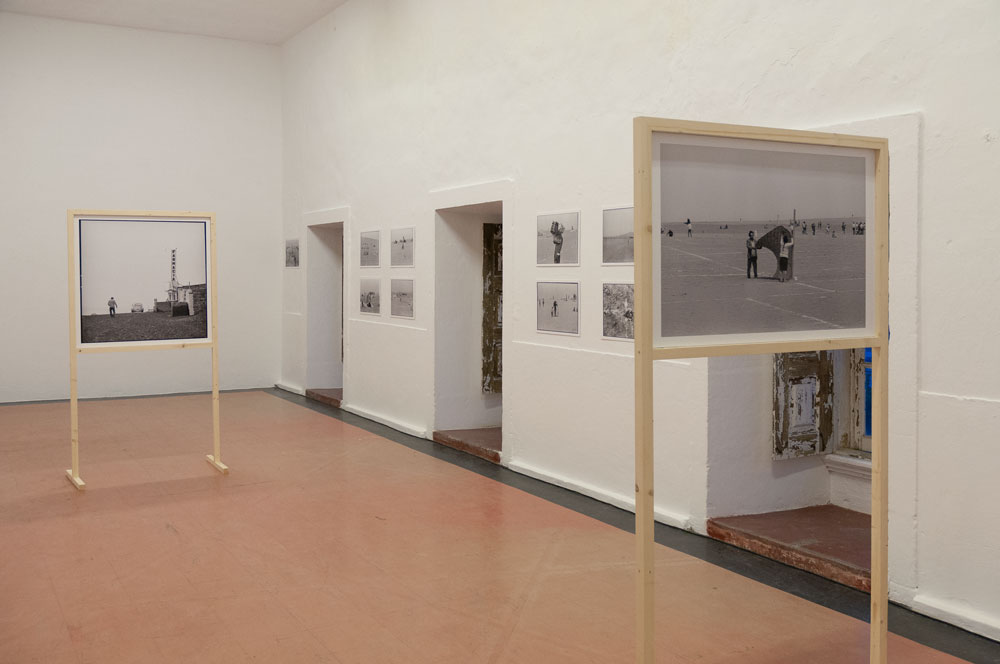
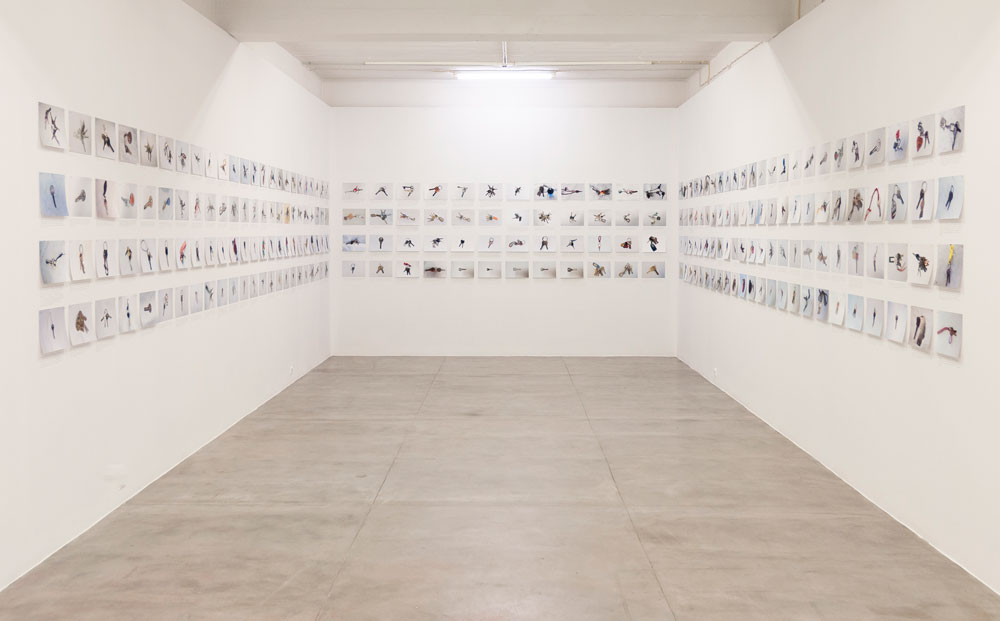
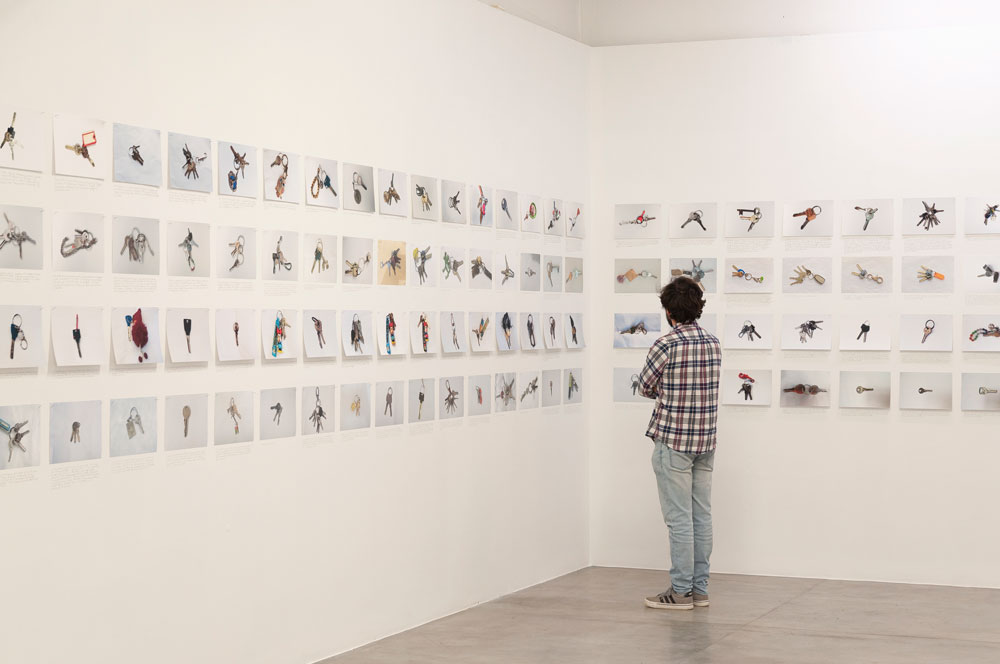
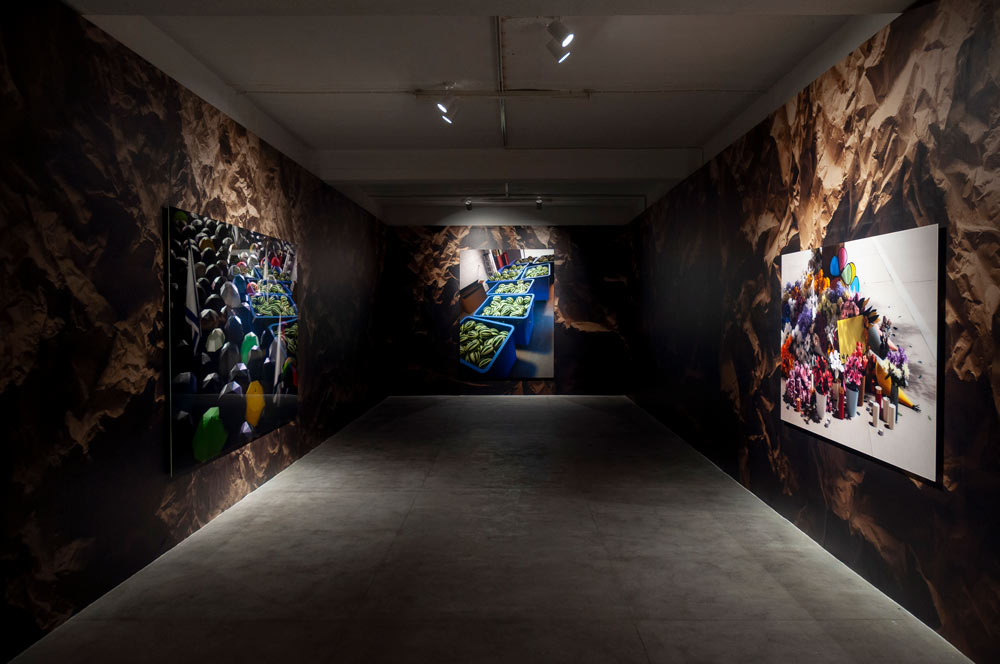
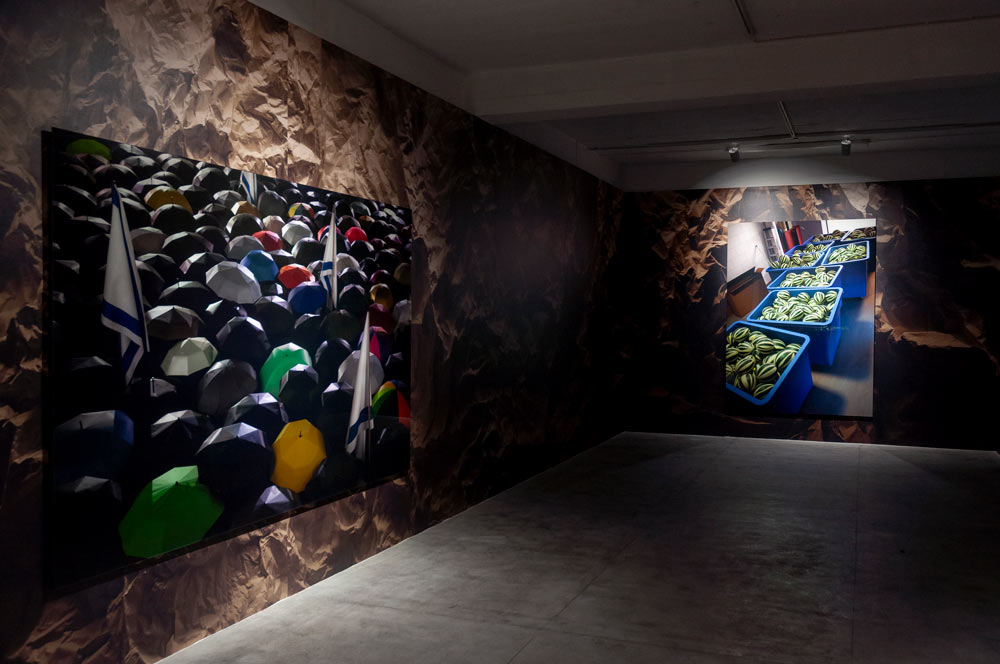
A Palestinian born in Gaza, Taysir Batniji has lost many members of his family in the conflict. His images of house keys accompany devastating textual narratives of Gazans displaced multiple times to so-called safe zones, forced to leave homes and lives that have taken many years to build. German artist Thomas Demand photographs the 2023 demonstrations in Tel Aviv, denouncing the Netanyahu government’s judicial reforms. In one work Demand captures an image of watermelons from a newspaper, an image of solidarity with Palestine - in fact, these watermelons were fabricated by Mexican cartels to carry drugs.
Thomas Demand, Melonen, 2025. Anozero'26, © Jorge das Neves
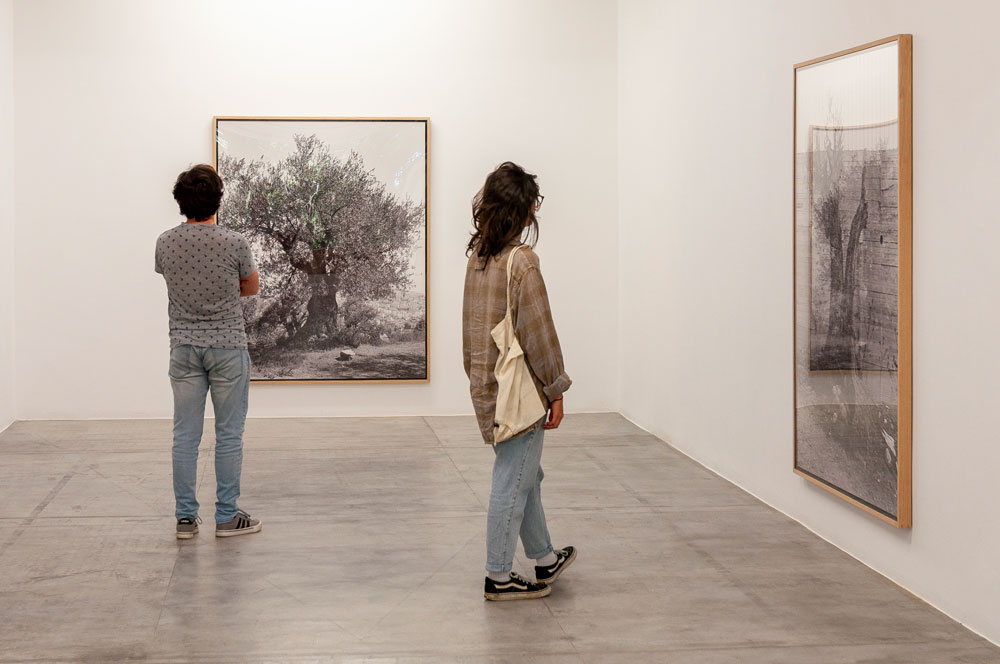
Adam Broomberg from South Africa, and Rafael Gonzalez, France, photograph Palestinian olive trees in Anchor in the Landscape, archetypal symbols of resilience frequently uprooted by Israeli West Bank settlers and the Israeli military. John Zeppetelli resigned in 2025 as Chief Curator at the Art Gallery of Ontario, following a mediatised row over his board’s refusal to acquire veteran American artist and activist Nan Goldin’s Stendhal Syndrome. The Sala da Cidade, a former monastic refectory, is showing this major work, a good opportunity to see it as it is not included in this year’s travelling retrospective of Goldin’s 50-year career. Referencing the psychological condition of the same name, Goldin creates a subversive ode to beauty, the overwhelming power of art and the endurance of the human experience. A 26-minute slideshow on video alternates photographs of Classical and Baroque masterpieces with intimate portraits of Goldin’s friends and lovers, while the artist reads passages from Ovid’s Metamorphoses against a sweeping soundtrack. Stendhal Syndrome is this biennial’s dopamine work, surrendering the banal to soar beyond rationality to hope. Rapture.
James MayorBorn in the United Kingdom, writer and journalist James Mayor has lived and worked in France, where he owned a contemporary art gallery, acted as a consultant to the luxury goods industry, and translated catalogues for museums including the Louvre, musée des Arts Décoratifs and musée Guimet. James has lived in Portugal since 2014, where he writes about culture, cause and wine.
Footnote It is possible history will look back on April 11, 2026 - by coincidence the Anozero’26 launch date - as a date of global significance. Inconclusive peace talks between the United States and Iran in Islamabad, Pakistan, threaten to stretch out a devastating war. |