






|
|
MIGUEL LÓPEZ-REMIRO FORCADA
27/06/2026
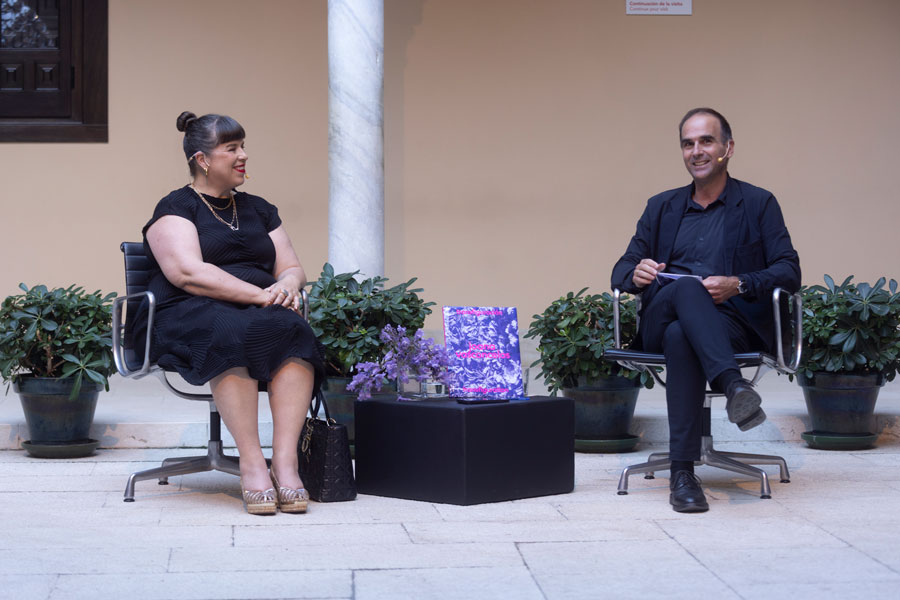
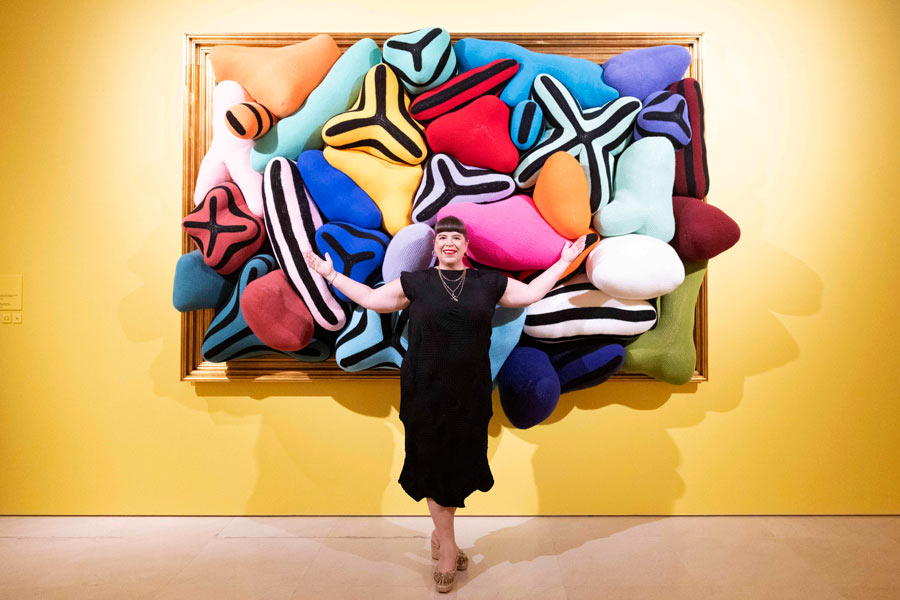
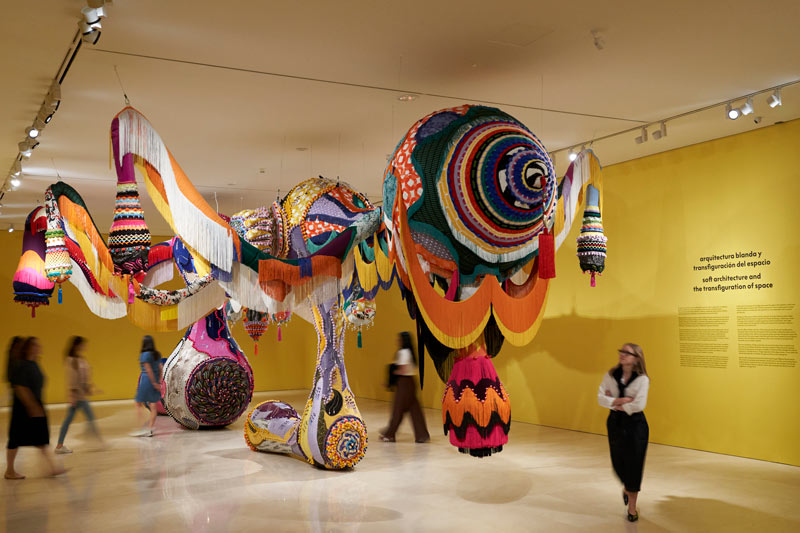
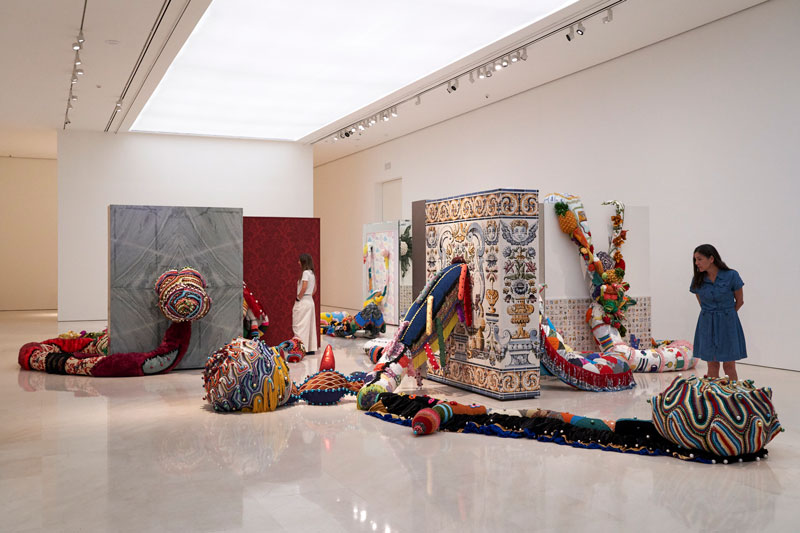
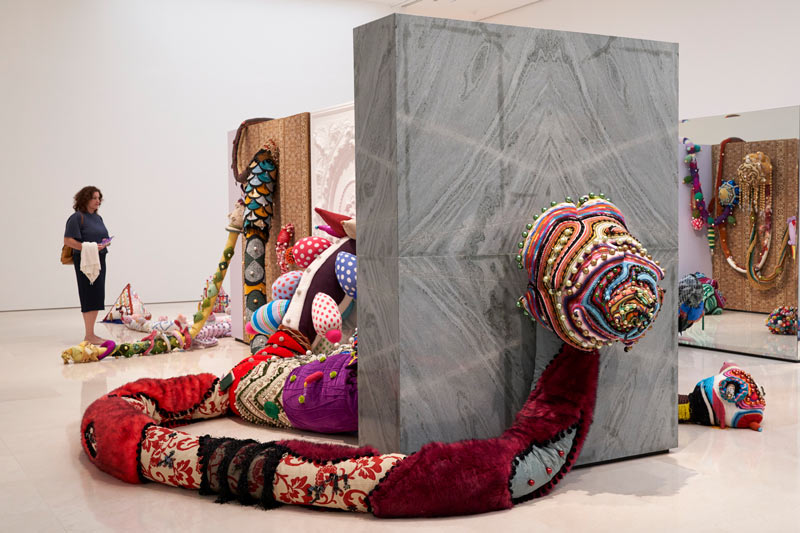
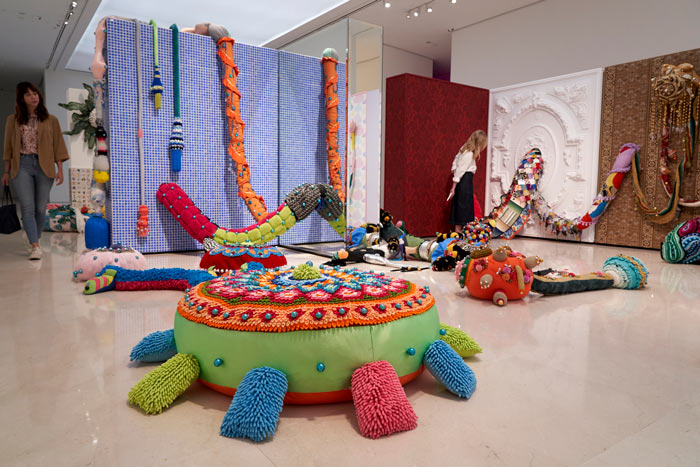
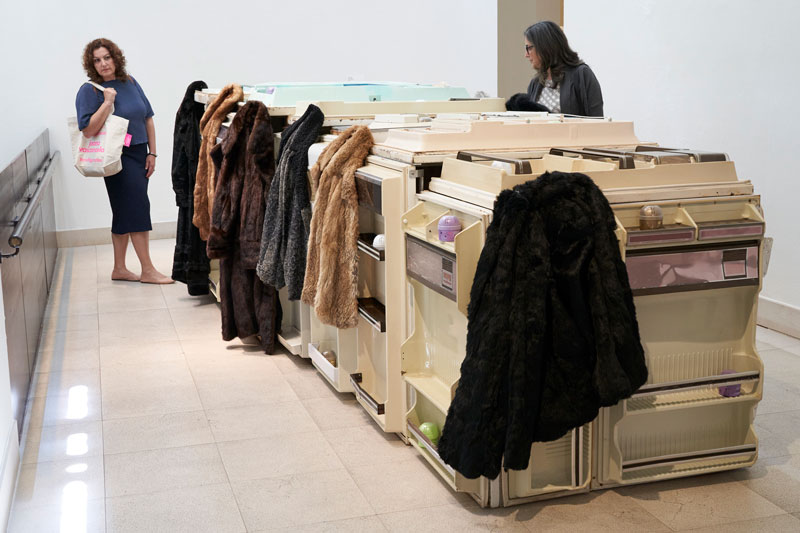
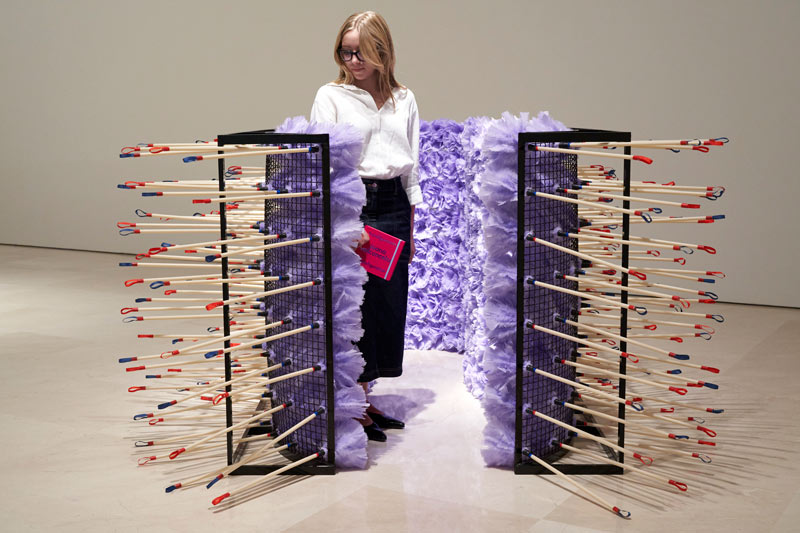
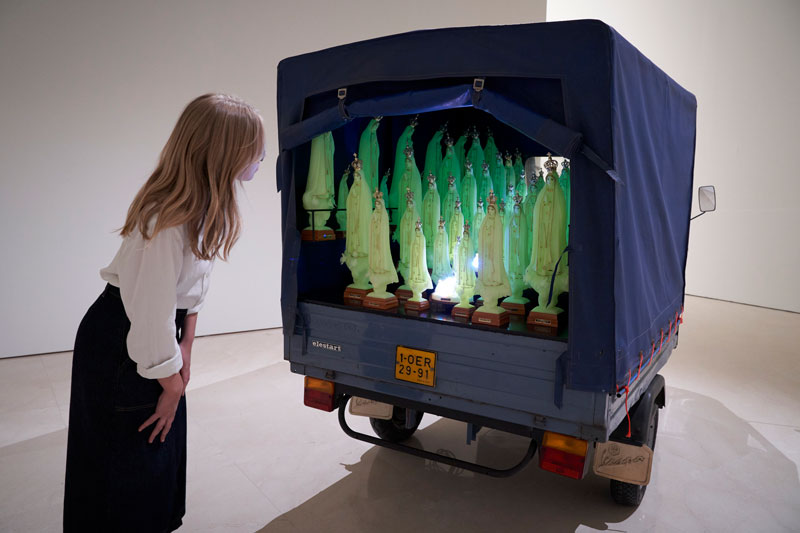
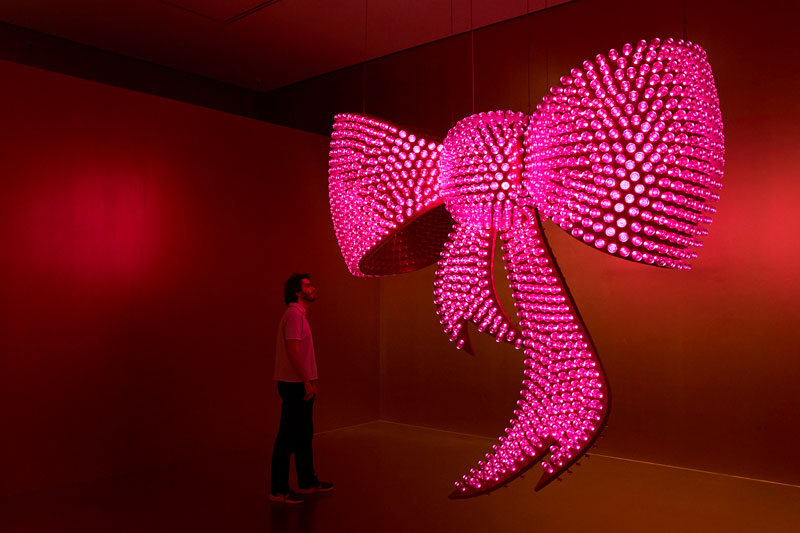
With works in the François Pinault, Louis Vuitton and Jacob Rothschild Foundations, Portuguese artist Joana Vasconcelos has equally a string of international solo exhibitions to her credit, at venues including the Château of Versailles, Venice Biennale, Guggenheim Museum Bilbao and the Massachusetts College of Art and Design. This summer Vasconcelos is showing at the Picasso Museum Malaga. The exhibition ‘Joana Vasconcelos. Transfiguration’ includes sculptures and installations from the late 1990s to more recent creations and is open until September 27, 2026. James Mayor spoke with the exhibition’s curator and Artistic Director of the Picasso Museum Malaga, Miguel López-Remiro Forcada.
Interview by James Mayor
>>>
James Mayor: Why have you invited Joana Vasconcelos into Picasso’s house?
Miguel López-Remiro: I believe both artists share a similar understanding of tradition. Neither Picasso nor Vasconcelos treat cultural inheritance as something fixed or sacred. For both, tradition is a living material that can be transformed, displaced and reactivated.
The exhibition is not based on formal similarities or direct references to Picasso. Rather, it is grounded in a shared artistic operation: the ability to make inherited forms appear differently. In that sense, bringing Joana Vasconcelos into Picasso’s house is not about creating a dialogue between two images, but about revealing a common attitude towards culture, memory and artistic freedom.
The title ‘Transfiguration’ emerged precisely from this idea. What interests us is not identity as something stable, but identity in motion.
JM: Is Vasconcelos a conceptual or a Baroque artist, or something else?
MLR: I think those categories are too narrow to fully describe her work. There is certainly a conceptual dimension in the way she displaces objects and alters their meanings. At the same time, there is an undeniable exuberance, theatricality and sensory intensity that recalls certain Baroque strategies.
Yet neither definition seems sufficient. What distinguishes Vasconcelos is her capacity to combine intellectual complexity with immediate visual and emotional impact. She does not ask us to choose between idea and experience. The work operates simultaneously on both levels.
Her art is perhaps best understood through the notion of transfiguration: forms remain recognisable, but their presence and symbolic density are intensified.
JM: In your view, is Vasconcelos a feminist artist?
MLR: Yes, although perhaps not in a doctrinaire sense.
Many of her works emerge from territories historically associated with women: domestic space, textile practices, craft traditions and forms of collective care. But what interests me most is not representation alone; it is the way she reorganises value systems.
Materials and practices traditionally considered secondary or decorative become structural, monumental and culturally central. Through that gesture, she questions hierarchies that have historically separated high and low culture, art and craft, masculine and feminine spheres.
Her feminism is therefore embedded in the way the work operates. It is a feminism of transformation rather than declaration.
JM: Picasso had a number of relationships with women artists. How do you think he would have related to Vasconcelos as an artist?
MLR: Any answer would necessarily be speculative. What seems more productive is to imagine an encounter between two artists who understand art as a process of transformation.
Picasso admired artistic strength, independence and invention. Vasconcelos possesses all three. She has developed a highly distinctive language capable of transforming everyday materials into complex symbolic structures.
I suspect Picasso would have recognised in her work an artist unafraid of scale, experimentation and risk. Beyond differences in generation, context and sensibility, both share a profound confidence in the transformative power of artistic practice.
JM: There is both trauma and humour in Picasso’s work, and equally in Vasconcelos’ work. Would you like to comment on this dual emotional response?
MLR: Humour and trauma are not opposites. Very often they coexist.
One of the remarkable qualities of Vasconcelos’ work is that it creates an immediate sense of pleasure, surprise and even joy, while simultaneously addressing questions related to power, identity, gender, memory or social structures.
Something similar can be found in Picasso. Even in works that emerge from profound historical or personal tensions, there is often an extraordinary vitality.
What interests both artists is not the illustration of suffering but the transformation of experience. Art does not erase complexity; it gives it form.
JM: The monumentality which sometimes characterises Vasconcelos’ work has on occasion been described as a ‘stunt’. What function does it perform in her work?
MLR: Monumentality is not the objective of the work; it is the consequence of a process.
Joana herself has often insisted that scale is not simply a tool. The dimensions of a piece emerge from the conceptual transformation of the object. When a saucepan, a piece of lace or a domestic element undergoes this process of transfiguration, scale becomes part of the new meaning.
Her monumentality does not function like traditional monuments associated with power and permanence. It is often soft, textile, enveloping and participatory. Rather than dominating the viewer, it invites inhabitation and experience.
JM: You have written about the exhibition “the form is maintained, while the meaning expands». Can you inform us?
MLR: This phrase lies at the centre of the exhibition.
A heart remains a heart. A saucepan remains recognisable as a saucepan. A domestic object does not disappear into abstraction. The form survives.
What changes is its symbolic horizon. Through displacement, scale, material transformation or context, the object begins to generate meanings that exceed its original function.
This is what I understand by transfiguration. The object does not become something else; it appears differently. The form remains, while the field of interpretation expands.
JM: How does Vasconcelos, to use your words, “reorganise our cultural hierarchies”?
MLR: She constantly destabilises categories that we usually take for granted.
She places craft beside contemporary art, domestic objects beside monumental sculpture, popular culture beside elite cultural forms.
Importantly, she does not reconcile these opposites into a comfortable synthesis. Rather, she allows them to coexist without hierarchy.
The result is that viewers are encouraged to reconsider what they value and why. Materials, traditions and practices that have often occupied peripheral positions suddenly become central.
JM: Vasconcelos can be considered a product of Portuguese culture, or do you think her roots and practice draw on wider sources with more extensive significance?
MLR: Both things are true simultaneously.
Portugal is a fundamental ingredient in her work. The materials, crafts, symbols and visual references are deeply connected to Portuguese culture.
However, she does not use them as folklore or as fixed markers of identity. She transforms them into vehicles for broader questions about memory, desire, power, gender, belonging and perception.
The more specific her starting point becomes, the more universal the experience often feels. Vasconcelos’ work demonstrates that universality is not achieved by abandoning local identity, but by passing through it.
Portugal has developed an extraordinarily dynamic artistic ecosystem over recent decades, and Joana Vasconcelos is one of its most visible international figures.
:::
Miguel López-Remiro
He holds a Bachelor’s degree in Economics and a PhD in Philosophy and Literature, Aesthetics and Art Theory from the University of Navarra; he also holds an Executive MBA from IESE and is a graduate of the Getty Leadership Institute at Claremont University in Los Angeles. He has been a Visiting Scholar at the University of California, San Diego, and is the editor of the first anthology of Mark Rothko’s writings, published by Yale University Press and Flammarion. He has served as Deputy Curatorial Director of the Guggenheim Museum Bilbao, Founding Director of the University of Navarra Museum, curator at various foundations, and lecturer at several universities. Since 2024, he has been Artistic Director of the Picasso Museum in Málaga.
James Mayor
A journalist who writes about Portugal – for Portuguese and British media – on culture, social issues and the wine industry. He has worked as a branding and content consultant in Portugal and France, specialising in French museums, the French luxury goods industry and the Portuguese wine industry. He founded and directed Galerie James Mayor (Paris, contemporary art).