







|
|
ALEXANDRA BIRCKEN
03/12/2025
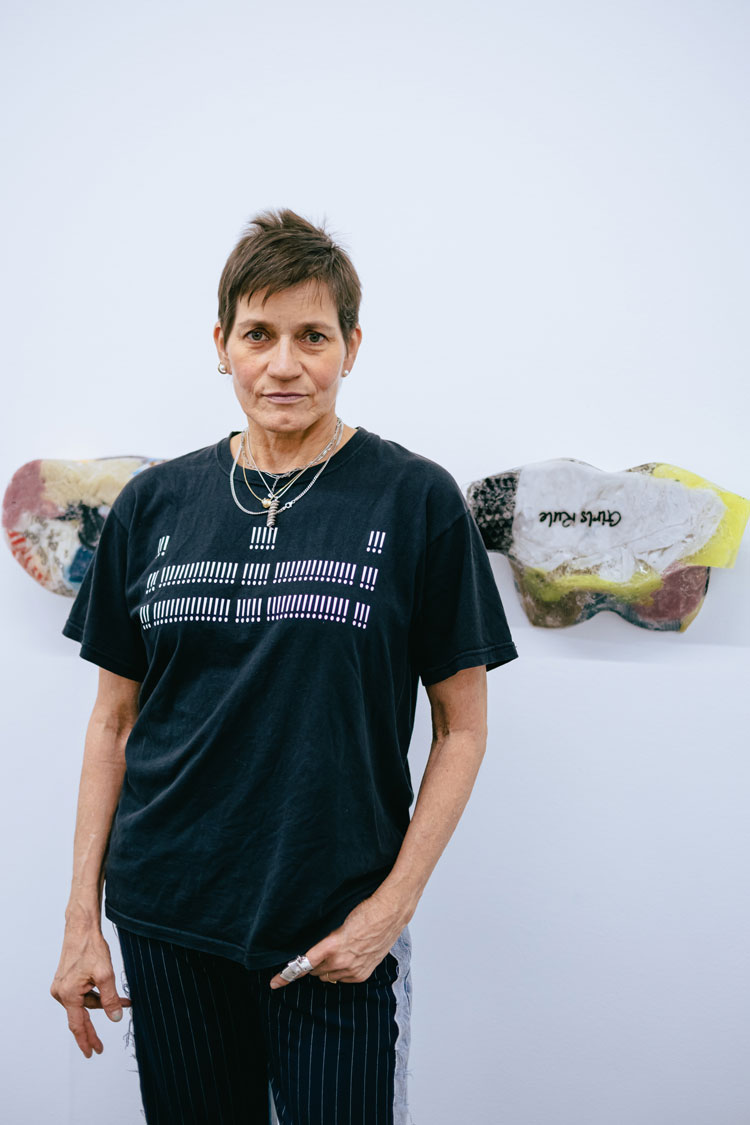
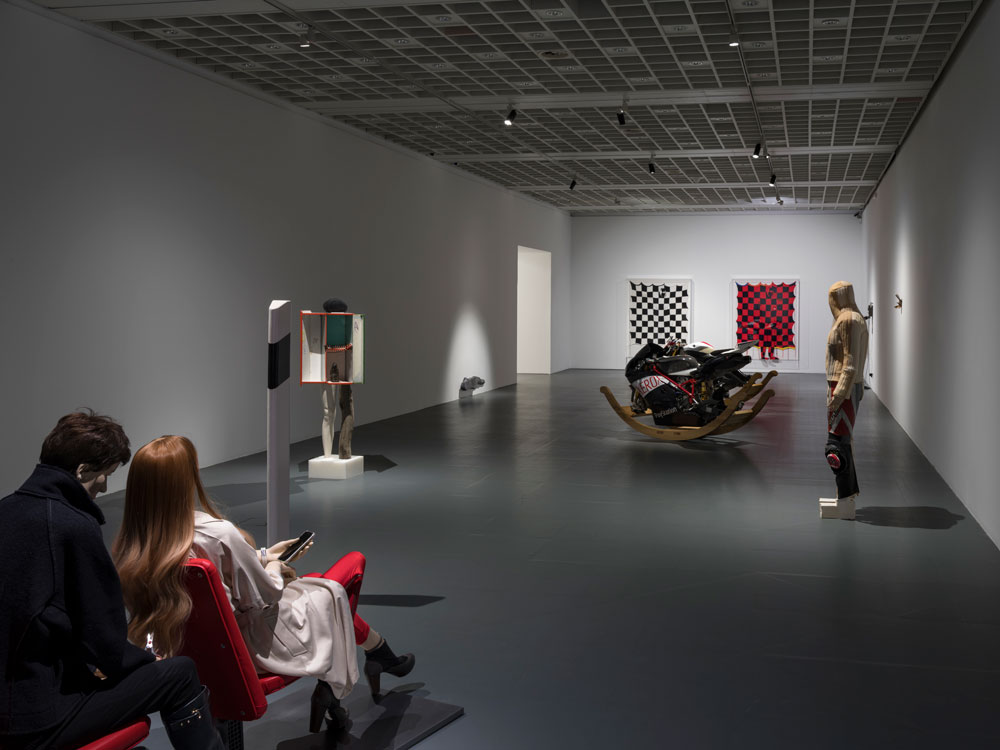
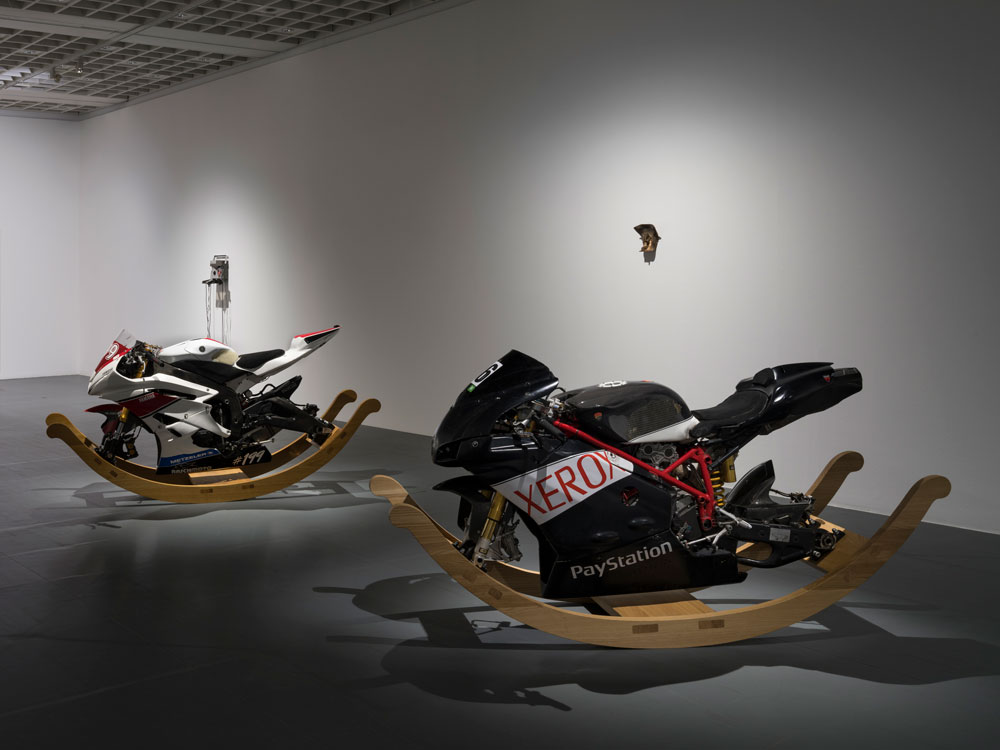
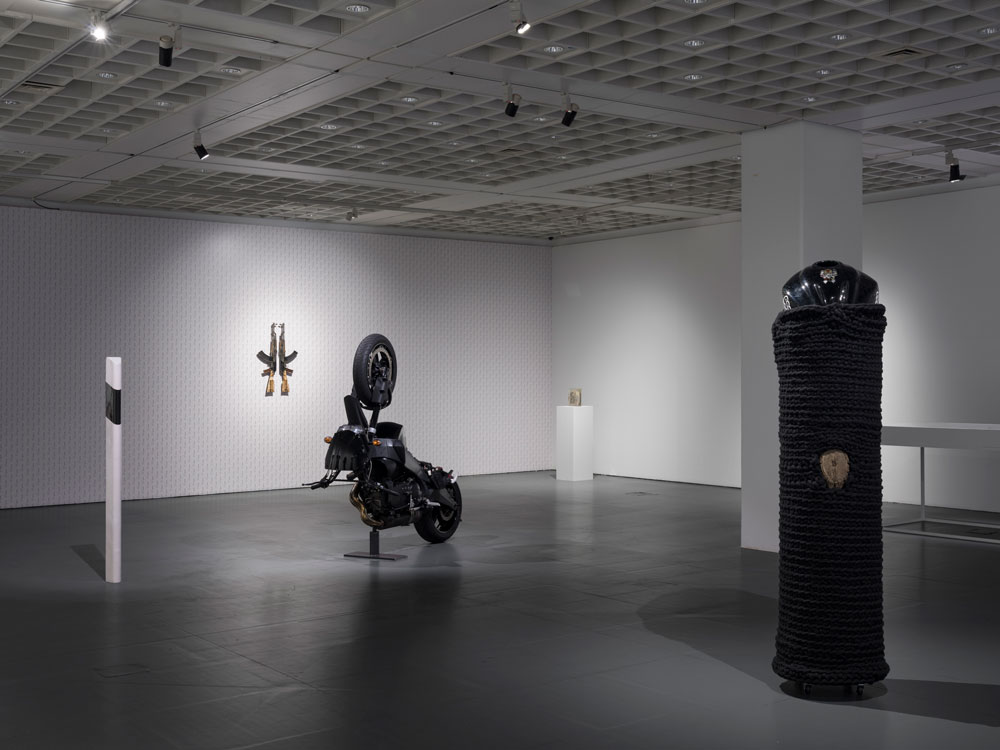
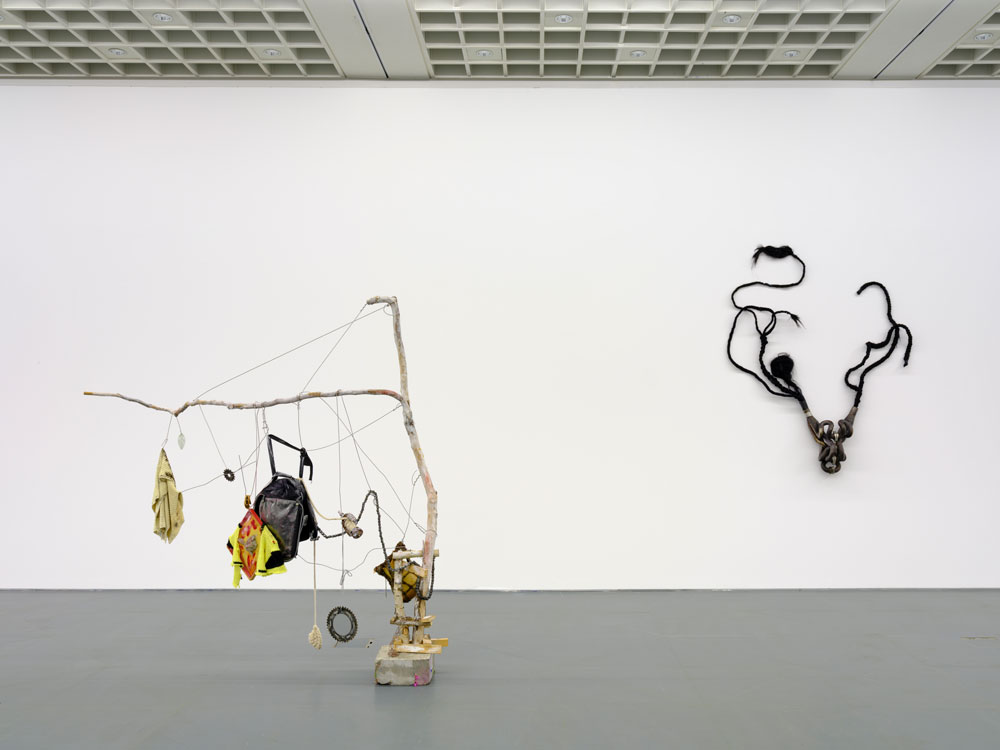
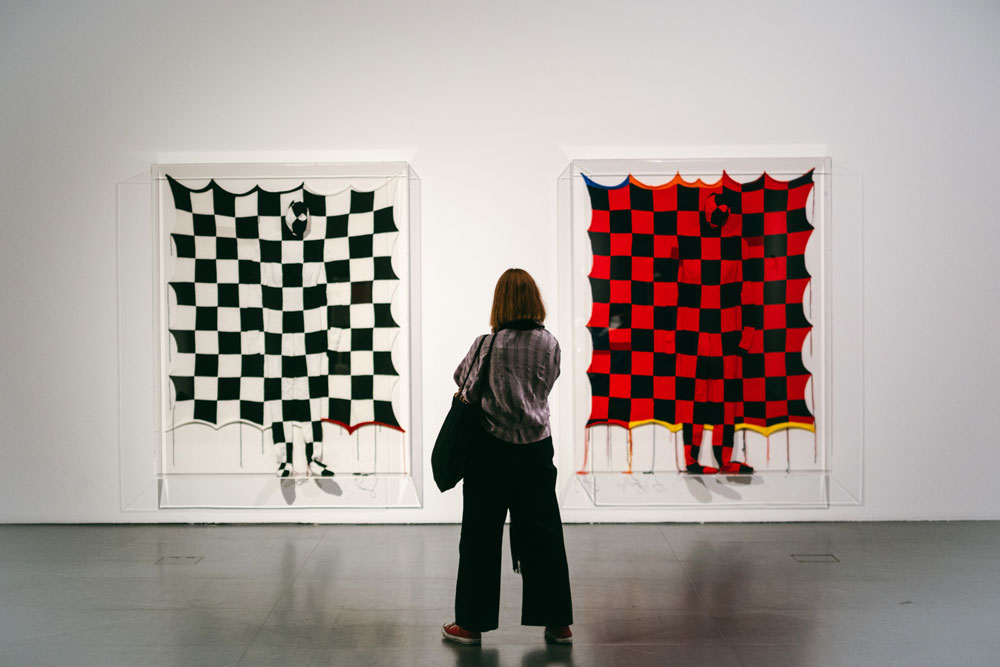
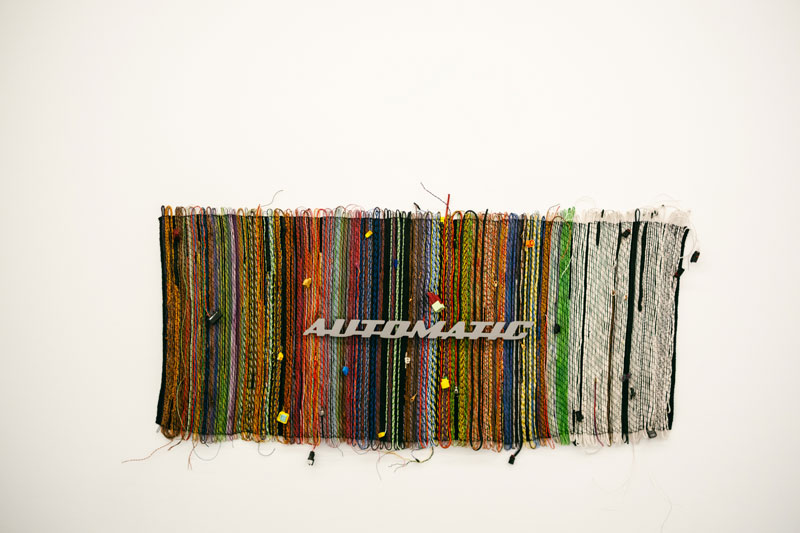
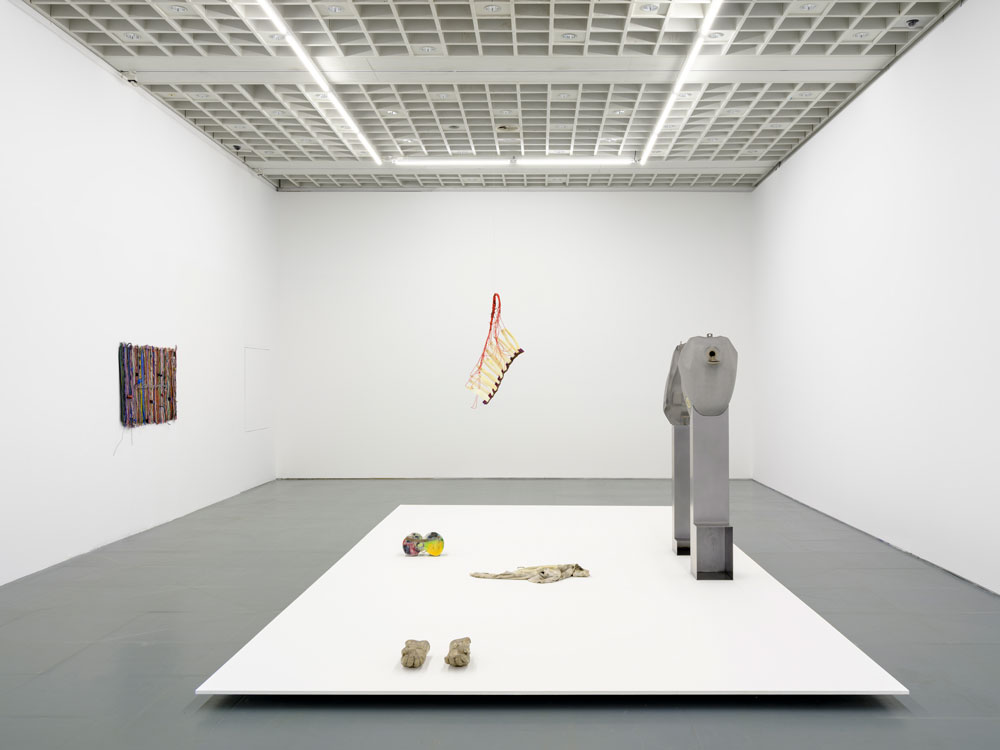
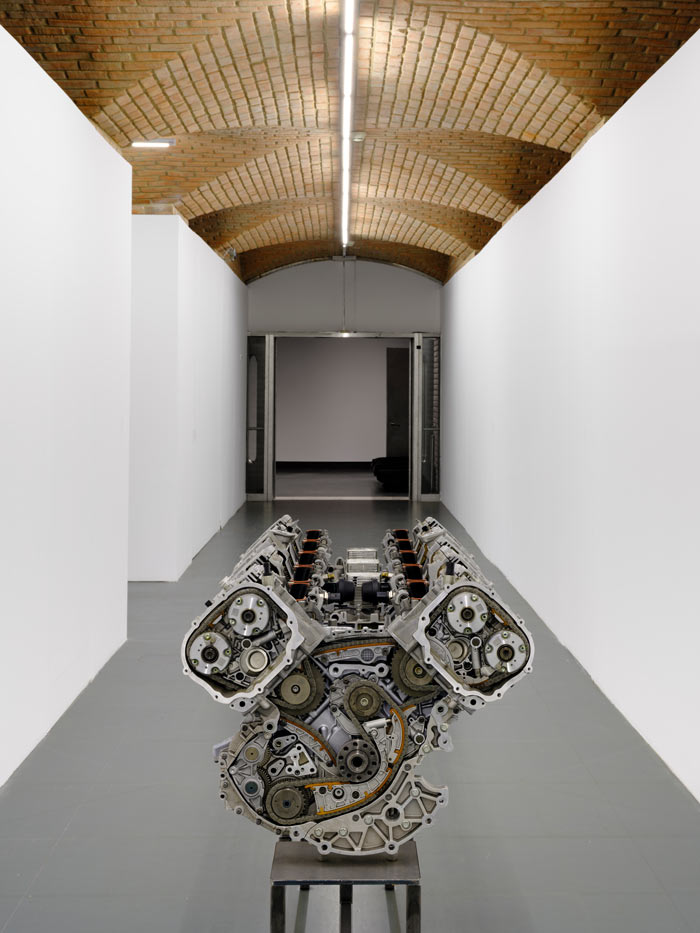
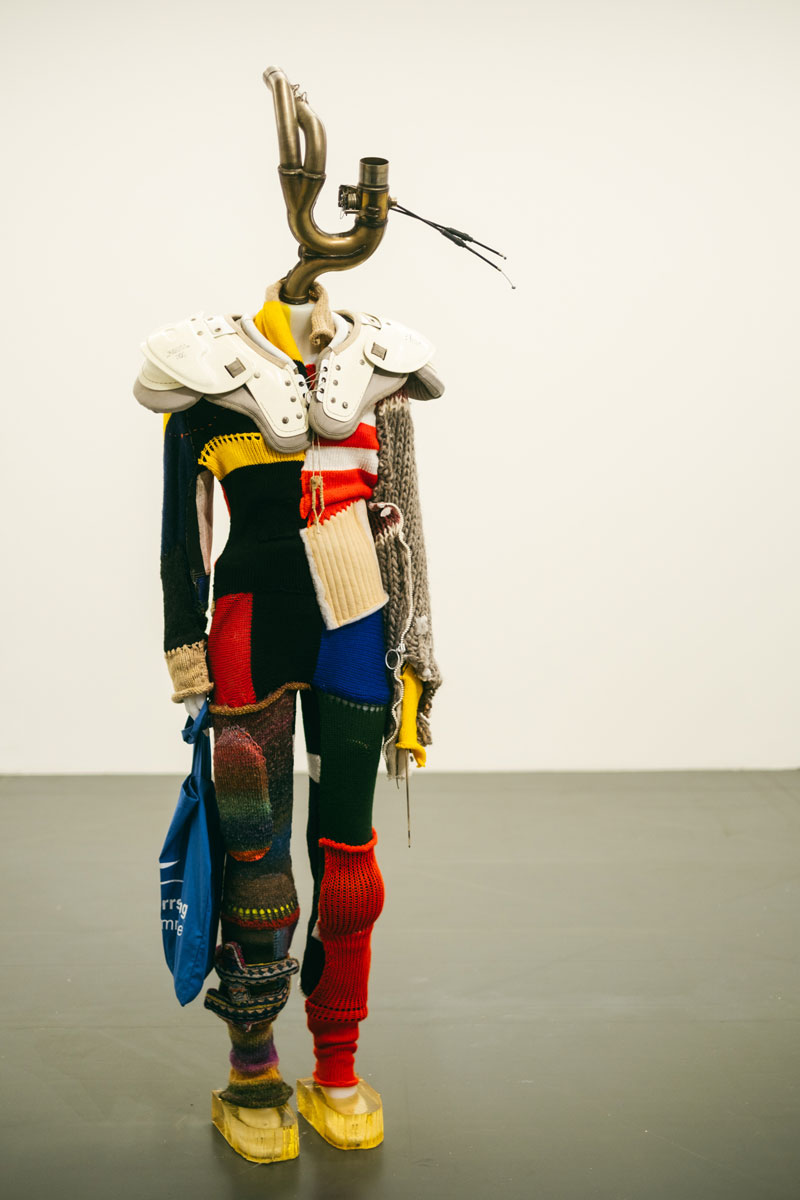
On the eve of the opening of the exhibition SomaSemaSoma, Alexandra Bircken's first in Portugal, sculptures from a world where attention is an increasingly scarce commodity are being installed at Culturgest. This traveling exhibition, which has already been shown at the KBCB Biel/Bienne museum and will next be shown at the Bordeaux Contemporary Art Center, brings together a collection of works by the artist from the last 15 years, juxtaposing an organic world and a technological one where art is often called upon to justify its place. Alexandra Bircken's artistic practice stands out for its refusal to surrender to this logic. Through deeply physical and material work, constructed predominantly using the technique of assemblage, it invites slower contemplation, an intimate dialogue with objects and their memories.
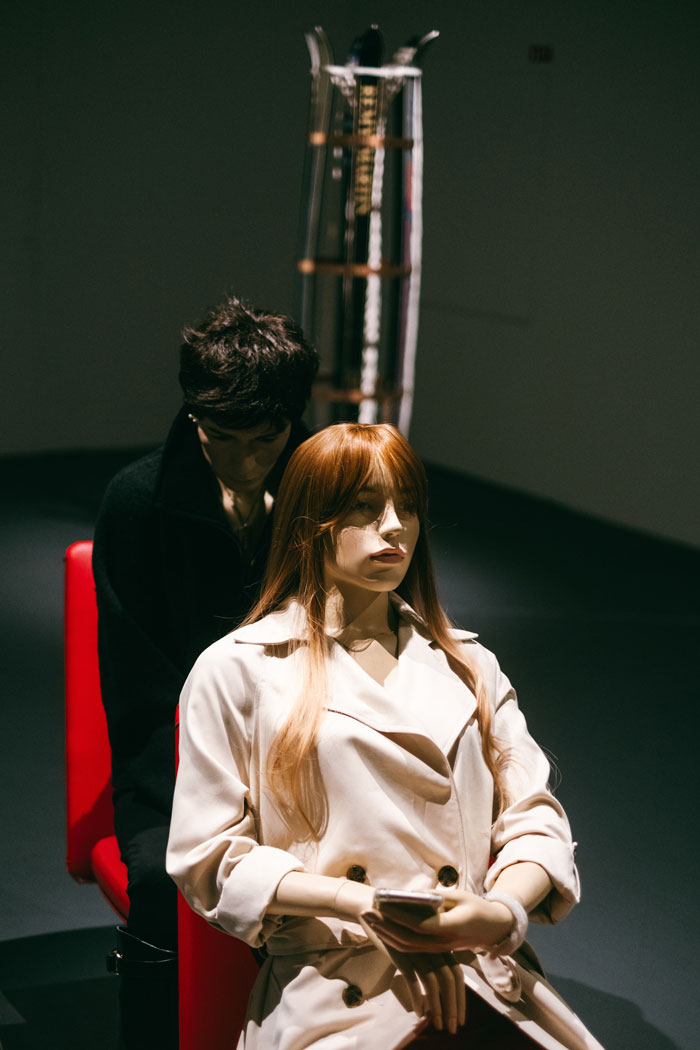
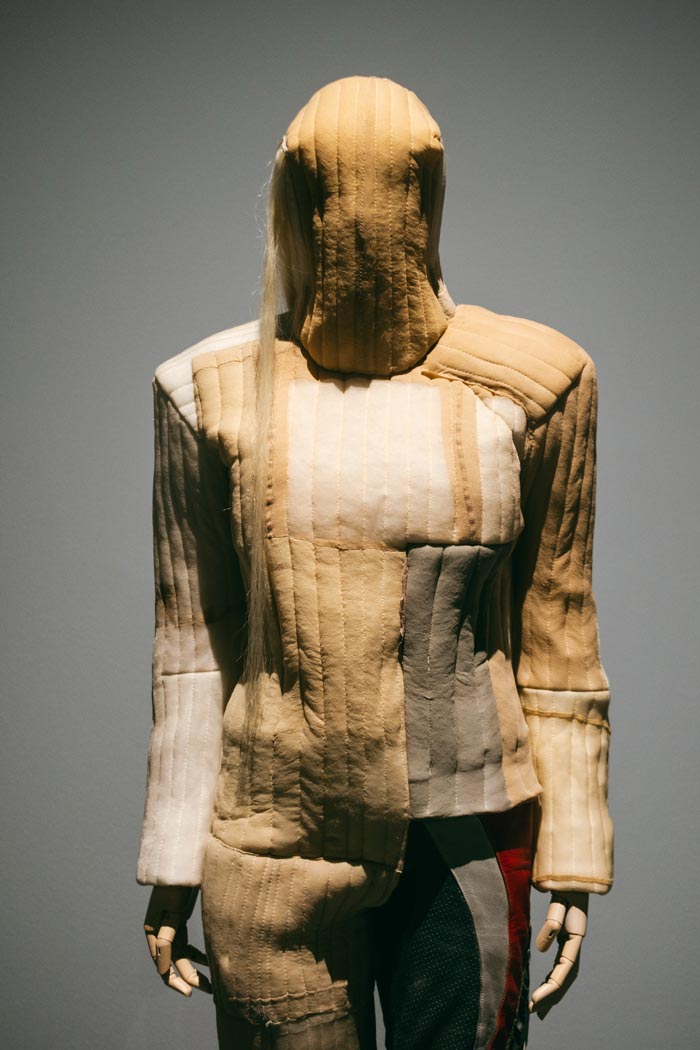
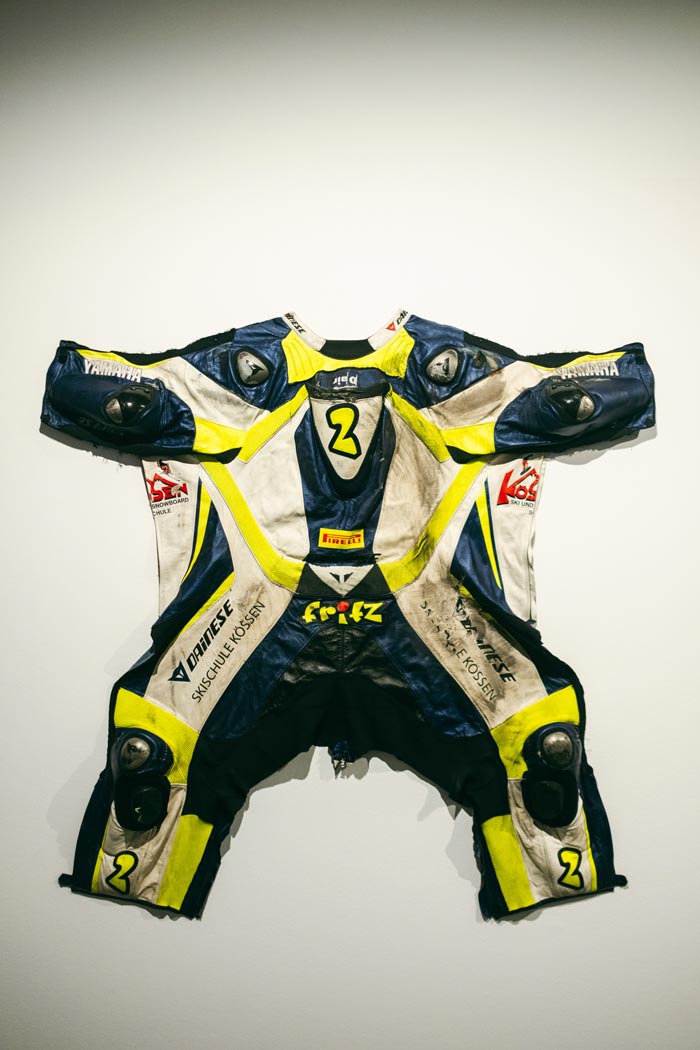
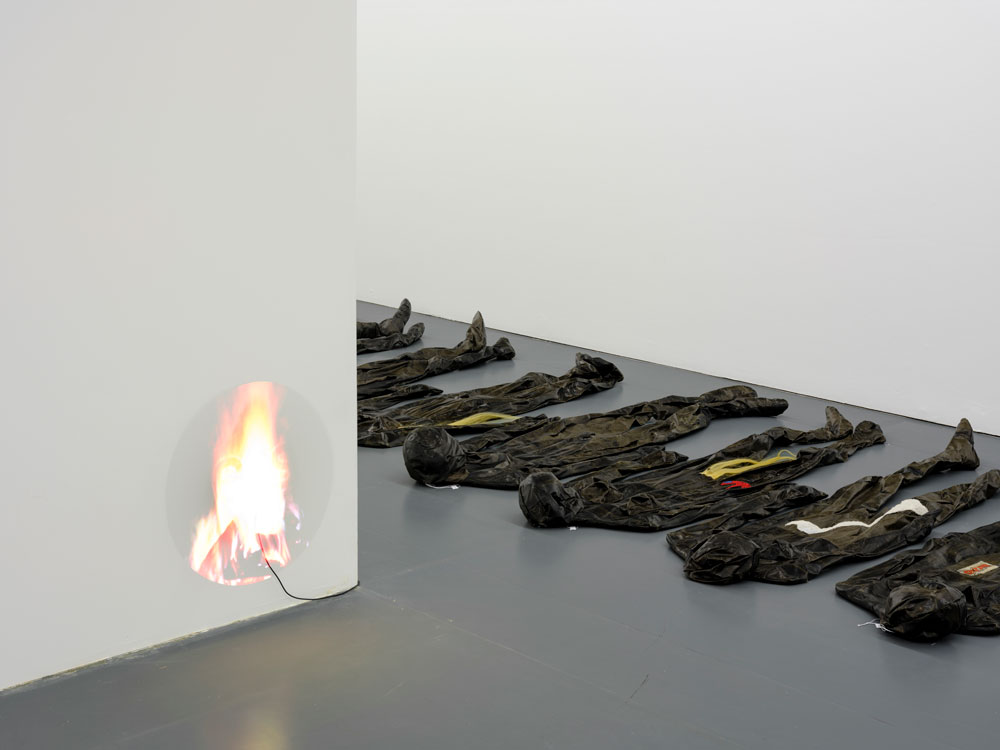
The exhibition covers a vast territory: from the intrinsic relationship between materials and the emotions they evoke, to the scathing critique of consumerism fuelled by social media; from the organic transition from fashion to sculpture, viewing the body as a sculptural support, to the complex interactions between art objects and museum space. Alexandra Bircken is not at all afraid to tackle major contemporary themes, such as the chimerical quest for plastic immortality and the profound impact of artificial intelligence on society, always with a sceptical view of the power of art to change the world and the people who shape it and allow themselves to be shaped by it.
The exhibition is a testament to an artistic practice that values the internal language of materials and the choreography of the exhibition, offering an urgent and necessary reflection on our time and the practices and knowledge that make us potentially human, whether through rocking motorcycles, an AK-47 surgically cut in half, ceramic signposts, or even a placenta preserved in Kaiserling solution.
Interview by Pedro Vaz
>>>
PV: It seems that contemporary art is at the forefront of the fight against the world´s growing attention deficit. Since your work focuses on a strong use of the assemblage technique, how do you think about capturing the visitor´s attention? Is the focus on the small details (the objects that make up the structure of the works) or is it in the whole unit?
AB: First of all, I don´t really think about wanting to capture the spectator. On the outside of making an art piece, this is not really my concern. It´s much more my concern having like an urge to make whatever I´m about to make and consider it as a whole thing, and I really believe that if you go about wanting to capture somebody it´s like you´re dressing the holes from the wrong side. Because you think about what it might evoke, and I think it will never do this, or it becomes something that´s very readable, and planned, and forced. And I really believe that materials, textiles, and structures, have an inner language because we have an experience of how they feel, and how they feel to the touch, you know, that this leather is soft, and is smooth and all that. We have an experience, and we know. So, in a way, using materials for sculpture, I find very interesting because you evoke emotions by controlling how things are put together, how they're presented, how are they made up, how well they are finished. And this is what I find interesting. But it´s never about if then I do this, or if I do that it kind of speaks to the viewer in a certain way, because I think this is something a viewer has to decide. And I think when I show my works, I find there so many different ideas and reactions, that it´s best to not even go there.
PV: And seeing your almost surgical approach in some of your works, particularly the cutting and the interiority aesthetic, I think of this interplay between plastic arts and plastic surgery. How do you think about these ideas of plasticity in the abstract? I mean, is the Barbie´s plastic life viable for seeking immortality the world is after or is it a barbaric utopia that doesn´t fit in our world, and even contributes to its deterioration, as is evident in the terms of environmental issues, for example.
AB: You mean Barbie, the Barbie doll?
PV: Yes, because I think about the song of the “Barbie world, life in plastic is fantastic”, and it seems like a lot of people are after this immortality around the plasticity of the body as well.
AB: I think one has to regard from when that song came from, you know. Wasn´t that the eighties, or nineties?
PV: I think that it´s nineties. Of course, the whole misogynistic part it doesn´t have anything to do with what we want today. But this growing search for immortality… the plasticity… How do you think about plasticity, in the abstract idea of plasticity?
AB: I mean, plastic was invented before the war when they came up with the bakelite, there were those handles they were like the first plastic objects that were moulded, and of course it was a way to do cheaper things for a huge consumer market that were affordable, like household items, water cans. Whatever you want, you know? They were made of plastic oil products. I mean, plastic is like a dairy rate of oil. And it was a way to satisfy consumer needs, and to suddenly bring things to a huge wide public, you know, not just to a few select that could afford certain things. And of course, now it continues, even though it´s not right. So, I don´t really know how to answer this question to be honest. I mean, there is an urge for eternity, this is definitely true, but I think it´s a problem. I think it´s a problem that people are so ignorant, they just look away: they want to live longer, they want to fly more, they want to consume more. And then on this planet there´s always fires and climate catastrophes, and people are just looking away and celebrating their life, I think. But this is what humans do, and that is what social media does. I really blame social media for this, because I think on this bloody social media you always see that people have a better holiday, more money, a better house, a better life, because everybody becomes comparable suddenly on this little same screen size photo. And I think this actually churns on consumerism and behavior.
PV: And it seems like it goes against the nature of the crafts where you make your work, and then you just show what you have to give to the world, right? You´re not expecting to compare your work.
AB: And people lack experience because people don´t go out anymore, they just look at it, look at that, look at this, and think they know what´s going on in the world. I mean, it´s a huge problem. But I don´t think one can address that. I find it very difficult if art is setting out to educate people. I mean, there´s so many shows now, like big group shows, or documenta, that are references that conceptualize certain ideas when trying to educate people. And I think if you set out to do that, it doesn´t work
PV: And even nowadays museology has been creating these new terms to change that fact. Like, they´re not talking about “educational service” anymore. They´re talking about activation programs, and public programs. So, it seems that the museum is getting some conscience over this power that the museum has. And actually, the museum space by its nature removes the functionality of the works on display. And I remember a story of a friend of mine that worked in the Machado de Castro Museum, and one day one of the visitors started to pray in front of Pietà sculpture, while touching it. And I found this marvellous because it shows how the museum can be shaped and fought, specially through the works itself. How do your work come to life in this environment made of objects stripped of their original functionality to serve an aesthetic purpose.
AB: I think the good thing is, with sculpture, opposed to most of the paintings, it´s that I find sculpture often more entertaining to look at, and it speaks to a broader number of viewers. I mean, I hear that quite often, even kids have a reaction, whereas they might not have a reaction if they looked at an abstract painting. In that way I don´t care so much about what else is going on as long I can control how I´m setting up the show. And this is hard work because of the obstacles: the way the institutions have an idea of how things should look. And this is why you spend a lot of time trying to control this. But I´ve never really had a bad experience. I mean, sometimes I´ve had a bad experience about the program that they create to kind of entertain school kids, you know? Silly stories, and they just think they´re idiots. But that´s something that happens after I leave. So I see this as a kind of the way I´m installing, it´s almost like a choreography, trying to think what goes well, figuring out the light in the first rooms, the spotlight to really bring out the details of the work, almost like in an art historical shows where you often have this kind of dramatic lighting.
PV: And it´s like the museum has an apology to make to its visitors after these whole years of conceptual art and homogenic language. But how did you make this transition from fashion to contemporary art? Was it a radical change, or did you always see something intrinsic to artistic practice in fashion such as sculptural practice? Even the visitor nowadays seems to go after texture and tridimensionality.
AB: I mean, it was like an organic process, it evolved. And I often felt confined in fashion, I always felt like in a cage because I was working as a designer for quite a few years during my studies, during my foundation course at Saint Martin´s. Basically, the nature of these foundation courses is that is very broad, you do all sorts of different disciplines from printmaking, to fashion, to pattern cutting. But you also do painting, you do poetry, ceramics, you do all sorts of things. And I always felt this very freeing: not thinking about the application of these things, just doing these pieces for the sake of them. But somehow, I was so interested in fashion, I mean, it was in England, it was 1990… There was a lot still not happening in fashion, and I felt I really, really wanted to do this. But when I left school and I started working I always felt that you have to work in a commercial environment because you have to design things that people want to buy it, and that people want to look good in, look pretty in. And what is this idea of beauty? What kind of concept is this? I found it very restricted, and I couldn't find myself in this. So, slowly, slowly, I earned money as a designer and had some money left, and then I rented a little space in Cologne. I went back from Paris to Cologne with the intention to actually start an own collection, but then somehow I made pieces and they ended up on the wall, and they looked they had their own right. They came from the body, but on the wall. And somehow, I realized this, you know? It does not need the body, it´s got an aura, it’s got a life on its own. But then, having studied fashion, worked in fashion (you realize) … the body is sculpture. When you're training in doing something three-dimensional as a fashion designer, it's a sculpture training in a way that you are judging something that is moving, that is three-dimensional. So, that step was not so big, you know? In the beginning when I did shows I always felt like, after each show, it has to be something completely new, because from fashion you know that every collection has to be very different from the next, or has to have a building on it, but still includes lots of new ideas. So, this took me a couple of years to lose this pressure.
PV: And how do you deal with this whole humanization of objects and technology, and at the same time their condition as an extension of the body? As you work in fashion you have to think about how the body is like and how the body works, and what the body seeks for. But when Apple is designing a new phone, they think on the bodies as well.
AB: Yeah, the phone is a prosthesis and I find that very interesting, how readily we accept this and how readily this become our extension.
PV: And you work the whole cyborg thematic as well.
AB: Yes, but somehow, I always find a bit problematic that this cyborg thing is such a topic. For me, I find it very natural. I mean, everybody has an extension now, and there was this time when everybody talked about cyborg theories, and I find that very obvious.
PV: It's like the fake news, right? There was always fake news, and even Cesar died because of fake news. And even the warriors had the swords as an extension of themselves. So, this is like a whole millennial theme that just came across with contemporaneity. And when you arrived in Culturgest, what was you experience in relation to its space and the installation of the exhibition? How has it been working with the spatiality of the building and the energy it holds?
AB: It´s been amazing.
PV: Because from outside it looks like a massive fortress.
AB: Absolutely a fortress. It looks a bit like some sort of Nazi architecture. Of course, it isn't. But somehow, coming from Berlin or the East, sometimes you can see some similarities with the buildings (there). But I mean, I find it amazing. I mean, Mario and Bruno, they are so good to work with, and there's an amazing technical team. They showed us around, we went to the canteen every day, and we went to these different options, like the sports centre. And I found it quite interesting this clashing of realities here: you've got us in the art here, and then you got the people from the state and the bank. And it's very rare that you are in a building like this, working in these different realities and jobs and structures hit themselves. So, that's super interesting. For me it's a bit like the Barbican Center in London, but the Barbican Center is a housing estate, it's only used for housing, there's no other business attached, but it's also like this cultural centre. I find it super interesting, and the spaces are not easy, they're not white cubes in a way, but for my work it's quite good.
PV: And actually, what your exhibition is doing here is contributing to reshape the aura of the whole building, and that's really overwhelming.
AB: For me it was very important to open this window because when I looked at the space and I saw the map and I thought “hang on, there's this courtyard, but there's these windows, and what is behind?”. And then the guys said its storage, so my idea was to open it up. The people that go into the offices come down the ramp, but for them to go down the escalator or go up and have a look inside the space, because it's always a hurdle going into a space, it's always like a barrier even if you wouldn't have to pay. It´s always a barrier for people that are non-artists or non-art interested. So, there was a wish to have this window there opened and communicate to the outside, and vice versa.
PV: I want to know what's your bet: will machines and technology allied with the capitalist logic will dominate the planet, or will humans resist with their endless will to live and expand as human beings? Or are these two hypothesis part of the same project?
AB: I think humans are so stupid, and I think they are so lazy, that everybody I know is already using AI for the simplest things, which I think in a number of years it's going to reduce our brains to write text by ourselves, to even investigate further. Riddle questions and quizzes that we would usually be thinking of, on the train, it's just not existent anymore. So, I think there's certain things AI can't do. It´s not empathic, and there's works and games that AI at the moment wouldn't be able to invent, but in the future will be able. The jobs will be lost because of AI, inner cities will just be violent because people are desperate, maybe not listening because it´s a new restructuring with so much money around. It's weird. But, I mean, when you go to Germany, you go to the city centres and it´s bleak: there´s only one-euro shops, vacant storage store fronts, and there's just homelessness whenever you look, and I think it's just going to aggravate. The government have to regulate things for us to actually change our behaviour, but they are scared of doing this because of right-wing government. If our government were allowed to fly at an x amount of time a year, people would just vote for AFD (Alternative für Deutschland) because AFD denies climate crisis. Honestly, I think it's quite negative, unfortunately.
PV: And it's like Germany, inside the Europe scene, is one of the countries where the first things appear first, and in Portugal there's a delay, even the extension of the right-wing parties is starting to grow stronger now here, and that´s a big problem we´re facing. But maybe, what artists need to do is to go after the good examples like to go after the craft practices and ideas to return to our human behaviours.
AB: I mean, we had Egypt, the Greek Antique, we had the Maya, they were all like these amazing culture civilizations, and maybe this is like the end of the Romans period and maybe it goes in cycles, until something new happens. This is how I see it. People that want to be stimulated by art will be stimulated by it, but I don't think it's going to make people change their votes. The power of art is limited, and it's limited to those who don't want to see. I think Portugal has a very different story, because I think of what your government is doing at the moment, attracting expats with lots of money, giving them tax-free time. And I think that´s bringing in lots of money. And I´ve seen less homelessness here than in Germany, for instance. But, I mean, that's unhealthy too what the government is doing because it's not really thinking about its own population. So, I don't see this very positively, sorry.
PV: Don't be sorry. I think museums, artists, and those who work with art have a negative vision of the future. I think we know what's going on and we try to fight it until we can.
AB: I think the politicians and people in business see it the same way. It's just it's all about making money, and they are attached to this money-making machine. They're much more extensions of the capitalist system, and I think we negotiate a lot more. Of course, we're all caught up in it, this is why whatever they say, they just never make the right decisions because of capitalism power.
:::
Alexandra Bircken, born in Cologne in 1967, has an artistic career that reflects an organic transition from fashion to the visual arts. Her training at the renowned Central St. Martins in London, where she completed a degree in Fashion after studying Fine Arts, and her experience as co-founder of the “Faridi” brand, laid the foundations for her distinctive sculptural practice. She currently lives between Berlin and Düsseldorf, where she teaches at the prestigious Kunstakademie. Her work, which explores the body as a three-dimensional medium and employs a materially rich assemblage technique, has been recognised with distinctions such as the Stiftung Kunstforsk Prize and artistic residencies at institutions such as the National Gallery of Zimbabwe.
Pedro Vaz began organising exhibitions and performances in Coimbra in 2014. Between 2013 and 2018, he completed his Bachelor's and Master's degrees in Art Studies at FLUC. He is currently a PhD student in Arts and Mediation at FCSH, NOVA University, and is part of the IN2Past laboratory as a researcher in the Museum Studies group at the FCSH Institute of Art History. His doctoral research benefits from an FCT scholarship and has the partnership of the MAAT museum as a co-supervising institution for the project.