






|
|
FRIDA ORUPABO
PEDRO VAZ
24/06/2026
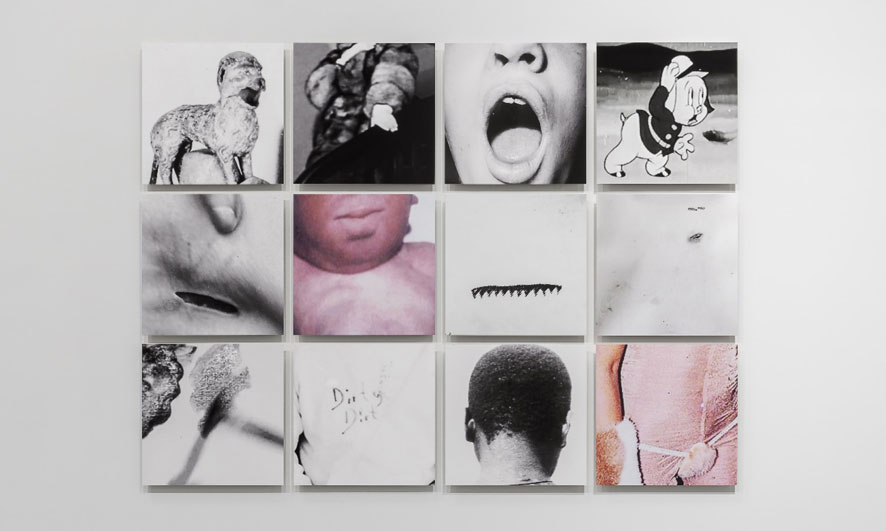
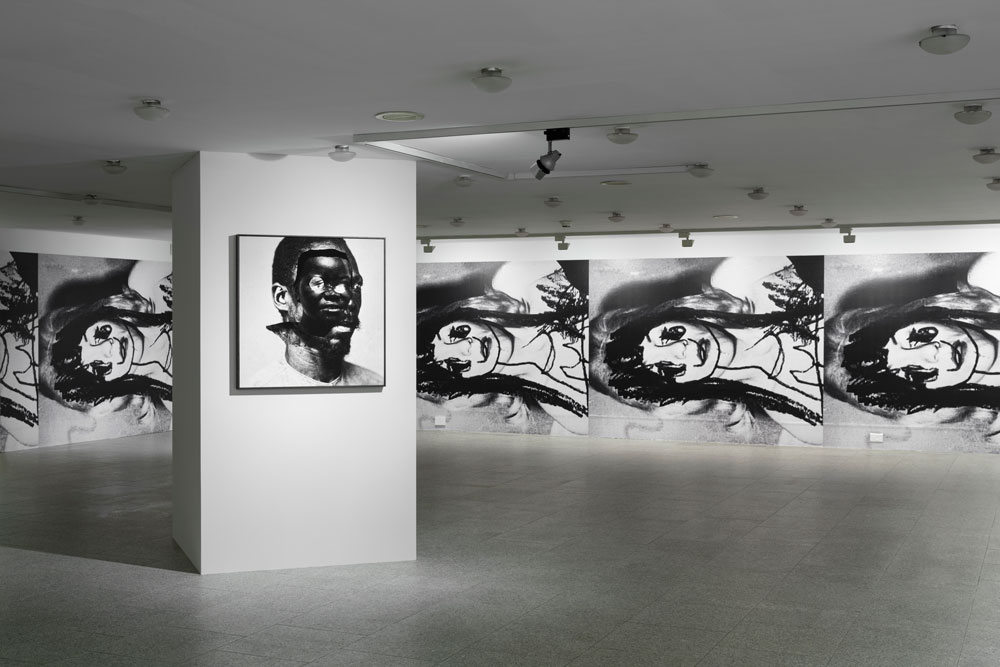
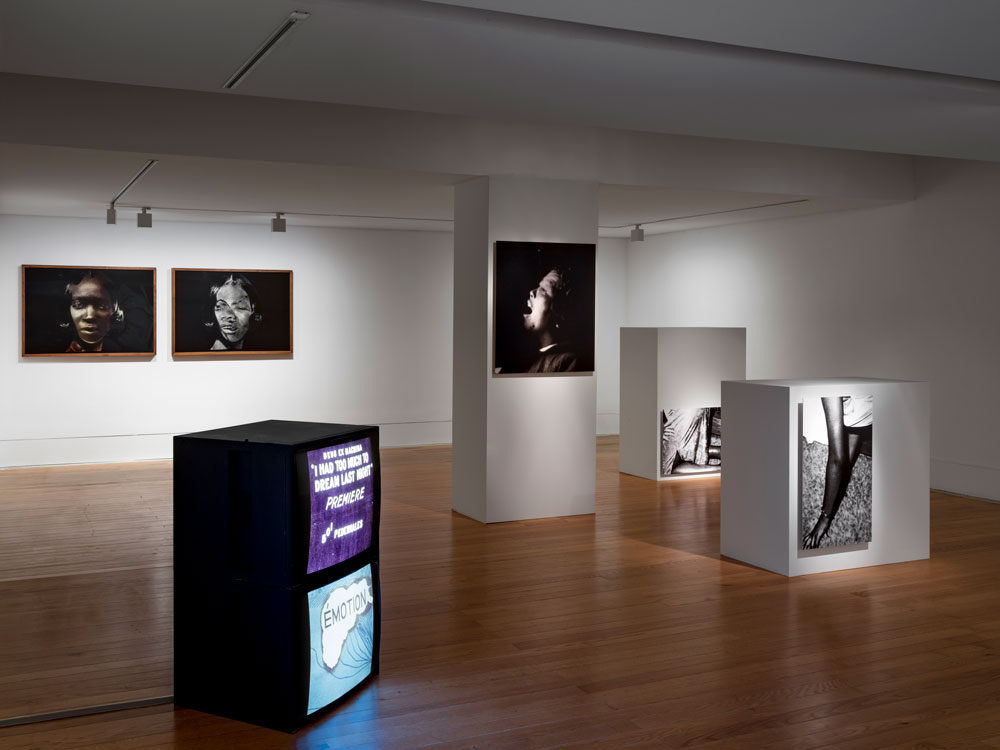
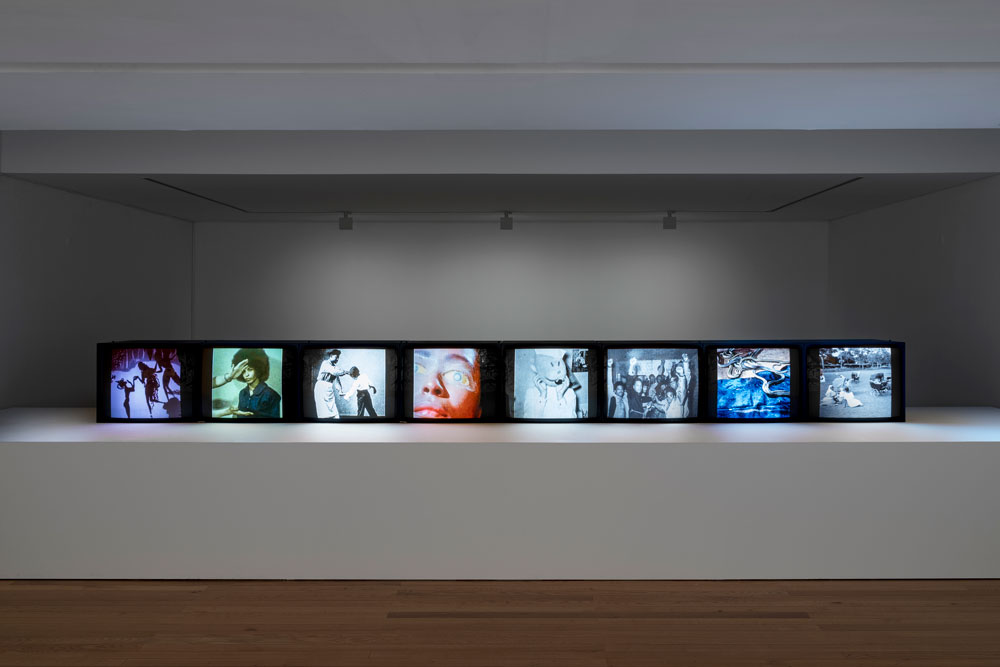
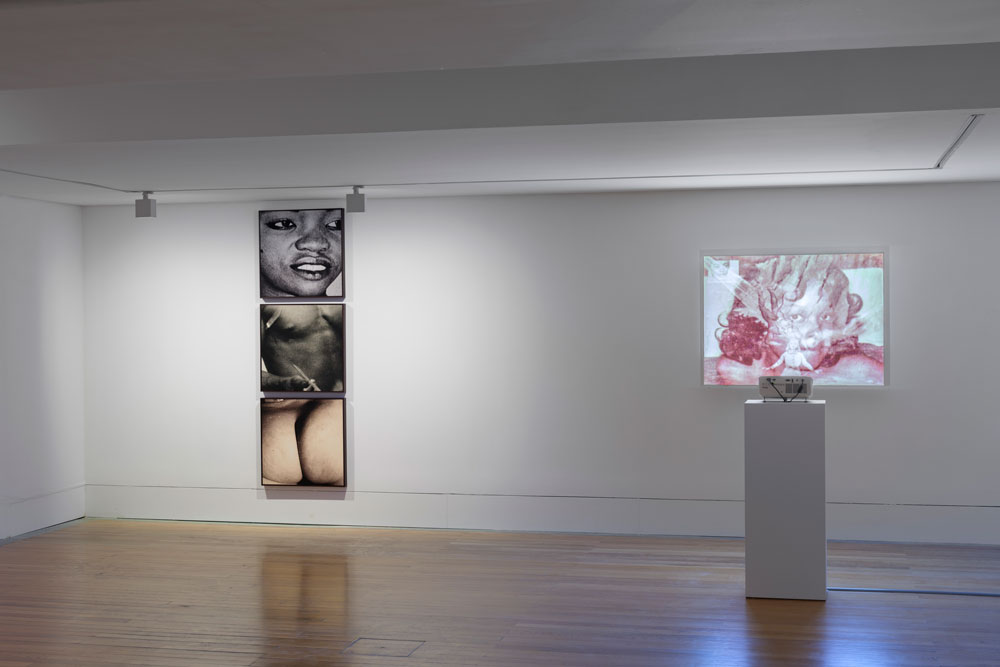
In her first solo exhibition in Portugal, Cloud of Confusion, Frida Orupabo presents a reflection on the circulation, archiving and meaning of images in the digital age. Curated by Marta Mestre, the exhibition takes over the MAC/CCB with a layout that evokes the contemporary experience of navigating between images, memories and fragmented narratives.
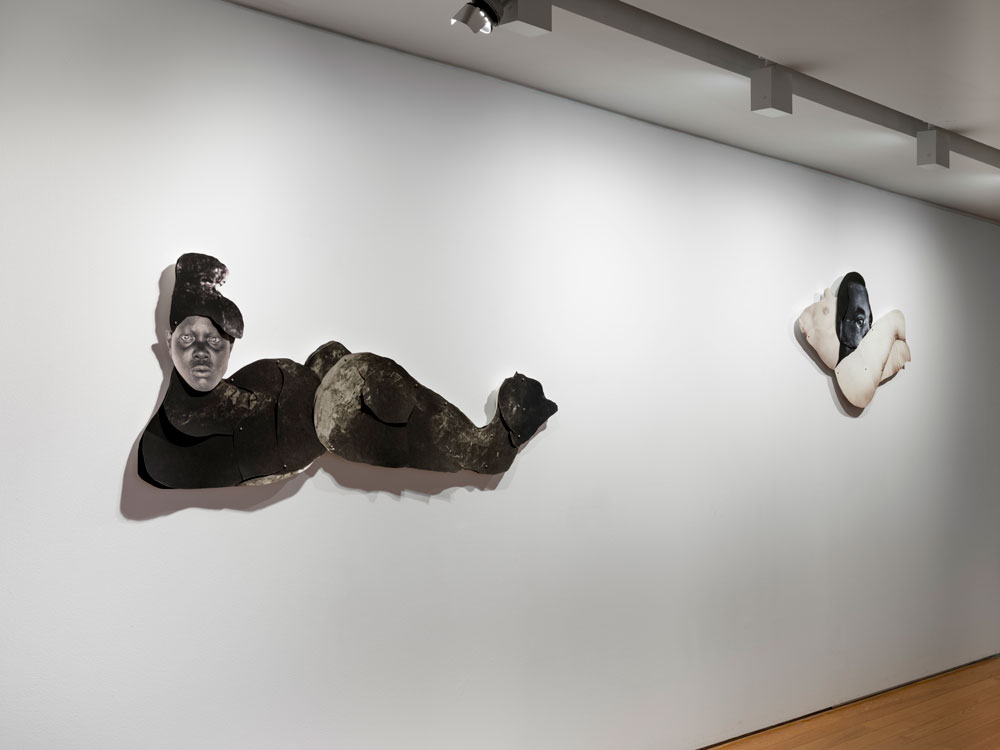
Known for her work based on photographs found online, the Norwegian artist constructs a visual universe where intimacy and violence, memory and erasure, identity and representation intersect. Her collages and assemblages deconstruct images and discourses to reveal the historical and political structures that shape the way we see and are seen.
The title of the exhibition refers both to the digital cloud and to the nebula of information, memory and oblivion that characterises the present. Inspired by the vast archive of images she has gathered over the years, Orupabo explores what she describes as the ‘abyss’ of images: their strangeness, instability and capacity to generate multiple interpretations.
With a degree in sociology and influenced by thinkers such as bell hooks, Audre Lorde, Toni Morrison and Grada Kilomba, the artist uses collage as a tool for investigation and reconstruction. Through fragmentation, she questions historical representations of the Black body, confronts the legacies of colonialism and seeks to imagine other forms of existence and belonging.
The presentation of the exhibition in Lisbon takes on a particular significance. Against a backdrop marked by memories of Portuguese colonial expansion, Orupabo’s work establishes a critical dialogue between past and present, questioning the continuities of historical violence and the possibilities for resistance and transformation.
In this conversation, the artist reflects on fragmentation as both a biographical experience and an aesthetic strategy, the influence of digital culture on her creative process, the construction of personal archives, and the role of art as a space for critical thought, beauty and possibility.
Interview by Pedro Vaz
>>>
PV: Fragmentation is an element explicitly present in your work. Where do you find yourself—or where do you seek yourself—within this process of cutting, collage, modification, and shapeshifting?
FO: I think that I came to collage out of a desire to create something I felt didn’t exist. It became a tool that helped me to question and explore other ways of seeing and understanding, and with that, other possibilities of ways of being.
Breaking up images, texts and sounds, to assemble together again in new ways through collage making, felt linked to theoretical deconstruction, which was where I was coming from - I was trained as a sociologist, though I never worked as one.
I think fragmentation plays such an important part in my work because it's so present in my life. My life has always felt fragmented. And so the collage work feels like a way of tearing things apart, to be able to build up and create something whole and new that makes sense to me, and that feels empowering.
Collage has in many ways been one tool, out of many, that has helped me to build up a self that tries to break with simplistic and fragmented ideas about who I am - and in extension of that, who we are (as Black people).
It's like picking up small pieces here and there, while at the same time getting rid of other things. Then carefully sewing it all together, piece by piece. I guess this is how I see my work.
And it is very much informed by thinkers that have meant so much to me like bell hooks, Toni Morrison, Audre Lorde, Patricia Collins, Grada Kilomba and many more… As Kilomba has stated - because of how the transatlantic slave trade and global colonialism deliberately "fragmented" Black people from their own histories, retelling history and filling in the holes, is so vital.
PV: To what extent is the internet, as a creative realm, embodied in the way you think about artistic practice? And since you work with the shifting of your own image, how do you navigate today's culture of avatarism?
FO: I'm not sure. I don't think so much about my practice or anything really when I'm working. The images are mostly found online, and they are the base or foundation of my work. The internet is an easy source for inspiration. And in relation to what we spoke of in terms of how embedded fragments are in my work, I have enjoyed many years now on different social platforms such as Tumblr and Instagram where fragmentation is at the heart of my doings. I’m not so active now but I remember the first couple of years on Instagram - when there were more limitations to what you could do. For instance you couldn’t post long films, so it became a very short fragment from a film that I already had taken fragments from - a fragment of a fragment - which led to a very intense loop. I loved that. In some ways I feel limitations push me in a good way. Whether it be where I work, what I work with, and so on. I like small rooms and blunt scissors. Then it was the grids that opened up new ways of working with images, sound, texts and narratives, which has stayed with me in the way I think about images and their relationship to one another.
PV: This exhibition integrates your own works—predominantly mixed-media assemblages—alongside a selection of images resulting from the curation you do through your Instagram page (@nemiepeba). Today, we often speak of digital curation and how social networks function as portals to personal archives. But doesn't what we call "curation" in this more innocent sense have a more human, real-world origin? I think of how a child innocently begins organizing their room with posters and toys, for example. Or of Anne Frank's room in Amsterdam, with all those collages scattered across the walls. What I really want to ask is this: aren't there many things we call by a single name—such as curation—that take place in spaces as ordinary as our own bedrooms, without us ever recognizing them as such?
FO: Yes, definitely. It reminds me of an interview with Senga Nengudi, who spoke of her mother and the way her mother attended to and decorated the houses where they stayed with love and care. And if I am not mistaken Nengudi said that this attentiveness shaped her - how she understood beauty and how things stand in relationship to one another. I remember this passage because it reminded me of my own upbringing with my mum, who like Nengudi’s mum, also had a strong attentiveness to the aesthetics around her.
One memory I have from my childhood is my mothers constant rearrangement of the apartment. I remember the sound of furniture being moved late in the evening and the joy of waking up to a new living room in the morning.
Both me and my sister have inherited that.
How I arrange things at home is the same way as how I will arrange things on my Instagram for example. It's driven by a strong feeling of what works together, of what feels good.
PV: What does it mean to you to bring an exhibition to Portugal for the first time, to a place like MAC/CCB—a fortress running parallel to the Tagus River and a 16th-century monastery?
FO: It means a lot. The collaboration with Marta Mestre and the rest of the team at MAC/CCB has been an enriching and wonderful experience for me. We have been working closely, trying to find new ways of showing already existing works - which led to a complete shift in my own reading of the work. Like a small revelation.
It is also exciting to be showing works at the same time as Grada Kilomba's show is opening, because of how much her work has meant to me as a student of sociology and later as an artist.
Her work together with other critical thinkers and artists living and working in and outside of Portugal has been and continues to be extremely important, because it sheds light on the history of slavery and colonialism and the legacies in the form of institutional, structural and everyday racism.
My work deals with that too. The interconnectedness between the past, the presence and the future. How history shapes and informs - but also how we are able to shape and break with dominant and violent discourses. I am trying to find ways “out” through my work. Or as Saidiya Hartman so beautifully put it in a conversation with Fred Moten: “What does it mean to experiment with living in the context of a world that is in so many ways uninhabitable”.
You mentioned the 16th-century monastery, which I read was commissioned by King Manuel I to celebrate Vasco da Gama's “successful voyage to India”.
And then I read about different sites you can visit in Portugal to see statues of him. You find these types of statues everywhere - celebrating men for their brutality, exploitation and violent oppression of other people.
It’s a lot to unpack, and I find it exhausting.
PV: Following the digital flux to which we are all subjected—a flux that reverberates through every action and way of being in the world—and faced with the abyss of images that are increasingly numerous and increasingly perishable in terms of attention and memory: should we draw closer to them and fall into that abyss, or should we turn inward and attain a third-person perspective, one in which the image becomes an element inserted into our landscape rather than a mirage?
FO: I don't know. I think we are equipped with different capacities when it comes to taking things in. I have to say I enjoy both things. And that I am more interested in the quality, what it is that I feed myself more than the amount or the speed. I guess my work, as is the case for many, is divided into more and less intense periods in terms of the image or text flow. And that my break or inward periode, happens when I am making the actual work with my hands, but after that I will voluntarily jump back into the digital flux again.
PV: Given the inherent conflict between closeness and harm—where intimacy relies on privacy from outsiders, and violence involves a disruptive breach that puts all participants at risk—how critically engaged should we allow ourselves to become?
FO: I’m not sure I have understood the question, but I think critical engagement is very important, as in critical thinking.
Whenever someone mentions critical engagement or - thinking, I am immediately led to bell hooks. In “Art on my mind”, she writes about art as a site of possibility, and art-making an act of preservation of self; and an act of resistance. As well as a place for joy and the experience of beauty.
This is very much in tune with my own experiences and beliefs.
:::
FRIDA ORUPABO
Cloud of Confusion
Curated by Marta Mestre
03.06 — 01.11.26
MAC/CCB