





|
|
MANUEL JOÃO VIEIRAA ILHA PÚRPURA: NOTAS E PAISAGENS MAAT Av. de Brasília, Central Tejo 1300-598 Lisboa 20 MAI - 07 SET 2026 The Vertigo of the Earth
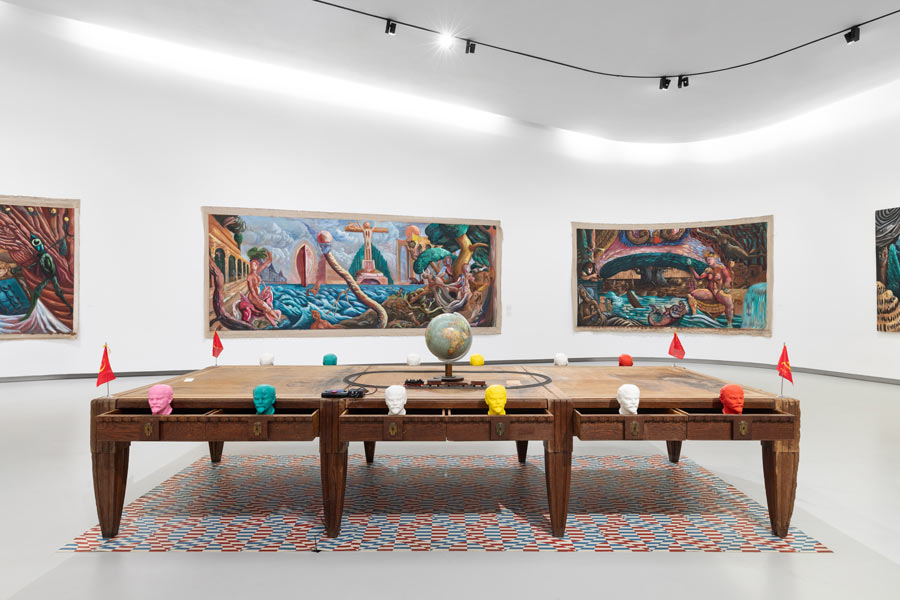
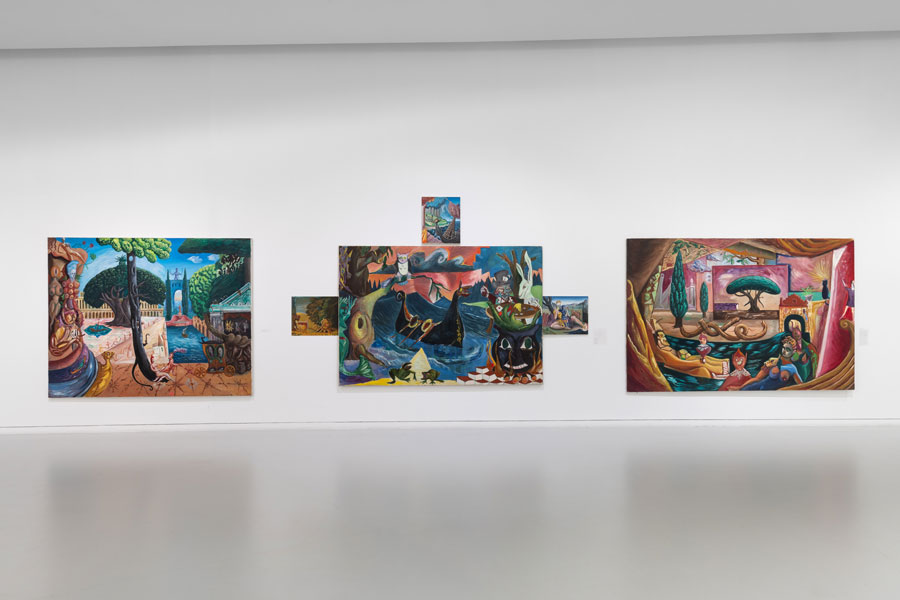
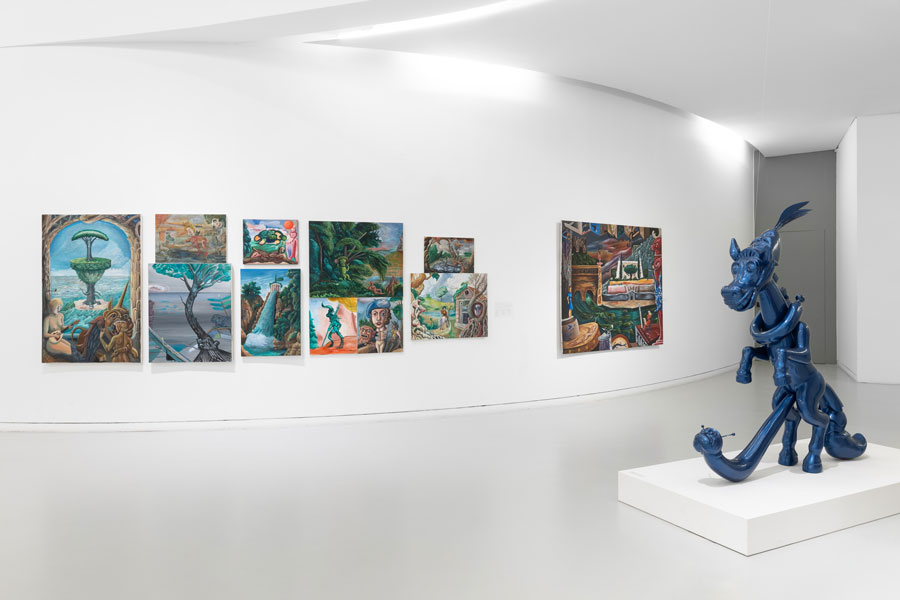
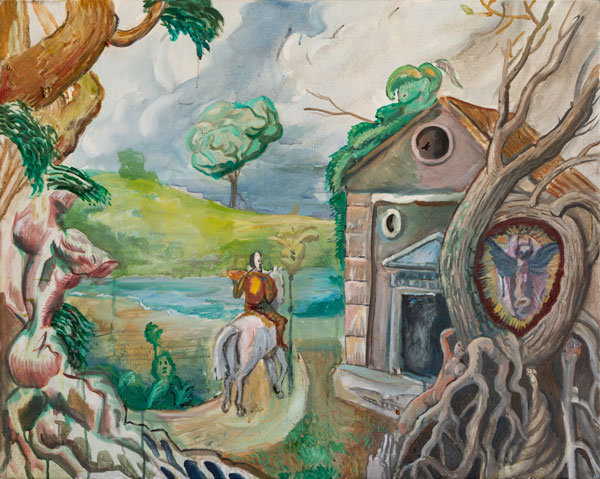
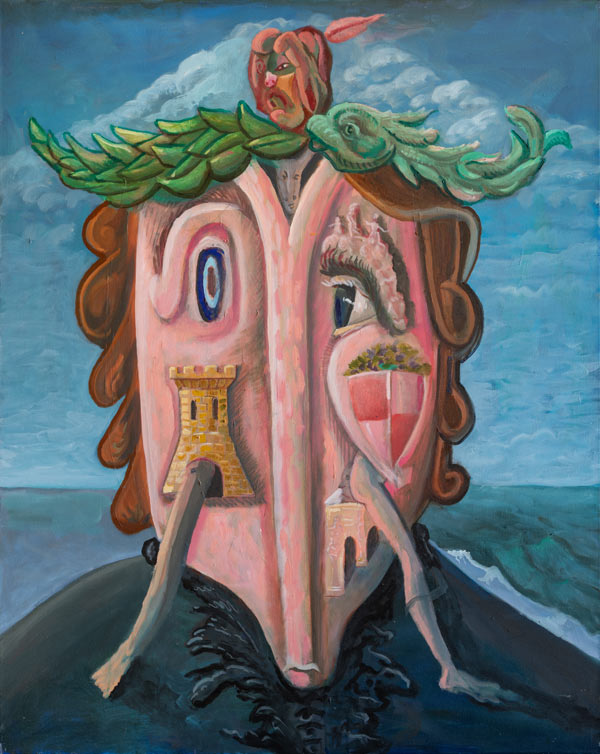
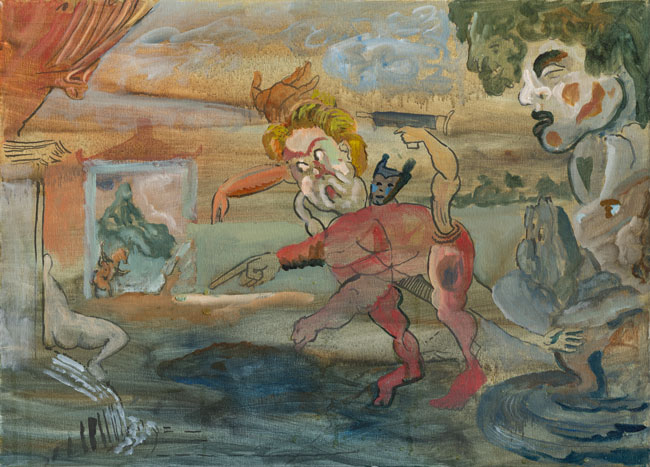
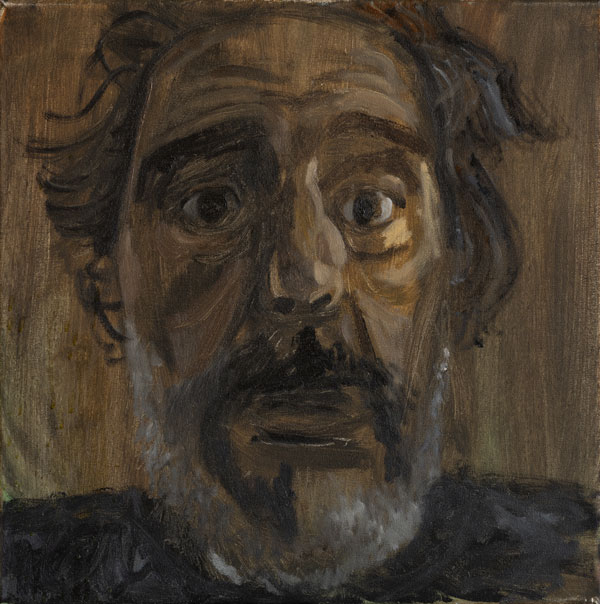
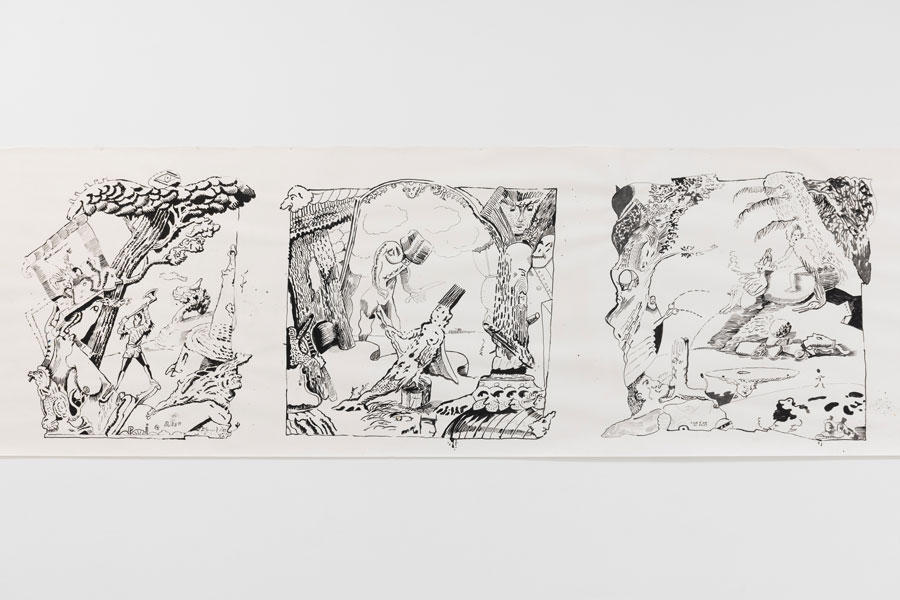
Manuel João Vieira's oil paintings place the viewer in a condition akin to Heideggerian Geworfenheit: thrownness into the world. Within Vieira's islands lies the untamed force of a land untouched by the domestication of historical narratives. Even as everything appears exposed, it remains profoundly concealed, making it impossible not to witness a silent search and the deep intimacy it quietly preserves. Heraclitus famously wrote that "nature loves to hide." When nature enchants us through its appearances, perhaps the wisest response is to let it unfold according to its own rhythm. In this sense, A Ilha Púrpura becomes the singular place where connections converge without ever demanding articulation. Manuel João Vieira's exhibition at MAAT, A Ilha Púrpura: Notas e Paisagens, is remarkably rich in scope, bringing together oil paintings, drawings, and sculptures. Spanning the artist's production from the 1980s to the present, the exhibition reveals shifts in materials and themes while maintaining two enduring constants: satire and defiance. Vieira's use of colour introduces an unexpected softness into intensely vivid hues, so that even the most strident colours acquire an almost pastel delicacy. His distinctive painterly language and humour are inseparable from the technique through which they are articulated. Beginning with River of No Return, water is the element that binds much of Vieira's pictorial universe together. Ships, mythical creatures, mermaids, streams, lakes, and seas occupy a central place in almost every painting, forming the connective tissue of his imagery, at times filling the spaces between scenes, at others becoming the very medium through which they are connected. As Manuel João Vieira observes, "These images were not born of dreams. They were constructed through an escape that deliberately chose to move ever farther away from reality, using whatever means were available, and in doing so created their own reality." His words remind us that the true image often possesses a singularity capable of surpassing even dreams. A series of ink drawings on white paper is defined by alternating gestures of contraction and expansion. These works offer a set of subtle clues as to where art begins and what insists on being spoken aloud. In A Ilha dos Amores, Vieira departs from conventional representations of love and hatred. Here, Eros becomes less a figure of desire than an invitation to confront our most intimate, and at times unsettling, passions. In The Birth of Tragedy, Friedrich Nietzsche traces the origins of art and tragedy to the tension between the ancient Greek figures of Apollo and Dionysus. Dionysus – the god of wine, ecstasy, and madness – and Apollo, associated with order, light, and artistic form, embody what Nietzsche identifies as the fundamental creative tension underlying Western art and thought. Standing before A Ilha dos Amores, one is reminded of the Dionysus Mosaic from House of Dionysus. In these imagined lands, where lush trees burst into life and vast waterfalls cascade, power, eroticism, dawn, birth, and death intertwine in dramatic scenes. The viewer is caught unprepared by the primordial mysteries of mythology. From the outset, Vieira is concerned with giving form to what is felt, to states of consciousness. These states emerge as lines and forces, colours and flashes of light. Beginning from the chaos and tensions of the world, he forges a singular visual language. In this sense, the painter is engaged in a search for the language of depths. Lately, I have been thinking about what it means to be a painter in the age of technique. Increasingly, it is works that reveal the sheer pleasure of "making" that command my attention. A Ilha Púrpura: Notas e Paisagens is a celebration of the joy of making things by hand, allowing the material act of creation to remain fully visible. The island to which Vieira invites the viewer is immersed in shades of purple and populated by a profusion of characters. A musician as much as a painter, and deeply engaged with political life, Manuel João Vieira draws on multiple dimensions of experience, allowing the images that inhabit his imagination to move freely alongside one another. The exhibition's title offers a glimpse into the atmosphere of the artist's studio, where a fertile disorder prevails. Within this purple profusion, notes and landscapes coexist, recalling the ancient poet Simonides, who observed that "painting is silent poetry, and poetry is painting that speaks." At the centre of the exhibition stands O Atelier de Lenine, an installation built around a large oak table. From its open drawers, busts of Lenin stare back at the viewer, while the corners of the table are marked by the flags of the Portuguese Communist Party (PCP). A toy train circling a globe at the table's center entwines world politics with its own absurd condition, producing an image that is at once grave, playful, and strangely contagious. Facing the installation, the sculpture Salazauro Rubro – a red dog bearing the head of Salazar – offers a biting satire of the Estado Novo regime. Each work through its movement, its proximity and distance, invites us to rediscover languages that remain alive within a shared, elusive continuum, living and dead languages alike. On Vieira's canvas, space enters thought. It invades and surrounds it. This is an attempt to give form to the space of matter, and through it, to the movement of thought itself. His works are shaped by his longstanding engagement with the tradition of comics and graphic satire. In this respect, Vieira's work operates simultaneously on three interconnected levels: the instinctive, the social, and the mythological. On the instinctive level, Vieira's work preserves the poetic impulse, even in an age increasingly shaped by technique. On the social level, it restores exuberance and excess to human experience, reminding us that happiness is not a privilege but a rightful condition of life. A common human language emerges through an endless network of interwoven references. On the mythological level, the works suggest that our contemporary world of human relations is itself a grand tragedy, a Promethean chaos in which destruction and creation remain inseparable. To stand outside that drama, withdrawing into a distant corner of the world without protest or resistance, is ultimately to wither away. I am reminded of an anecdote about the Athenian painter Parrhasius. As an elderly man sat posing for Parrhasius, he cried out, Manuel João Vieira's A Ilha Púrpura: Notas e Paisagens remains on view at MAAT Gallery until 7 September.
Ayşenur TanrıverdiIstanbul-based writer, living in Lisbon since 2022. She studied at Istanbul University and is the author of two published works of literary fiction. A regular contributor to Cumhuriyet, a major Turkish newspaper, where she focuses on Portuguese culture. Her essays and critical texts on theatre, literature, and contemporary art have also been featured in various art magazines.
|