

|
|
TARRAH KRAJNAKREPOSE EXPOSE COUNTERPOSE FONDATION A STICHTING Av. Van Volxem 304 1190 Forest, Bélgica 22 JAN - 17 MAI 2026
IMAGEN Kms superpuestos cabalgando las distancias— i al otro lado me estaría esperando yo misma Ciudades con los nervios de acero Yo quiero las ciudades donde para llorar su esclavitud — Yo quiero— — detrás de cuyas murallas — - Magda Portal
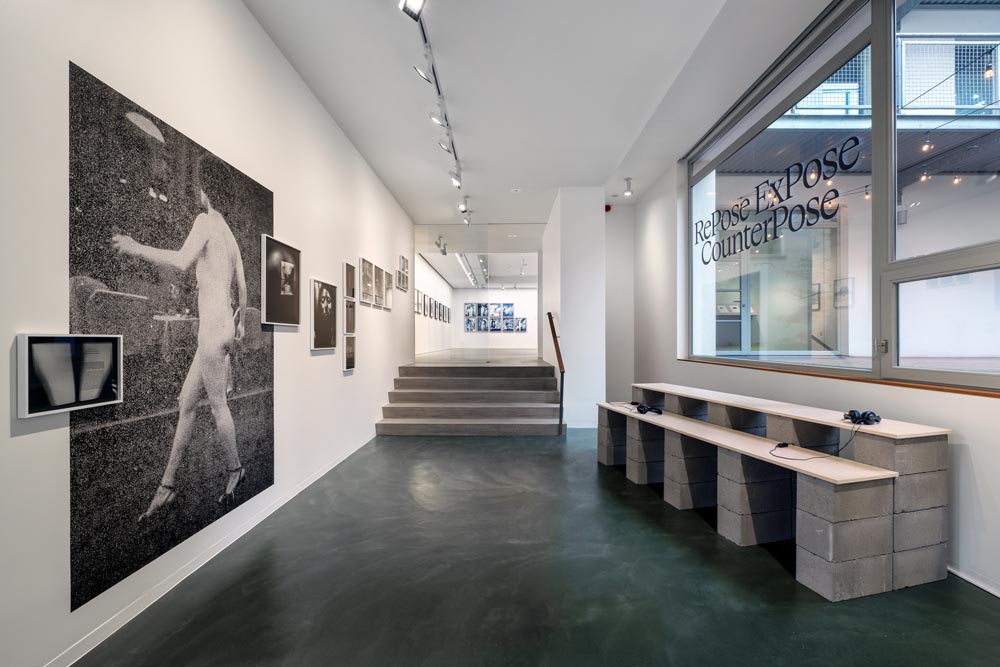
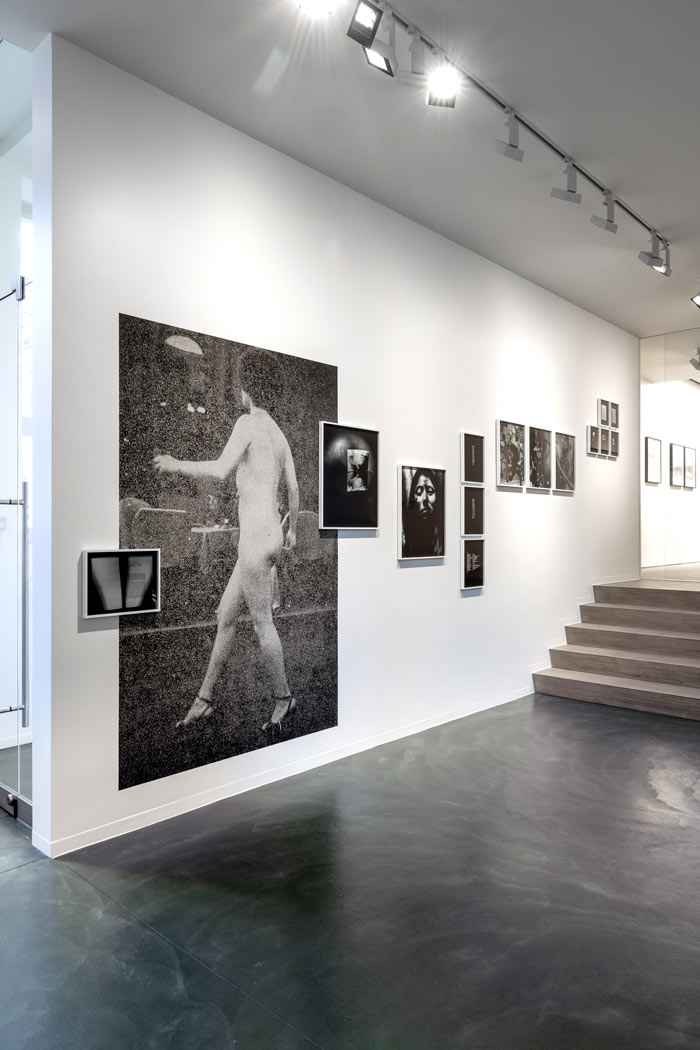
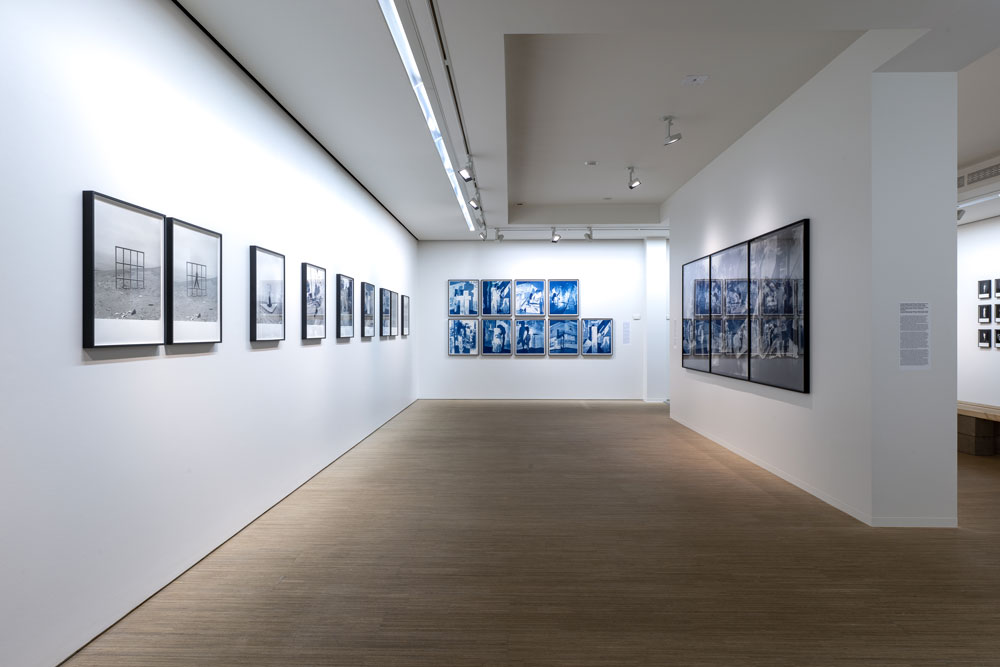
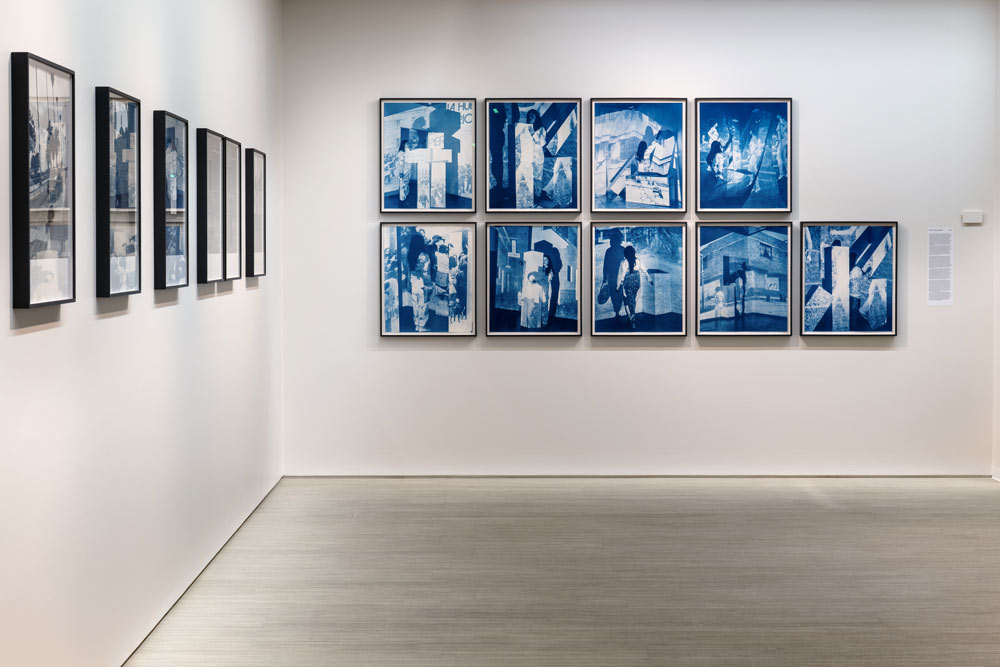
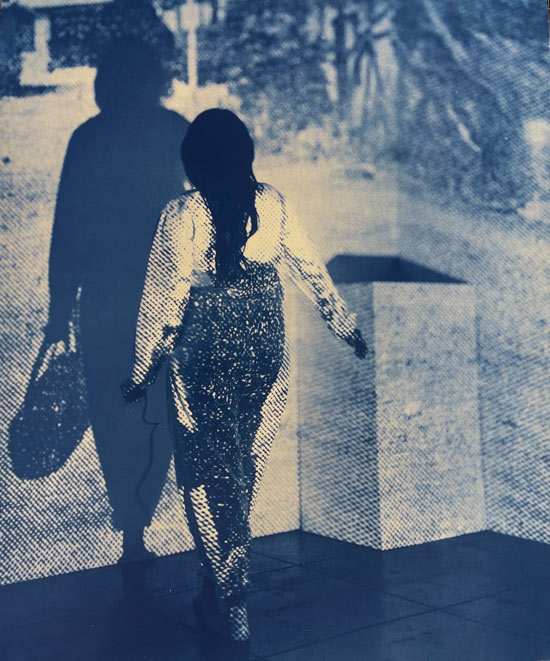
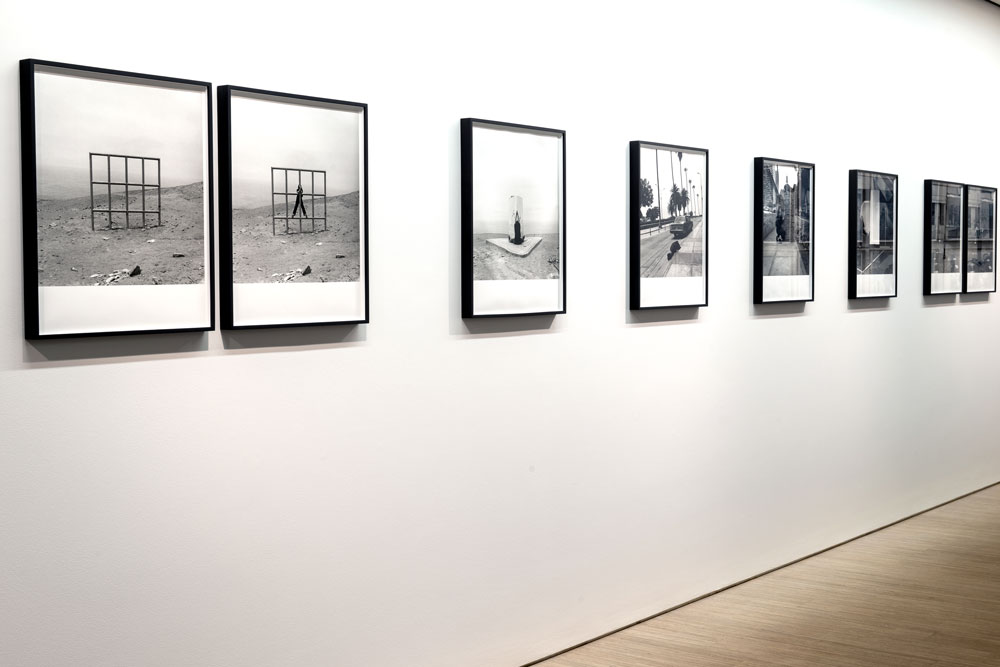
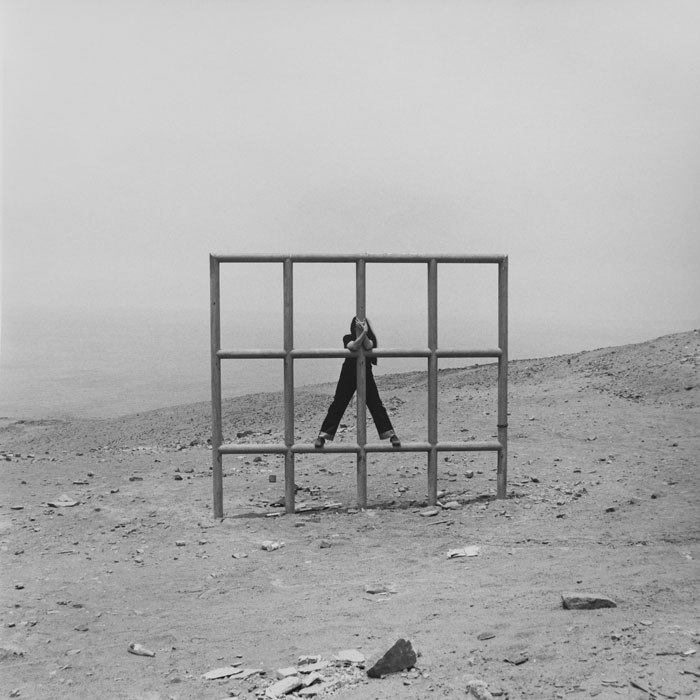
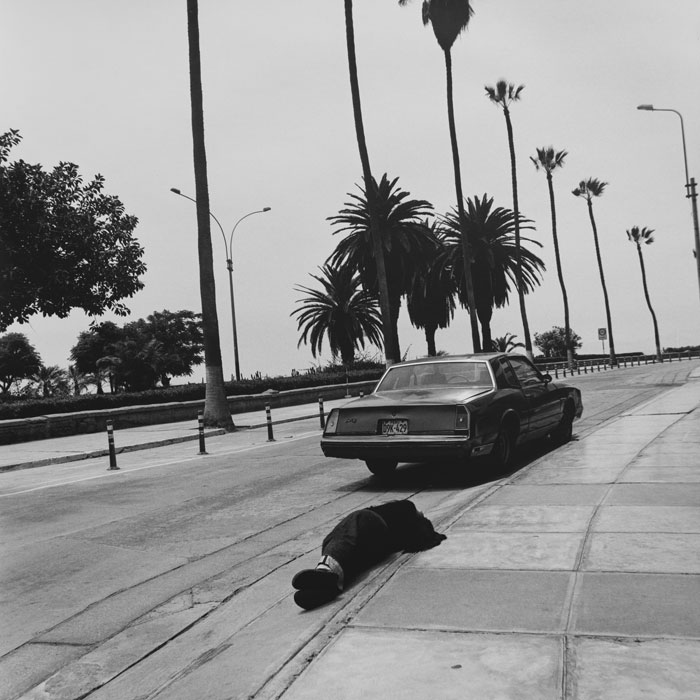
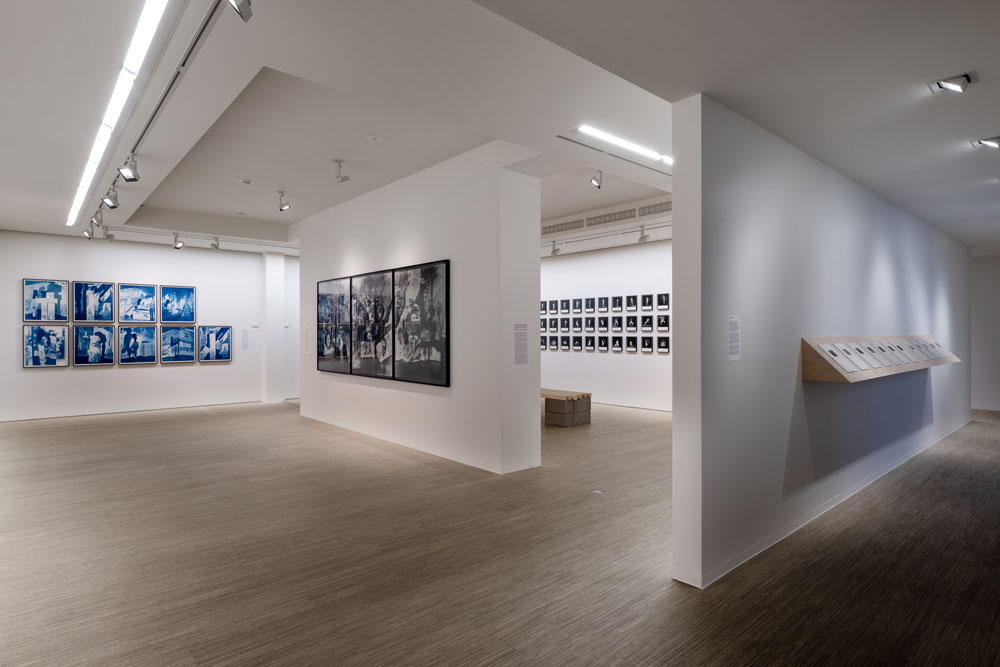
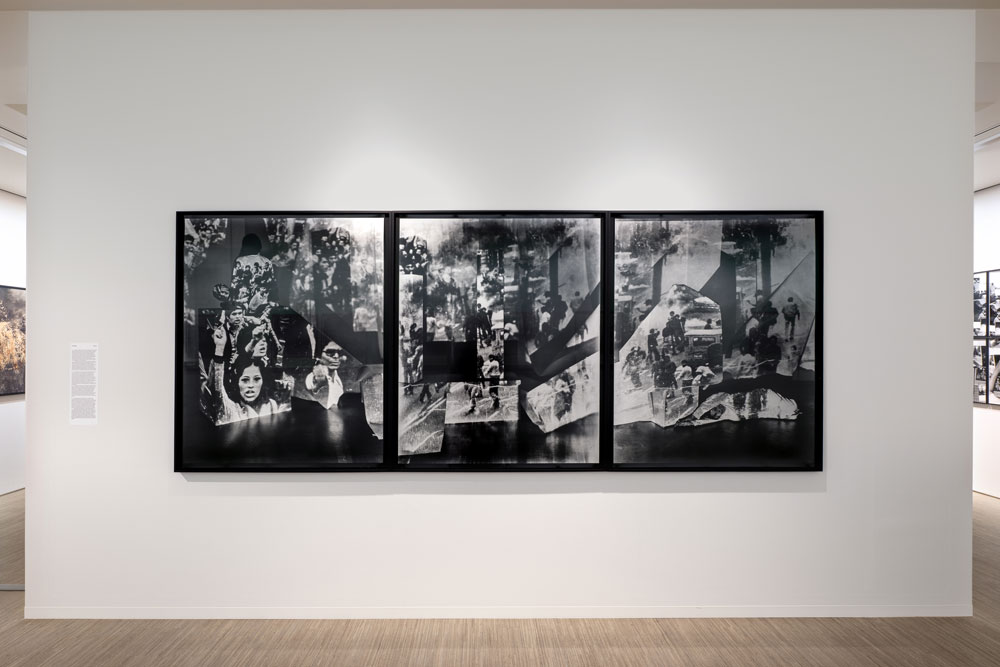
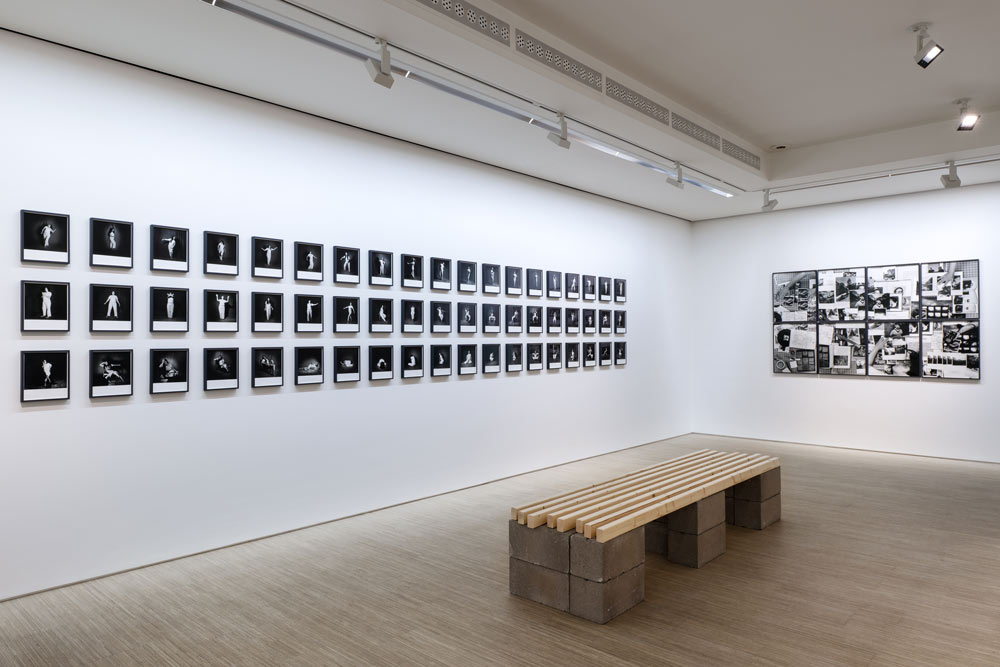
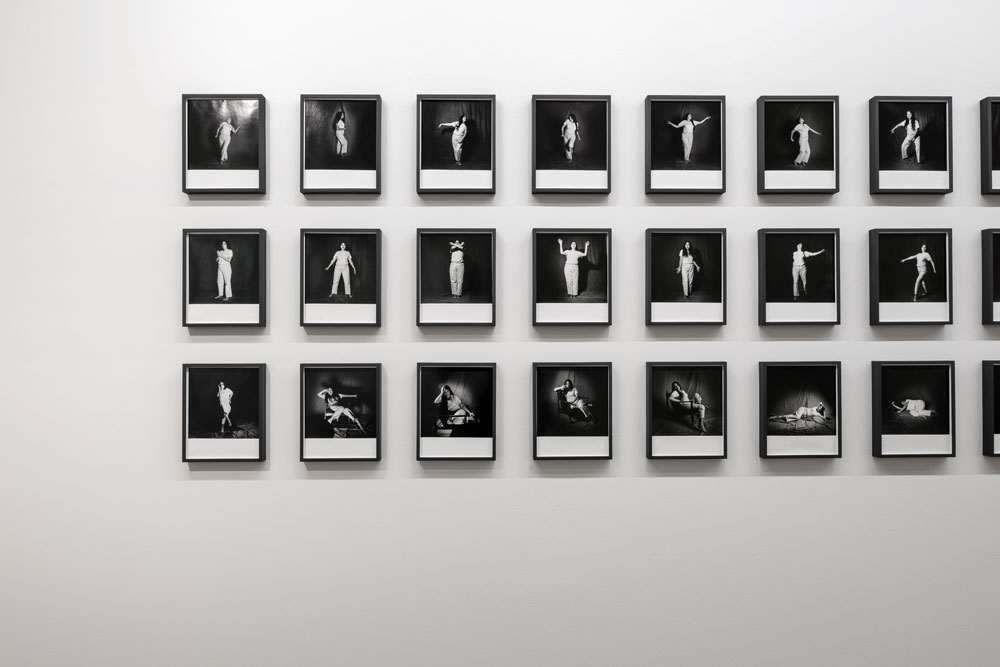
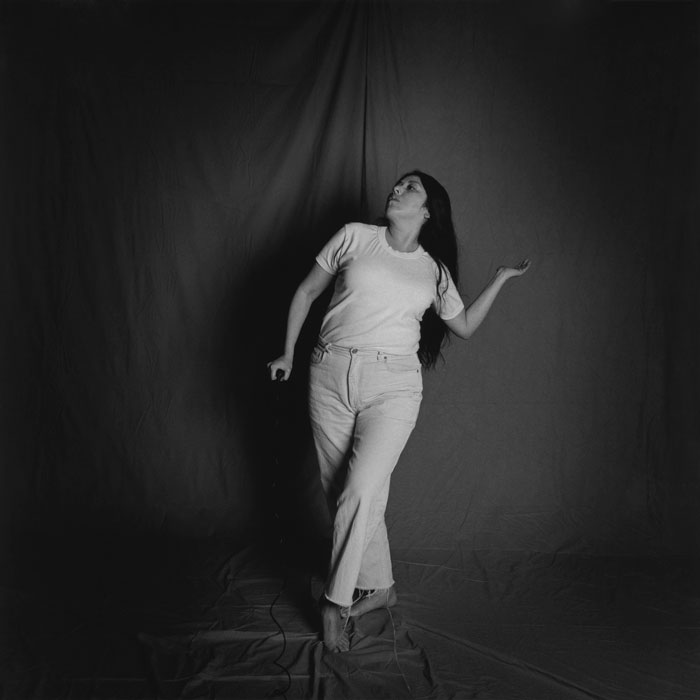
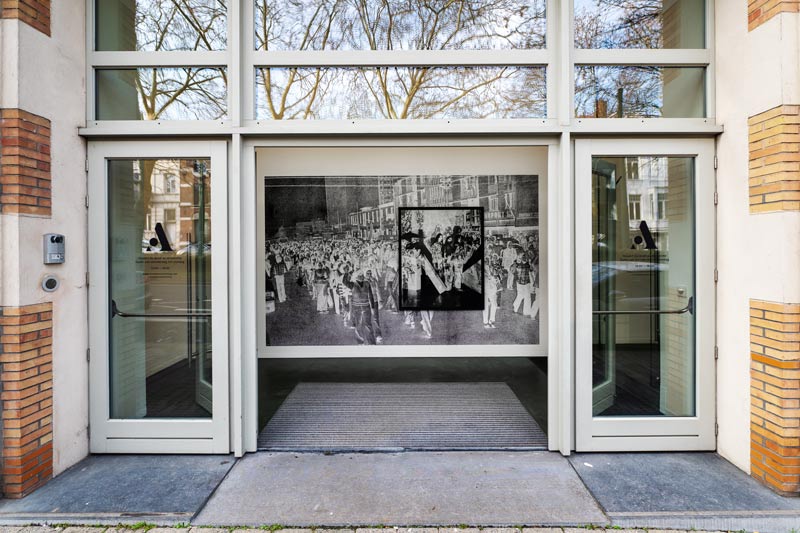
“An invisible labyrinth of time.” This is how the character Stephen Albert defines the object that serves as the leitmotif of the short story El jardín de senderos que se bifurcan. Jorge Luis Borges’ essay centers on a fictitious book-labyrinth where time diverges into infinite futures; within them, the same characters sometimes exist, and sometimes are “an error, a ghost.”[1] In this supposedly impossible work, however, the term ‘time’ is never once mentioned. It is this enigmatic text that lends its title to the artwork anchoring Tarrah Krajnak’s solo exhibition, RePose ExPose CounterPose. Occupying the spacious halls of Fondation A, the artist presents a group of series that oscillate between self-representation and the deconstruction of historical archives. Her work configures a heterogeneous photographic practice that subverts the canon. Marked by a deep political bias and a monochromatic aesthetic, Krajnak’s artistic production investigates the scars of a turbulent period in Peruvian history, the genocide of Indigenous peoples in the Americas, and the representations of the female body. The result is a plural archive that functions as a complex critique of historical and epistemological violences. By superimposing her presence onto the urban landscape and invoking art historical references, Krajnak intertwines different temporalities, translating subjective experience into an engaged collective reflection. In El jardín de senderos que se bifurcan, the artist connects her biography to the recent history of her country of birth, Peru, through a poetic search for her own roots. Based in the United States since childhood, Krajnak’s work reclaims a link to the troubled Peruvian society of 1979, the year of her birth. This date falls within the context of a decades-long dictatorship (1968–1980), followed by a period marked by profound human rights violations and acts of extreme violence carried out by both the State and armed groups—the precursor to a new and atrocious authoritarian regime. In the late 1970s, the Peruvian capital was a landscape of peasant marches against the State that were brutally suppressed by military force, triggering political radicalization and the prelude to an internal armed conflict. Originally structured as an editorial object, the project transposes a visual grammar into the exhibition space that brings together vernacular photographs, self-portraits, fragments of contemporary magazines, and texts authored by the artist. Thus, the proposal of Krajnak aligns her own identity with the country’s collective memory. For researcher Ángeles Donoso Macaya, the photograph is a finite object that functions as a supplement, whose field is permanently expanding [2]. El jardín de senderos que se bifurcan is precisely this expansion: a visual project whose genetics contain a literary trait inscribed in the fantastic tradition of Borges or even Julio Cortázar, who, in his daring Rayuela, seems to have realized Borges’ vision: an infinite work capable of being read in countless ways—a literature that is, above all, a multivalent trajectory. At once a fictional commentary on Latin American politics and a reflection on the author’s own exile, this fugitive book expresses the “conflict between the exterior and interior of all realities, including politics” [3] — as Tarrah Krajnak so masterfully demonstrates, both here and in the other works on display. Within the main room, where most of the exhibition is installed, Body Configurations (Lima) occupies one entire wall. RePose ExPose CounterPose features the second iteration of this project, which originated in Venice. The photographic series examines the urban topography of Lima, considering the city as a political archive. Choosing emblematic sites such as the Villa María del Triunfo slum and the mirador Morro Solar, the artist references the nearly eponymous avant-garde work of VALIE EXPORT, using her own body as a device for mediation and critique. Krajnak transforms public space into a laboratory for direct intervention. While reenacting the Austrian artist’s iconic poses, she articulates an original corporeal lexicon: by contorting herself against the mineral coldness of angular buildings and streets, and through organic modulation within the city’s fabric, Krajnak instigates a profound reflection on the visibility and autonomy of Indigenous women within an urban architecture shaped by colonial legacies. Regarding the 1972 work that inspired Krajnak, titled Körper-konfigurationen in der Architektur (Body Configurations in Architecture), EXPORT emphasizes the analogy between scenic and corporal arrangements — their “common forms” — and the “visible externalization of internal states.” [4] Updating EXPORT’s feminist proposal, Krajnak re-contextualizes the tensions of self-representation while occupying the dual role of photographer and subject—oscillating between alienation and presence, machine and body. The body as a cultural artifact—a term used by Roswitha Mueller [5] — is a site of historical-political inscriptions and functions as a potent performative archive. On the perpendicular wall, the bluish hues of 1979: Contact Negatives catch the viewer’s eye. In a performance realized in 2019, Krajnak projected iconography from the 1979 Peruvian press onto wooden structures and suspended panels. Moving between the projectors, the artist interposed herself within these images of Lima, creating a layered interplay where the body acts as a bridge between the real and the imaginary, staging a dreamlike return to her birthplace amidst the turbulent context of the 1970s. During the performance, the artist captured a sequence of images using a remote shutter release, subsequently developing them as cyanotypes. The poet and visual artist Ronald Kay asserts that the photograph is a "centaur sign": half physis, half history. Kay also suggests that the photographic image is a supplementary second skin, always delimited by another space and another time, configuring a zone of transition [6]. In this ‘spectro-poetics’ — a term suggested by Krajnak — the artist’s image merges with archival journalistic photographs like a ‘second skin.’ Here, multi-temporality embodies the ghosts that haunt both personal biography and collective memory. Engaging in a dialogue with 1979: Contact Negatives, Crowds is the final work situated in the western part of the gallery. This photo-performance resumes the combination of projection and presence. Here, Krajnak expands the techniques developed in previous works to transition, once again, from biographical introspection to recent history. The black-and-white triptych uses press coverage of the social movements and protests that erupted in the streets of the Peruvian capital in the late 1970s as its archive; in doing so, it reactivates Latin American emancipatory struggles that extend to the present day. Unlike the previous repertoire, other women are summoned in this work to occupy the space of the projected images, transforming the individual body into an intergenerational political manifesto. Created through static positions held over long exposure periods, the portraits of the performers upon whom the archival images are projected create a tension between past and present, stasis and kinesis. Within the photographic space, a kind of civil imagination [7] emerges, activated by the shared use of history and memory, both of which remain open to contestation. The third section of the exhibition moves beyond the Andean context explored in the previous rooms. In RePose, the series from which the exhibition takes its name, Krajnak investigates the construction of female visuality by confronting the Condé Nast archives with references from her private collection, which spans sources as heterogeneous as vintage pornography, anthropological studies, and art historiography. In a durational performance, the artist uses her own body to mimic a vast archive of postures and gestures. Krajnak operates a remote shutter to capture herself while reenacting these bodily forms, evoking artistic movements such as Body Art and Expressionism. The process culminates in the development and printing of the images, producing a typology of female representation. The result is a striking collection of sixty silver gelatin prints. Given their arrangement in the gallery, it is difficult to look at the series without thinking of the plates of Aby Warburg’s Mnemosyne Atlas or the iconography of Charcot’s patients. By reflecting on the survival of gestures in images and referencing the violence of gendered indexing within structures of knowledge and power, RePose performs a spectral conjuration, challenging the ways centenary representations have been etched into the culture and the female body alike.
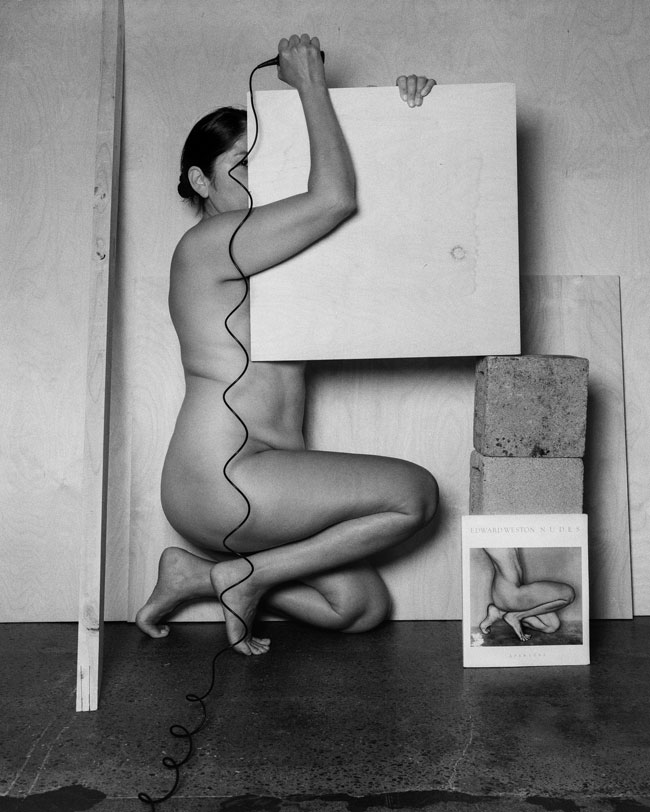
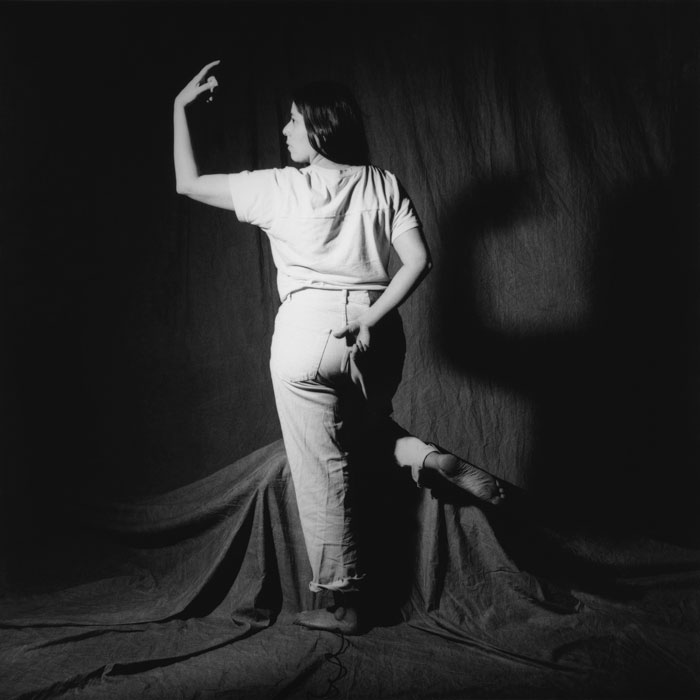
Tarrah Krajnak, Self-Portrait as Weston / as Bertha Wardell, Series Master Rituals II: Weston’s Nudes, 1927/2020. Courtesy Galerie Zander Cologne / Paris. © Tarrah Krajnak
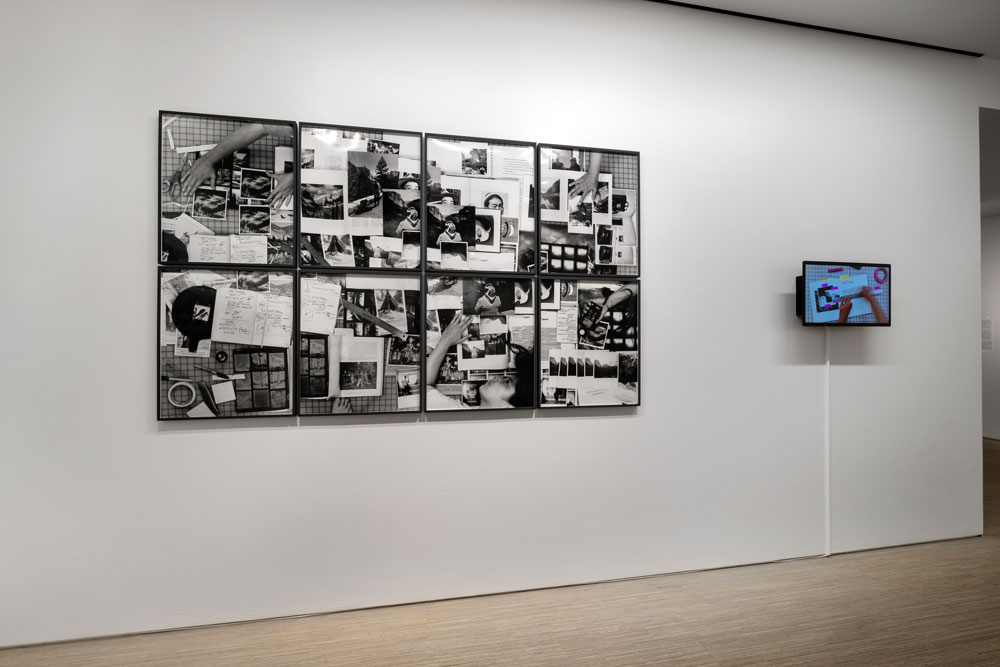
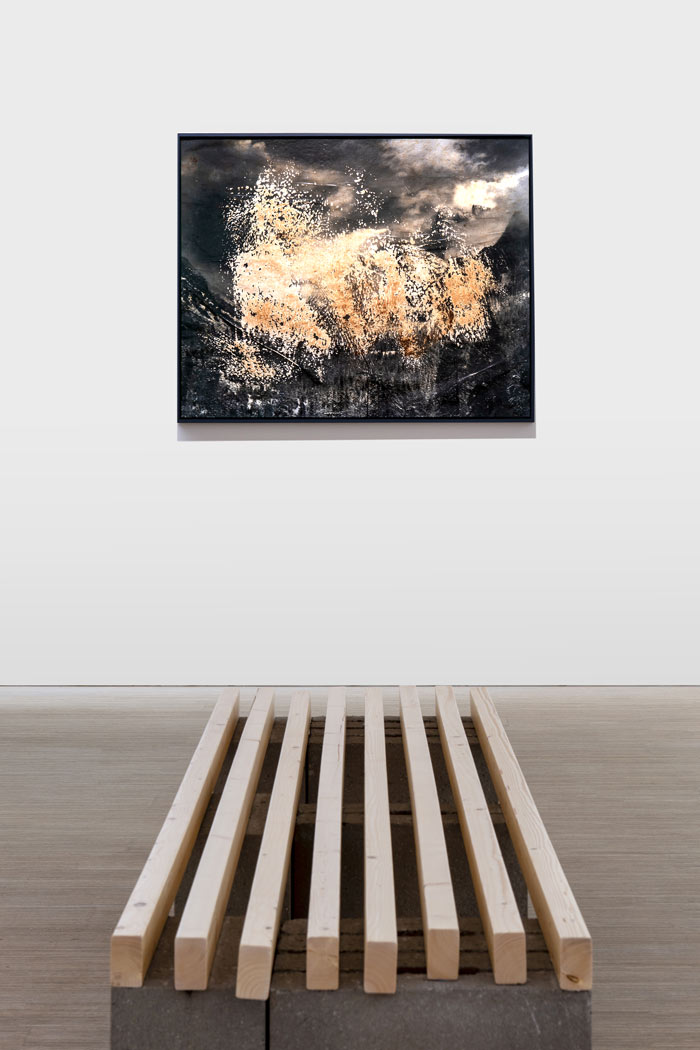
On the opposite wall, the theme of gender representation persists. Master Rituals II: Weston's Nudes operates a critical subversion of the modernist canon by confronting Edward Weston’s well-known photographic series. By reenacting the poses of models such as Sonya Noskowiak, Bertha Wardell, Fay Fuqua, Charis Wilson, and Miriam Lerner, Krajnak highlights the collaborative nature of the photographic act. With the shutter release and light meter in view, Krajnak positions herself as both subject and author, challenging the masculine, Western, and normative gaze that informed the original work. The artist deconstructs Weston’s formal rigor by including elements the photographer chose to omit: faces, gazes, and the physical structure of the studio itself, using bricks and wooden blocks to expose the artificiality of the composition. However, the series is not limited to a political reimagining of Nudes: weaving her practice into a spiral of references, Krajnak reinterprets Robert Mapplethorpe’s emblematic Self Portrait (1975). The artist updates the photographer’s horizontal gesture in an operation of both approximation and rupture. If the citation celebrates the defiance of heteronormativity embodied by Mapplethorpe, the presence of the photometer in Krajnak’s right hand functions as a critical counterpoint: this act reaffirms the autonomy of self-representation, questioning the centrality of the masculine in the photographer’s work. Another canon deconstructed by Krajnak is that of landscape photography. The body of work titled Tarrah Krajnak's Ansel Adams' Clearing Winter Storm, Yosemite National Park subverts the legacy of Ansel Adams, confronting the triumphalist narrative of the American West with a visceral reimagining—a quality that counters the meticulous rigor of Adams’ photographic technique. In a video, the original text from the book Examples: The Making of 40 Photographs is redacted. This piece is shown alongside a panel where the artist superimposes her own images onto those of Adams. Across the gallery, through a fragmentary spatial arrangement, the iconic photograph Clearing Winter Storm undergoes a radical intervention: using her own hair, Krajnak disfigures Adams’ pristine landscape, reinserting the human presence deliberately erased in his photographic records. In Aymara — a language of the Andes region — the expression wut walanti conveys the sense of something “irreparable.” [8] The artist demonstrates how photography itself can be an instrument of power that seeks to mask the irreparable: the systemic violence endured by Indigenous peoples during the U.S. westward expansion. Finally, in a narrow corridor, lies the most introspective work of the exhibition: Black Messengers is inspired by the collection of poems Los Heraldos Negros by César Vallejo. Returning to literature, this work inverts the Peruvian writer’s artistic endeavor. Situated in the early 20th century, Vallejo engaged with the international avant-garde while delving into the internal tensions of the human condition—a hallmark of peripheral modernity. Krajnak states that as a photographer, she seeks to externalize these conflicts by turning the lens toward the world. The series consists of 35mm photographs taken at Indigenous ruins and archaeological sites scattered between Peru and the United States. These small-scale images renders them like brief notations—singular, fleeting commentaries on the fragile vestiges of the landscape: animals, shadows, textures, objects, and rocks. In a passage from the poem Las Piedras, Vallejo writes:
Las piedras no ofenden; nada Y si algunas de ellas se
Animated by the camera, the ruins may yet perform something profoundly human.
Isabel SteinShe is a PhD candidate in Art Studies at Universidade Nova de Lisboa. She holds a Master’s degree in Communication and Culture from UFRJ and is a member of the research groups the Observatory of Visual Studies and Media Archaeology (NOVA FCSH) and Image/Time (UFRJ). Her research and practice focus on photography, exploring its connections with history, art and politics. She has participated in conferences and academic publications on the photographic image. In addition, she develops curatorial and artistic projects, such as the exhibition Imagens intangíveis (2025) and the founding of the InterStruct Collective.
:::
Footnotes [1] El jardín de senderos que se bifurcan (1941).
|